
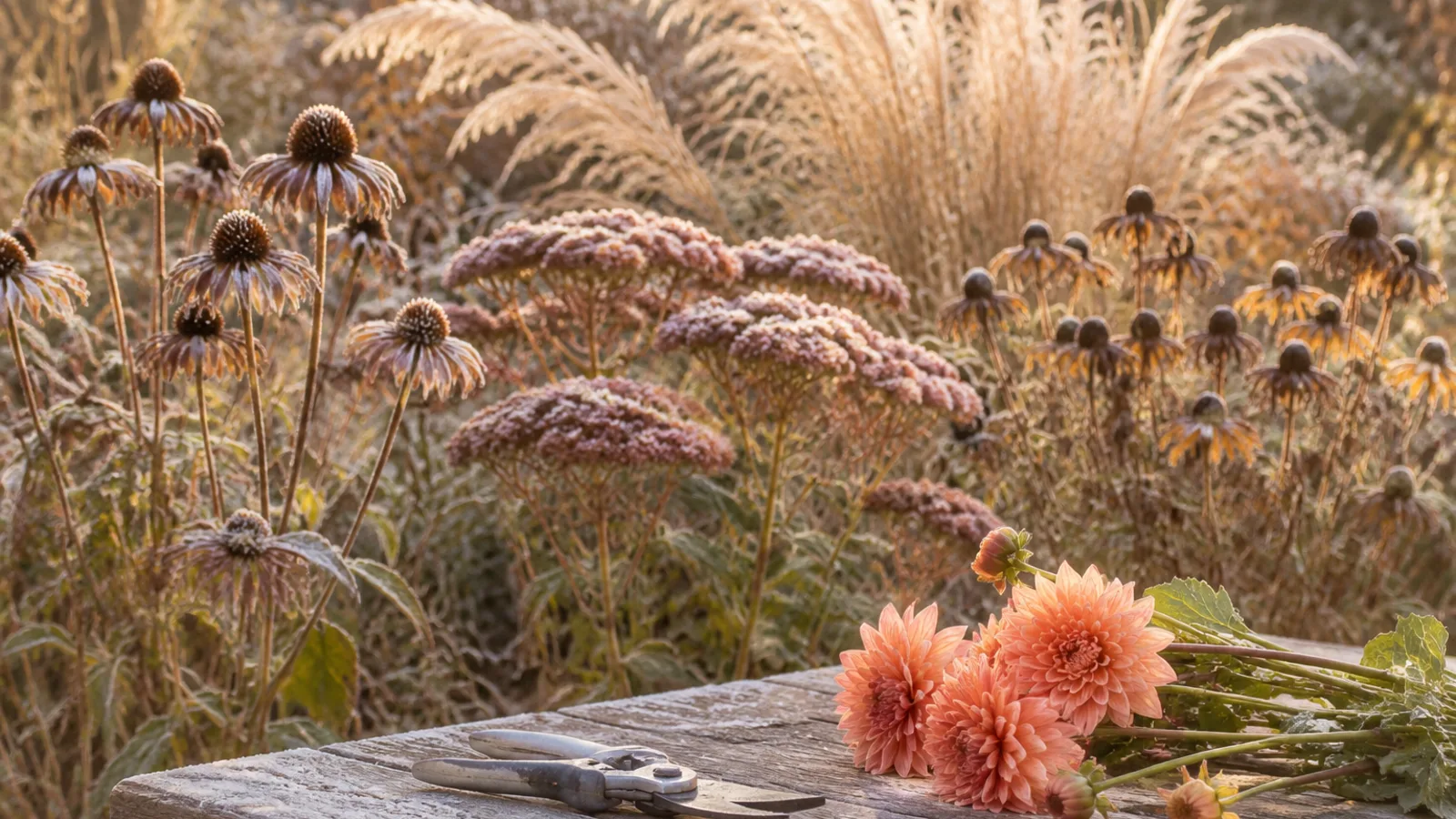
It happens every October. You walk outside, look at a border full of browning stems and sprawling seedheads, and wonder whether the responsible thing is to tidy it all away or leave the whole thing standing as frosted winter architecture. The honest answer is: it depends — and knowing what to cut back in autumn is less about following a named list and more about understanding the reasoning behind each decision. Get that reasoning right and you can make the call on anything in your garden, long after you have put this article down.
The two things you need to weigh are straightforward: whether a plant is carrying disease or pests that will overwinter and cause problems next year, and whether its standing foliage, stems, or seedheads are doing something useful — protecting the crown, feeding birds, or sheltering insects through the cold months. Most plants fall clearly on one side. A handful sit in the middle, and those are the ones worth paying closest attention to.
Before You Pick Up the Secateurs
Ask yourself two questions about each plant before you cut.
- Is this plant showing signs of disease, mildew, rot, or pest damage that could carry over to next season?
- Does leaving it standing protect the crown, provide food for birds, offer shelter for insects, or add structure to the garden in winter?
A yes to the first question is almost always a reason to cut and clear — and to dispose of carefully rather than composting. A yes to the second is usually a reason to leave. Where the answer to both is yes, timing and method matter more than a simple cut-or-leave verdict.
At a Glance: The 3-Second Rule
- Disease or rot on the foliage? Cut back and dispose — do not compost.
- Vulnerable crown or borderline-hardy? Leave or cut lightly; protect with mulch.
- Seedheads, hollow stems, or strong structure? Leave until late winter.
One point worth making once: sharp, clean secateurs reduce the risk of disease entering at the cut. Wipe blades between plants if you are working through anything showing mildew or rot.
What to Cut Back in Autumn: The Clear Cases
Disease-prone perennials
Phlox and monarda (bee balm) are both highly susceptible to powdery mildew, and that mildew overwinters on spent foliage. If you leave the stems standing, the spores are right there to reinfect new growth the following spring. Cut both to ground level once the foliage has died back, and do not put the material in your compost heap — bin it or burn it if local rules allow.
Hostas and other soft-leaved perennials are worth clearing before the leaves collapse into wet sludge after the first hard frost. Dying hosta foliage left to rot at the base can provide overwintering sites for slug eggs; clearing it before that stage removes the opportunity without waiting for frost to do the work for you. The difference in spring slug pressure can be noticeable.
Iris showing brown rot, leaf spot, or fan rot at the base should be cut back and cleared entirely. Leave healthy iris fans in place — they continue to photosynthesize in mild spells — but anything marked with disease comes out.
Tender plants that need clearing before they can be protected
Dahlias need their top growth removed once the first hard frost has blackened the stems. Cut to around 15 cm (6 inches) above the ground. What you do next depends on where you garden: in colder regions — USDA hardiness zone 7 and below, most of Canada, most of the UK outside the mild coastal southwest, and cooler parts of southern Australia — lift the tubers, let them dry for a week or two, then store in a frost-free place in barely damp compost or vermiculite. In warmer zones, leaving tubers in the ground under a generous layer of dry mulch usually works well. Either way, clearing the blackened top growth first prevents rotting stems from sitting against the crown through winter. That is where rot takes hold.
Cannas follow similar logic. Their thick stems hold moisture and rot readily if left standing in wet conditions. Cut back after the first frost, then lift or mulch depending on your climate.
Annuals and finished vegetable plants
Clear these without hesitation. Spent annuals and the remains of vegetable crops offer no winter value and can harbour disease and overwintering pests. Compost healthy material; dispose of anything showing disease separately.
What to Leave Standing Through Winter
Ornamental grasses
This is the category where the urge to tidy causes the most damage. The foliage of ornamental grasses is not merely decorative in winter — it is functional. It insulates the crown, the plant's most vulnerable point, against the freeze-thaw cycles that can kill it outright. Cutting an ornamental grass hard in autumn exposes that crown to exactly the conditions that do it the most harm.
Leave grasses untouched until late February or early March, or until you can see new green shoots beginning at the base. Then cut the whole clump down to around 10–15 cm. This applies to miscanthus, pennisetum, molinia and calamagrostis, among others. The frosted plumes are, as a side note, one of the genuinely beautiful things in a winter garden — the kind of sculptural silhouette that earns its keep long after the last flower has faded.
Perennials with architectural seedheads
Echinacea (coneflowers) are perhaps the best-known example of a plant that earns its place in winter. The spiky seedheads are actively worked by goldfinches and other small seed-eating birds through the coldest months. Leave them until late winter — if you have goldfinches in your area, you will watch them using the seedheads if you do.
Rudbeckia (black-eyed Susan) offers the same feeding value and the same guidance. The stems are strong enough to hold their structure through hard frosts, and the seedheads remain full well into winter.
Sedum (now reclassified as Hylotelephium) has flat-topped seedheads that hold frost beautifully and provide landing platforms for birds. The standing stems also help protect the crown from waterlogging in wet winters. Leave until spring.
Verbena bonariensis self-seeds productively and feeds sparrows and finches through winter. Rather than cutting to the ground in spring, cut to around 30 cm — the hollow stems provide overwintering sites for small solitary bees.
Teasel, if you have it and it is not spreading too aggressively, is worth leaving for the birds. If it is seeding itself where you do not want it, cut after the birds have finished feeding but before the seeds disperse fully in early spring.
Why hollow stems matter more than most gardeners realise
Many solitary bees and beneficial insects overwinter inside hollow or pithy stems. Cutting to ground level in autumn destroys that habitat at exactly the point it is most needed. Cutting to 15–20 cm in late winter — once you can see new growth beginning — keeps the habitat intact through the period it matters, then removes it tidily when it has served its purpose.
This applies to rudbeckia, echinacea, agastache and the dried stems of fennel, among others. It is a small change in habit with a disproportionately large effect on the garden's ecology.
The Borderline Cases: Where Timing Decides
Penstemons
Do not cut penstemons hard in autumn. The old foliage and stems protect the crown through winter, and removing them in autumn is one of the most common reasons penstemons fail to come back in spring — particularly in the UK and in the northern US. Tidy lightly if you need to, but save the full cut-back for mid-spring, when new growth is visibly under way from the base.
Salvias: hardy versus half-hardy
When pruning perennials in autumn, salvias are the plant most likely to catch you out because the right action depends entirely on the variety. Hardy salvias — Salvia nemorosa, S. x sylvestris — can be cut back after flowering without concern. Half-hardy salvias — S. guaranitica, S. microphylla and similar — need their top growth left as insulation for the crown in colder areas, with the cut happening in spring. If you are unsure which type you have, leave it until spring.
Agapanthus
Evergreen agapanthus varieties should not be cut back at all. For deciduous varieties, remove dead foliage but leave some material around the crown as protection, especially where temperatures regularly drop below around -5°C (23°F). A layer of straw, evergreen boughs, or dry bark mulch over the crown, held in place loosely, provides meaningful insulation without smothering the plant.
Lavender: resist the autumn tidy
Never hard-prune lavender in autumn. Light deadheading after summer flowering is fine, but cutting into old wood as temperatures drop risks killing the plant if winter turns hard. The main structural cut — taking back by around a third — happens in early spring, or just after the main summer flush of flowering. Autumn hard-pruning is the single most common reason lavender dies in British, Australian, and northern North American gardens.
After You Cut: Mulching and Useful Untidiness
Once tender plants or bare crowns have been cleared, a layer of well-rotted compost or bark chips — roughly 5–10 cm deep — insulates the roots through winter without smothering growth points. Apply it after the ground has had its first proper frost rather than before: mulching on warm soil can encourage late growth that then gets caught by frost.
When it comes to what to do with cleared material: healthy green waste composts well. Foliage carrying powdery mildew, blackspot, rust, or significant slug damage should not go into a home compost heap, since domestic heaps rarely reach temperatures high enough to kill pathogens reliably. Bag it and bin it.
Finally, leave some untidiness deliberately. A pile of dead leaves in a sheltered corner, a bundle of hollow stems tied loosely to a fence post, a patch of bare soil near a sunny wall — none of these is neglect. They are habitat, and the garden will reward you for them.
Frequently Asked Questions
When exactly should I start cutting back in autumn — is there a date?
There is no universal date, and tying your garden calendar to the clock rather than to what you see in front of you often causes mistakes. A more useful trigger is the state of the plant: once foliage has died back, been blackened by frost, or is showing disease, it is ready to clear. For plants you are leaving standing, the trigger is simply spring — specifically the moment you see new growth beginning at the base.
I missed autumn — can I cut things back in December or January instead?
For most plants, yes. Ornamental grasses, rudbeckia, echinacea and other seedhead plants can be cut back any time from late winter. Dahlias and cannas are the exception: once left in the ground uncut through a wet autumn and winter, the risk of crown rot rises. If you are lifting tubers late, check them carefully for soft or rotten sections before storing.
Should ornamental grasses be cut back in autumn or left until spring?
Leave them until late winter or early spring — late February to mid-March is about right for most of the UK, US, Canada, and cooler parts of Australia. The standing foliage insulates the crown against frost damage. Cutting in autumn exposes the crown to freeze-thaw cycles at exactly the wrong time, and is one of the more reliable ways to kill an otherwise robust plant.
What do I do with dahlias — cut them back, or lift the tubers?
Cut the blackened stems back to around 15 cm first, regardless of what you do next. Then: if you are in a region with reliably cold winters, lift the tubers, dry them for a week or so, and store in a frost-free spot. If your winters are mild and reliably above freezing, leaving tubers in the ground under a thick dry mulch usually works well. The critical error is leaving the blackened top growth sitting against the crown in wet conditions — that is where rot takes hold.
Can I hard-prune my lavender in autumn to keep it tidy?
No — this is worth resisting even when the plant looks untidy. Hard pruning into old wood in autumn, as temperatures are falling, leaves the plant vulnerable if winter is harsh, and lavender does not reliably regenerate from old wood the way some shrubs do. Keep autumn tidying light. The structural cut belongs in early spring, once you can see new growth, or directly after the main summer flowering period.
The Short Version
Deciding what to cut back in autumn comes down to three questions: Is the plant carrying disease? Is the crown vulnerable without its foliage? And does it have seedheads or hollow stems that are doing something useful? Answer those honestly for each plant and the right call becomes straightforward — even for the ones not covered here. The goal is a garden that is tidied where tidying genuinely helps and left standing where standing genuinely matters.






Join the conversation
Sign in — Sign in to join the conversation.