
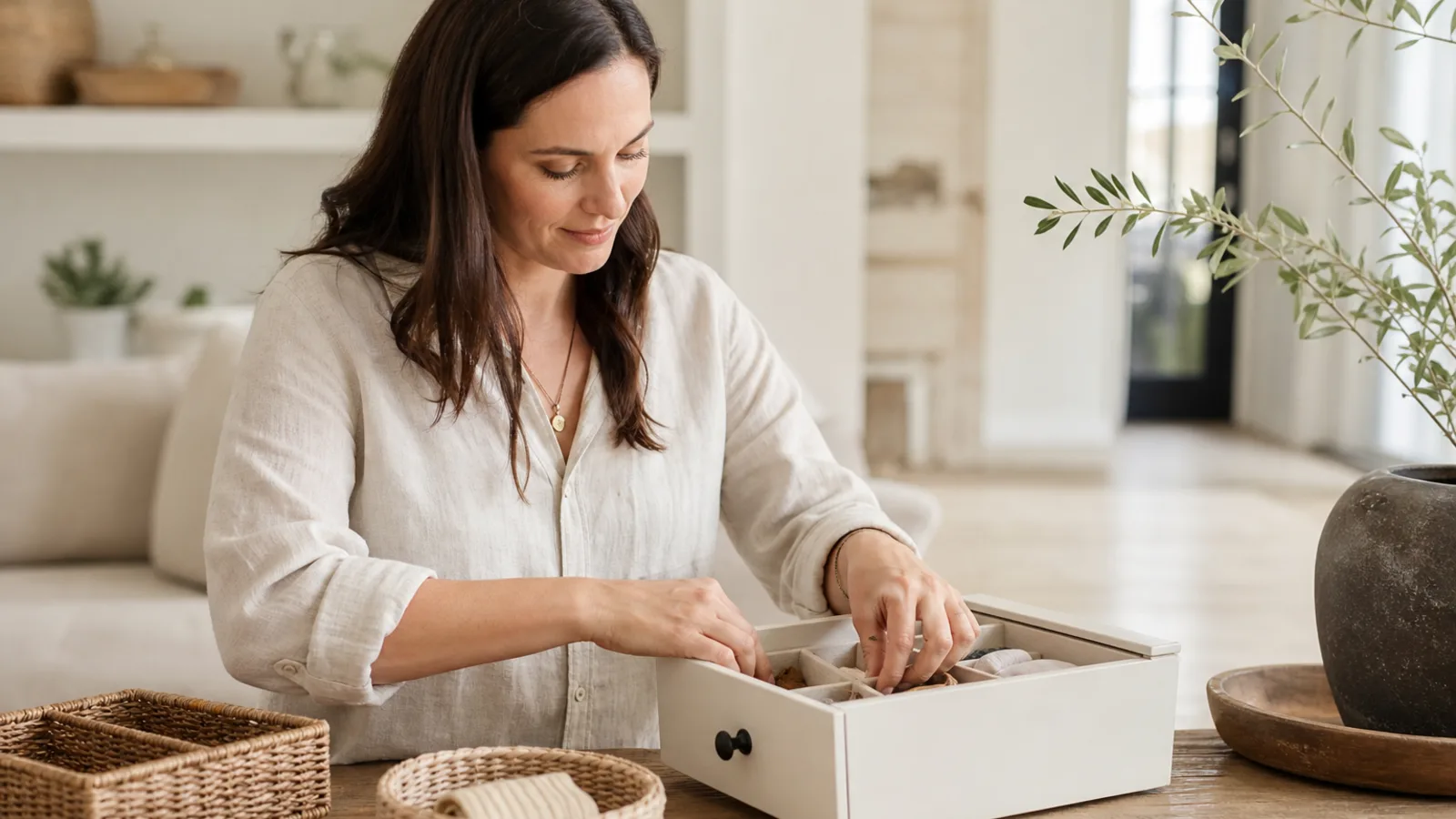
If you’ve been staring at a messy room, a cluttered cupboard, or an entire house that feels impossible to untangle, you’re not alone. The hardest part of learning how to organize a home is often not the tidying itself. It’s knowing where to begin without making a bigger mess, wasting money on the wrong storage, or burning out before you see a result.
The good news: you do not need to organize everything at once. You need a starting system small enough to finish. The easiest way to begin is with one zone, one category, and one finish line. That simple structure helps you make decisions, see progress, and stop before the job turns into a weekend project you never want to repeat.
Think of this as a calm reset, not a transformation marathon. You are not fixing the whole house today. You are choosing one small part of it and making that part work better. That might be a drawer, a shelf, a cabinet, or a table. The category could be papers, toiletries, batteries, socks, or chargers. The finish line is the clear result you want, such as “I can find what I need quickly” or “this space is easy to put back in order after a busy weekday.”
Start with one zone, one category, one finish line
When a home feels out of control, it’s tempting to sort by room, buy a few bins, and hope for the best. But most clutter problems get easier when you narrow the task. A zone gives you boundaries. A category helps you see what you own. A finish line keeps you from endlessly rearranging.
Use this method to reduce decision fatigue. Instead of asking yourself to organize the whole house, ask three smaller questions: Where will I start? What am I sorting? When is this done?
What counts as a zone
A zone is any contained space you can complete in one session. It should be small enough that you can empty, sort, and reset it without getting overwhelmed.
Good starter zones include:
- A junk drawer
- One bathroom cabinet
- A bedside table
- A hallway shelf
- An under-sink cupboard
- One pantry shelf
If you’ve been overwhelmed for a while, start with the space that irritates you most but is still manageable. The goal is a quick win, not a heroic effort.
What counts as a category
A category is a group of similar items: pens, makeup, medicine, cables, cleaning products, or spare toiletries. Organizing by category helps you see duplicates, expired items, and things that have drifted into the wrong place.
This step matters because clutter often hides in plain sight. You may not realize you own five half-used hand creams until you bring them together. You may not notice how many pens are dead until they all sit in one pile.
If the zone contains mixed items, choose the most common category first. For example, a bedside table might hold books, chargers, tissues, and skincare. Start with the category that causes the most clutter or daily frustration.
What counts as a finish line
A finish line is the point where you stop. It keeps the task from turning into “while I’m here, I should do the whole room.”
Examples of a good finish line:
- All pens are in one container, and only working pens stay there
- Daily skincare is together and easy to reach
- This shelf only holds items used in this room
- Papers are sorted into action, file, and recycle
- The drawer opens smoothly and closes without fighting the contents
A finish line should also survive a normal busy day. If the system collapses the moment life gets messy, it’s too complicated. Simplicity is what makes it useful.
Choose one small win
If you’re unsure where to begin, choose the smallest visible space that will improve your day. Many people assume they should start with the worst room, but that often leads to decision fatigue. Starting smaller builds confidence and gives you a sense of momentum.
A good first zone is usually:
- Visible enough to feel rewarding
- Small enough to finish in under an hour or two
- Low-stakes emotionally
- Used often enough that the improvement will matter
For example, instead of tackling the entire kitchen, start with one utensil drawer. Instead of the whole bathroom, choose the cabinet under the sink. Instead of the whole living room, clear the side table where mail and random items pile up.
If you live with other people, it can help to pick a space that affects everyone a little but belongs to no one in particular. That makes it easier to make changes without needing a family summit first.
Empty only what you can finish
One of the simplest organizing rules is also one of the most useful: only empty a space if you can finish it. Pulling everything out helps you see what you have, but it can become chaotic fast if you choose too large an area.
Use a realistic time limit. If you have 30 minutes, choose a tiny zone. If you have a free afternoon, you can go a little bigger. The point is to avoid starting with a room that will still be in piles when you need to make dinner or leave the house.
Try this approach:
- Clear a surface or floor space nearby.
- Remove everything from the small zone you chose.
- Sort items into simple groups.
- Return only what belongs there.
- Take out anything to donate, recycle, relocate, or throw away.
If you cannot comfortably finish the sorting and putting away in the time you have, the zone is too big. Shrink it.
For example, instead of emptying the whole bathroom, remove only one drawer. Instead of the whole pantry, sort one shelf. Instead of the whole wardrobe, focus on one category like scarves or activewear.
Sort before you buy storage
This is where many people get stuck: they think they need bins, labels, dividers, and matching containers before they can start. In most homes, though, the real issue is not a lack of storage. It is too many items and no clear system.
Sorting first helps you answer the question storage is supposed to solve: what exactly needs to be stored, and how much of it is there?
As you sort, ask yourself three simple questions for each item:
- Do I use this?
- Do I need this?
- Do I genuinely want to keep this?
If the answer is no to all three, let it go. That includes duplicates, broken items, expired products, and things that no longer fit your life.
This is also the moment to be honest about habits. If your family drops shoes by the door, the best system is one that works with that habit rather than fighting it. If you are unlikely to decant everything into pretty jars, don’t design a system that depends on that level of effort.
What to use instead of shopping right away
Before you buy anything, look around your home for temporary containers you already own. Shoeboxes, baskets, trays, laundry bins, and sturdy cardboard boxes can all help while you figure out what stays.
That keeps you from spending money on containers that turn out to be the wrong size, too deep, too narrow, or simply unnecessary. It also helps you see the true shape of the problem before you try to solve it with products.
If you do need storage later, you’ll know what size and style makes sense. That’s much better than buying a set of bins and then trying to force your stuff to fit them.
Create one simple system for what you keep
Once you’ve sorted your items, give the keepers a home that is easy to understand and easy to maintain. A good organizing system should be simple enough that you can put things back without thinking too hard.
Here are a few principles that help:
- Keep like with like
- Put the most-used items in the easiest-to-reach spot
- Store backups, extras, and seasonal items elsewhere
- Don’t make the system more complicated than the household will actually follow
For example, you might keep daily skincare in one small bin on a bathroom shelf and backup products in a separate box. In the kitchen, you might keep everyday utensils in a drawer and specialty tools in a separate container. In a hallway, you might use one basket for each family member’s out-the-door essentials.
A good system is not just tidy. It is usable. If a setup looks great but takes too long to maintain, it will probably fail once real life returns.
Examples of simple systems by zone
Kitchen drawer: Group cooking tools in one section, baking tools in another, and remove duplicates. The finish line might be: “I can reach the spoon I need without moving three things first.”
Bedroom nightstand: Keep only the items used every night, such as a lamp, current book, charger, and hand cream. Everything else can move elsewhere.
Bathroom cabinet: Put daily products at eye level, extras in a labeled box, and expired or unused products out of the space entirely.
Entryway: Use one basket or tray for keys, sunglasses, and other grab-and-go items. Add a separate place for shoes or bags if needed.
Paper pile: Split mail into action, file, and recycle. The “action” pile should stay small enough to process quickly.
Give every item a home, then stop
A home is easier to maintain when each item has a designated place. That doesn’t mean every item needs a glamorous container. It just means you should know where it goes when you’re done using it.
This is also where you set a finish line and stop. A session should end with the space functional, not with you questioning every object you own. It’s better to complete one shelf well than to half-finish three rooms.
Before you stop, do a quick reset:
- Return every keep item to its place
- Remove donation and trash bags from the room
- Check that the space opens, closes, and functions easily
- Make sure the most-used items are the easiest to reach
If you can honestly say, “This space now works better for my life,” you’re done.
How to keep going without burning out
Once you’ve finished one zone, repeat the same process somewhere else. Do not jump to a bigger system until the first one is working. The most reliable way to build order in a home is through a series of small, repeatable wins.
You might decide to organize one zone each weekend, one drawer a day, or one shelf whenever you have time. There is no prize for speed. Consistency matters far more than doing everything at once.
If you’re short on energy, keep the next task tiny. One shelf counts. One drawer counts. One corner counts. Progress is still progress, even when it looks modest.
It also helps to remember that homes are maintained, not permanently solved. Things drift. Life changes. New items come in. The point is not to create a perfect system forever. The point is to make your home easier to live in now.
Common mistakes to avoid
When people try to learn how to organize a home, they often make the same few mistakes. Avoiding them can save you time and frustration.
- Buying bins too early. Storage should fit what you keep, not the other way around.
- Starting with the biggest room. A smaller win gives you more momentum.
- Organizing by room when the real issue is a category. Sometimes all the batteries, for example, need to be gathered first.
- Keeping too many “maybe” items. Maybe means the item is still taking up space without serving a clear purpose.
- Skipping a finish line. Without one, organizing can turn into endless shuffling.
- Creating a system that only works on a good day. Real-life systems need to survive busy mornings, tired evenings, and other normal disruptions.
If you can avoid those traps, the whole process becomes simpler and much less overwhelming.
FAQ
Where should I start when organizing my whole house?
Start with one small zone that you use often and can finish in one session. A drawer, shelf, cabinet, or table is usually a better place to begin than an entire room. Pick a space that gives you a visible win without draining your energy.
Should I declutter before I buy storage bins?
Yes, in most cases. Sorting first helps you understand what you actually need to store and how much of it there is. If you buy containers too early, you may end up forcing your things to fit the bins instead of choosing storage that truly works.
How long should I spend organizing at one time?
As long as you can stay focused and finish the zone you chose. For many people, that might be 20 to 60 minutes. If the area is still not done when your time runs out, the zone was probably too big.
What if I get overwhelmed halfway through?
Pause, put one category back, and make the task smaller. Sometimes the best move is to stop for the day and return later with a clearer plan. Overwhelm is usually a sign that the zone or category needs to be narrowed.
How do I keep my home organized after I finish?
Make it easy to put things back where they belong. Keep the most-used items accessible, create simple homes for everyday things, and do small resets regularly. A few minutes of maintenance is usually easier than letting clutter build until it feels unmanageable again.
If you’re trying to figure out how to organize a home, remember this: you do not need a perfect plan or a full set of matching containers to begin. Start with one zone, one category, and one finish line. That simple system helps you make real progress without getting stuck in decision overload or unnecessary shopping. Once one small space works better, the next one becomes much easier, and the whole house starts to feel more manageable.


Join the conversation
Sign in — Sign in to join the conversation.