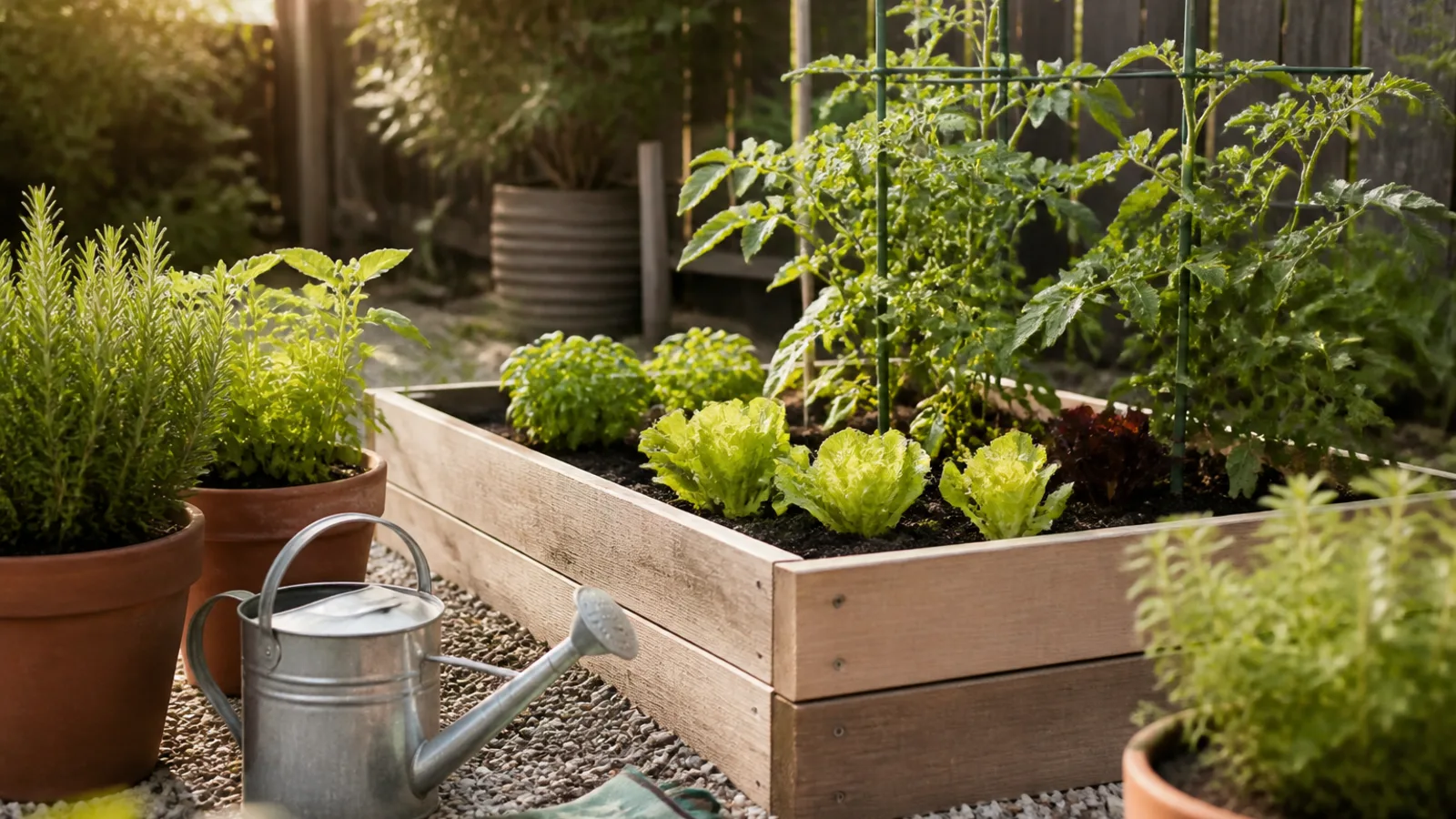
Learning how to start a vegetable garden can feel more complicated than it should. One person tells you to build raised beds, another swears by containers, and seed packets often sound as if you already know your climate, frost dates and soil type.
The truth is simpler: your first vegetable garden does not need to be big, perfect or expensive. It needs a sunny, practical spot, a few crops that match your season, and a routine you can keep up with after the excitement of planting day has passed.
This first-season guide walks you through the decisions that matter most: where to put the garden, whether to grow in the ground, raised beds or pots, how to prepare soil, which crops are easiest, how to water, and what mistakes cause beginners to quit.
Start small: what a first vegetable garden should actually look like
The most common beginner mistake is starting with a garden that looks impressive in spring and overwhelming by midsummer. A smaller garden that you can water, weed and harvest easily will teach you far more than a large plot you start avoiding.
For a first season, choose one simple setup:
- One raised bed, such as 4 x 4 ft or 4 x 8 ft.
- A few large containers on a patio, balcony or sunny doorstep.
- A small in-ground patch, roughly 3 x 6 ft or 4 x 8 ft.
Pick three to six crops at most. A realistic beginner garden might include cherry tomatoes, lettuce, bush beans, basil and radishes. That gives you something productive, something leafy, something quick and something you will actually use in the kitchen.
Your first-season goal is not a perfect harvest. It is learning what grows well in your light, your soil and your routine.
Choose the right spot by sunlight, water and convenience
Sunlight is the first filter
Most fruiting vegetables need a bright position with at least six hours of direct sun. Tomatoes, peppers, cucumbers, squash, courgettes, zucchini and beans usually perform best in the sunniest part of the garden.
Leafy greens and many herbs can tolerate a little less sun, especially in hot climates. If your patio gets four to five hours of sun, you may have better results with lettuce, spinach, parsley, chives and mint than with large tomato plants.
Before you dig or buy containers, watch the space for a full day. Notice when the sun arrives, when shade falls and whether fences, trees or buildings block the light. Morning sun is gentler; strong afternoon sun can be useful in cool climates but drying in hot ones.
Put the garden near water
A vegetable garden that is easy to water is far more likely to survive. Choose a spot near an outdoor tap, hose or practical watering route. Containers need particular attention because they dry out faster than in-ground beds, especially in warm or windy weather.
If watering requires carrying heavy cans across the house twice a day in summer, you may quickly lose enthusiasm. Convenience is not laziness; it is good garden design.
Avoid risky or frustrating areas
Avoid deep shade, low soggy ground, heavily compacted soil and very windy corners. Do not plant edible crops where pets regularly toilet, or in soil with an unknown history of contamination.
Be especially cautious in older urban yards, near old painted walls or foundations, beside busy roads, or on former industrial land. In the US, homes built before 1978 may have higher lead-paint soil risk around the drip line of the house; older buildings in other countries can pose similar concerns. If you are unsure, arrange a professional soil test through a local lab, extension service or environmental authority before growing edible crops in the ground.
For questionable soil, use deep containers or raised beds filled with fresh growing mix. Where contamination is a concern, place raised beds over a suitable barrier, such as geotextile fabric, and seek local advice on safe depth and installation.
In-ground, raised bed or containers: which is best?
In-ground garden
An in-ground bed is often the lowest-cost option if you have a suitable yard. Roots can spread, soil usually holds moisture better than pots, and you do not need to buy a bed frame.
The trade-off is that existing soil may be weedy, compacted, rocky or heavy with clay. To start simply, remove grass and weeds, loosen the top layer with a garden fork, and mix in compost or well-rotted organic matter.
Raised bed
A raised bed is a good choice if your soil is poor, your ground is compacted, or you want a tidy, contained layout. Raised beds give you more control over the growing mix and can be easier to reach and maintain.
They do cost more upfront and often dry out faster than in-ground beds. They also need enough soil or raised-bed mix to fill them. For most beginner vegetables, a bed with good drainage and enough depth for healthy roots matters more than an elaborate design.
Containers
Containers are ideal for renters, balconies, patios and small spaces. They let you grow food without digging and can be moved if you need to chase the sun.
The key is choosing pots that are large enough and have drainage holes. As a practical starting point, use at least a 5-gallon or 19-litre container for a compact cherry tomato, and go larger for vigorous or indeterminate varieties. Peppers usually need at least 3 to 5 gallons or about 11 to 19 litres. Salad greens and many shallow herbs can grow well in wide troughs that are at least 6 to 8 inches, or 15 to 20 cm, deep. Courgettes and zucchini need much more room, often closer to a large tub than a patio pot.
Use potting mix rather than ordinary garden soil, which can compact in containers and drain poorly. If you garden on a balcony, check building rules, weight limits and water runoff. Drip trays or saucers can protect surfaces and neighbours below, but empty excess water so roots are not sitting in stagnant water.
Understand timing: frost dates matter more than generic calendars
Vegetable gardening advice often says to plant in a particular month, but that only works if your climate matches the writer’s. A gardener in Toronto, Sydney, Edinburgh and Atlanta will not follow the same schedule.
Instead, learn two local markers:
- Your last spring frost date: the approximate point after which frost becomes less likely.
- Your first autumn or fall frost date: the approximate point when frost risk returns.
These dates are estimates, not guarantees, but they help you understand your growing season. In the US, local extension services are a strong place to start; many are connected to land-grant university programs listed by the USDA. In the UK, the Royal Horticultural Society offers reliable gardening guidance. In Canada and Australia, provincial, state or local gardening resources and reputable nurseries can help you match planting times to your area.
In frost-free, subtropical or Mediterranean climates, the main challenge may be summer heat rather than winter cold. Coastal parts of Australia, Florida, southern California and similar regions often grow many cool-season crops through mild winter months, while delicate greens may struggle in peak summer. Always adjust the advice to your local heat, rainfall and frost pattern.
Cool-season vegetables
Cool-season crops prefer mild weather and often struggle in heat. Beginner examples include lettuce, spinach, peas, radishes, kale and spring onions or green onions. In many climates, these are suitable for early spring or autumn planting; in mild regions, winter may be the easier season.
Warm-season vegetables
Warm-season crops need settled warmth and should not be rushed outdoors before frost risk has passed. Tomatoes, peppers, cucumbers, beans, courgettes, zucchini and basil all prefer warmer conditions.
If your growing season is short, buying tomato and pepper seedlings is usually easier than starting them from seed. You gain several weeks of growth and avoid the fussier indoor seed-starting stage.
How to start a vegetable garden with beginner-friendly crops
The best first crops are the ones that suit your space, season and kitchen. If you never eat kale, do not grow a bed full of kale because someone said it is easy. Motivation matters.
Three seeds to direct-sow
- Radishes: quick to mature and useful for learning spacing and harvest timing.
- Lettuce and salad greens: good for repeat harvests when picked leaf by leaf.
- Bush beans: productive, straightforward and easier than climbing types if you do not want tall supports.
Three seedlings to buy at the nursery
- Cherry tomatoes: easier as young plants, especially in short-season climates.
- Peppers or chillies: slow from seed and simpler to start with transplants.
- Herbs: basil, parsley, thyme and rosemary are useful immediately and easy to tuck into small spaces.
A balanced first garden might include one fruiting crop, one leafy crop, one root crop and one herb. For example: cherry tomato, lettuce, radishes and basil.
Crops beginners may want to delay
Some vegetables are not impossible, but they can be less forgiving. Cauliflower, celery, melons and large pumpkins tend to need more space, timing and consistency. Carrots can be easy in loose soil but frustrating in compacted or rocky ground. Sweetcorn needs space and grouping for good pollination, so it is rarely ideal for a tiny first garden.
Prepare the soil simply
For in-ground beds
Remove grass and weeds first. Loosen the soil with a garden fork, working in compost or well-rotted organic matter. Avoid digging when soil is waterlogged; wet soil can compact into clods that are difficult for roots to move through.
If you plan to grow a large garden, have repeated poor results, or are concerned about lead, chemical residues or pH, arrange a soil test through a local laboratory, extension service or council-approved resource.
For raised beds
Fill raised beds with a quality mix suitable for vegetables, often sold as raised-bed mix or blended topsoil and compost. Avoid filling the root zone only with fresh wood chips or uncomposted material, which can cause problems as it breaks down.
Soil in raised beds settles over time. That is normal. Top up with compost or suitable mix between seasons.
For containers
Use potting mix, not garden soil. Choose containers with drainage holes and place them where excess water can escape safely. Fruiting plants in pots may need feeding during the season because nutrients wash out with repeated watering.
A beginner does not need a shelf full of amendments. Compost, a suitable growing mix and sensible watering will take you a long way.
Harden off seedlings before you plant them
Many nursery and indoor-grown seedlings have been protected from direct sun, wind and cool nights. If you plant them straight into the garden on a bright day, they can wilt, scorch or stall.
Hardening off means gradually introducing seedlings to outdoor conditions before planting them permanently. For several days, place them outside in a sheltered, lightly shaded spot for a few hours, then increase their outdoor time and light exposure. Bring them in if nights are cold or weather is rough. After about a week, depending on conditions, most sturdy seedlings are better prepared for transplanting.
This step matters most for tomatoes, peppers, cucumbers, basil and other tender warm-season plants.
Plant with spacing and access in mind
Seedlings look tiny, so it is tempting to squeeze them together. Resist that urge. Spacing affects airflow, light, root growth, disease pressure and how easy plants are to harvest.
Read the seed packet or plant label, then thin seedlings when needed. Thinning means removing extra seedlings so the remaining plants have room to grow. It can feel wasteful, but overcrowded plants usually perform worse.
Make sure you can reach your plants without stepping on the growing soil. A 4 ft wide bed is popular because many people can reach the middle from both sides. Leave room for watering, weeding and harvesting.
Put supports in early. Tomatoes, peas, cucumbers and climbing beans are much easier to train before they sprawl. In a small bed, place taller crops where they will not shade shorter ones for most of the day, adjusting for your hemisphere and sun path.
Water the right way in your first season
Check soil before you water
There is no universal watering schedule. Weather, soil type, container size, plant age and wind all change how quickly a garden dries out.
Use your finger as a simple moisture gauge. If the top layer is dry and the soil below is starting to dry, it may be time to water. Seedlings need steady moisture while they establish. Larger plants usually prefer deeper, less frequent watering rather than a quick daily sprinkle.
Water the soil, not the leaves
Water at the base of plants when possible. Wet leaves can encourage some plant diseases, especially if they stay damp overnight. Morning watering is often helpful because plants start the day hydrated and foliage has time to dry.
Mulch can reduce evaporation and suppress weeds once seedlings are established. Straw, shredded leaves, fine bark or compost can work, depending on what is available and appropriate in your area.
Learn the signs of stress
Underwatered plants may wilt, grow slowly or sit in dry, pulling-away soil. Overwatered plants may sit in soggy soil with yellowing leaves and weak roots. Some plants wilt briefly in intense afternoon heat even when the soil is moist, so check before adding more water.
A tomato in a pot on a hot patio may need much more frequent watering than lettuce growing in the ground. Containers require the closest attention.
Feed plants without overdoing it
Compost improves soil structure and adds nutrients gradually, but heavy-feeding crops may need extra fertiliser. Tomatoes, peppers, cucumbers, courgettes and zucchini usually need more nutrition than many herbs or leafy greens.
Follow the product label. More fertiliser is not better and can damage plants or run off into waterways. Too much nitrogen may produce lush leaves but fewer fruits on some crops.
Organic and synthetic fertilisers can both be used responsibly. The important part is matching the product to the crop and using the correct amount. Container vegetables may need feeding sooner than in-ground plants because watering gradually flushes nutrients from the potting mix.
Keep weeds, pests and problems manageable
Weed little and often
Small weeds are easy to pull. Large weeds compete with your vegetables for water, light and nutrients. Spend a few minutes each week removing weeds before they become established. Mulch bare soil once plants are settled to reduce new weed growth.
Check plants regularly
A five-minute check every few days can prevent many problems. Look under leaves, inspect new growth and notice changes in colour, holes or wilting. Not every insect is harmful, so identify the issue before treating it.
Your local extension service, garden centre or horticultural society may be able to help identify pests and diseases common to your area.
Start with gentle responses
Hand-pick larger pests where practical. Use netting, collars or barriers if they suit the problem. Avoid broad spraying when you do not know what you are treating, as it can harm beneficial insects as well as pests.
Accept a little imperfection. A few holes in lettuce leaves do not mean the crop has failed. Homegrown food rarely looks supermarket-perfect.
Know when and how to harvest
Harvesting is not just the reward; it is part of plant care. Many vegetables produce better when picked regularly.
- Lettuce: cut outer leaves and let the centre keep growing.
- Radishes: pull when they reach usable size; waiting too long can make them woody or hot.
- Beans: pick regularly once pods are ready.
- Courgettes and zucchini: harvest while modest in size for better texture and continued production.
- Tomatoes: pick when fully coloured, or let nearly ripe fruit finish indoors if bad weather is coming.
Do not wait for everything to become enormous. Oversized vegetables can become tough, bitter or seedy.
A simple first-season vegetable garden plan
Sample 4 x 8 ft raised bed
- Back or sun-appropriate tall area: one cherry tomato with a cage or stake.
- Middle row: bush beans, spaced according to the packet.
- Front edge: lettuce or salad greens for easy picking.
- Quick fillers: radishes between slower crops early in the season.
- Herb corner: basil or parsley near the front.
If space is tight, skip the courgette or zucchini and choose peppers, extra herbs or more greens instead.
Sample patio container garden
- One 5-gallon or larger pot with a compact cherry tomato and support.
- One or two 3 to 5-gallon pots with peppers or bush beans.
- A trough at least 6 to 8 inches deep with lettuce or salad greens.
- Several herb pots with basil, parsley, chives or thyme.
- An optional compact cucumber in a large container with a support.
Group pots where they are easy to water. Use potting mix, make sure every container drains, and choose compact varieties when space is limited.
Your first-week checklist
- Observe your sunlight for a full day.
- Choose in-ground, raised bed or containers.
- Look up your local frost dates and growing season guidance.
- Pick three to six beginner crops you actually eat.
- Buy seeds, seedlings, compost or potting mix, labels and any needed supports.
- Prepare the bed or containers.
- Harden off tender seedlings before transplanting.
- Plant according to packet or label spacing.
- Water gently and label everything.
- Check plants every few days.
Basic tools and supplies beginners actually need
- Hand trowel.
- Watering can or hose with a gentle spray.
- Gardening gloves.
- Compost, raised-bed mix or potting mix.
- Seeds or seedlings.
- Plant labels.
- Stakes, cages or trellis for crops that need support.
- Scissors or pruners for harvesting.
- Optional mulch, soil test and kneeling pad.
FAQ
What is the easiest vegetable to grow for beginners?
Radishes, lettuce, bush beans and courgettes or zucchini are often beginner-friendly. The easiest choice still depends on your climate, season and space. Herbs such as basil, parsley and chives are also rewarding because you can harvest small amounts often.
What month should I start a vegetable garden?
It depends on your local climate and frost dates. Cool-season crops may suit early spring, autumn or mild winter in many regions, while warm-season crops should wait until frost risk has passed and weather is reliably mild to warm. Use local guidance rather than a generic month.
Is it better to start vegetables from seeds or seedlings?
Most beginners do best with both. Seeds are affordable and work well for radishes, lettuce, beans and peas. Seedlings are easier for tomatoes, peppers, chillies and many herbs because they save time and reduce early-stage fuss.
Can I start a vegetable garden if I only have a balcony?
Yes, if the balcony gets enough sun and containers are allowed and safe for the space. Use large pots with drainage, choose compact varieties, check building rules and weight limits, and manage runoff with trays that do not leave roots sitting in water.
How often should I water a beginner vegetable garden?
There is no single schedule. Check the soil with your finger and adjust for heat, wind, rain, container size and plant age. Seedlings and containers dry out faster. Established in-ground plants usually prefer deeper watering rather than frequent shallow sprinkling.
Your first harvest starts small
The simplest way to learn how to start a vegetable garden is to begin with a space you can manage, choose the sunniest practical spot, plant crops that match your local season, and build a routine you can keep up with.
Start with one bed, one corner or a few pots. Grow food you like to eat. Check your plants often. By the end of the season, you will know more about your light, soil and climate than any generic planting calendar can tell you.



Join the conversation
Sign in — Sign in to join the conversation.