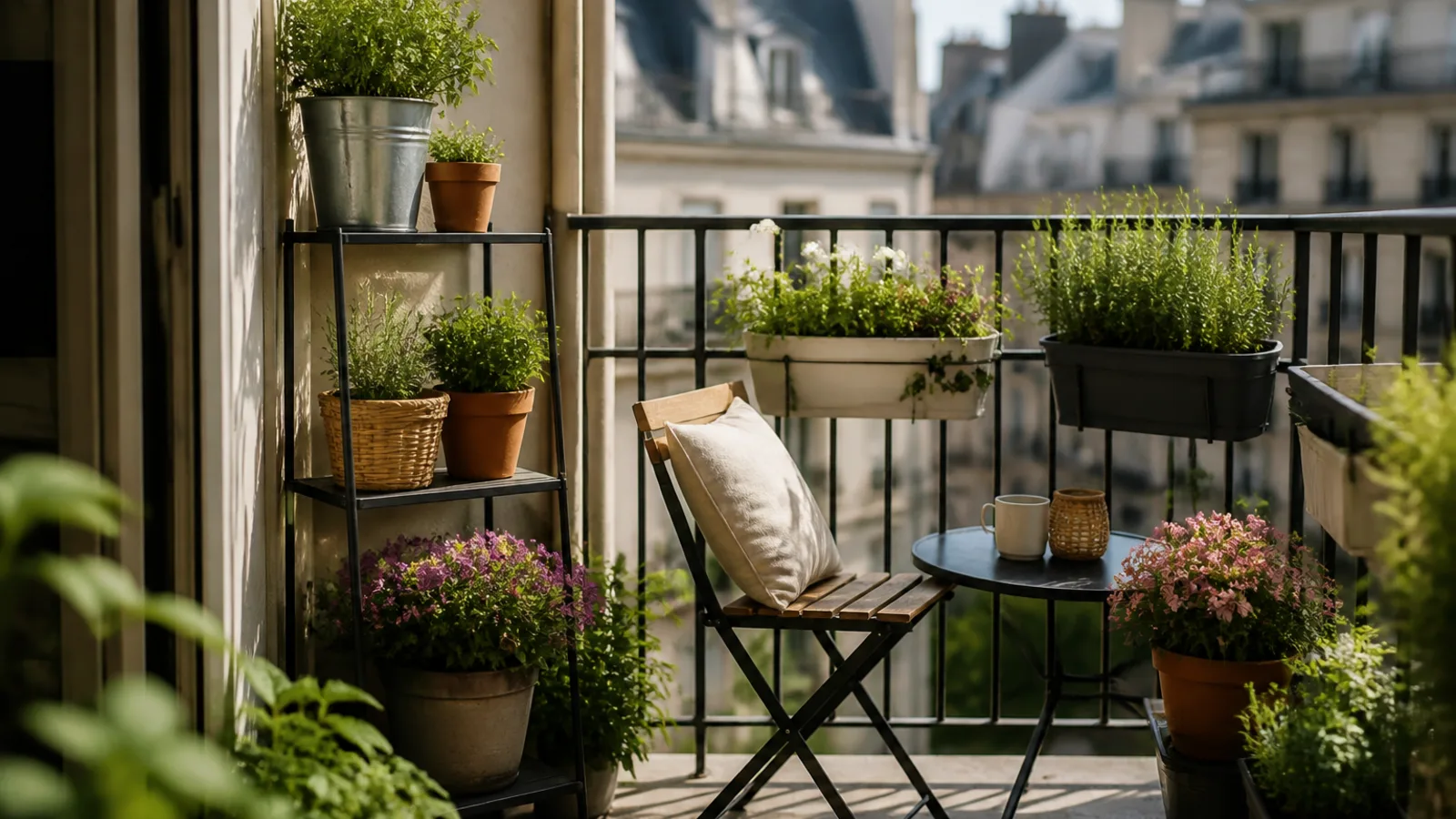
A balcony garden does not need to be a miniature country garden. The best small-space gardens are built around what your balcony can actually handle: light, wind, safe weight, drainage and the amount of watering you will realistically do. For renters and city dwellers, the most useful balcony garden ideas are the ones that look good without risking a lease dispute, a water leak or a row of crispy plants after one hot weekend.
Start with the conditions you have, then choose containers and plants that suit them. A sunny, windy high-rise balcony needs a very different plan from a shaded courtyard or a narrow ledge outside a bedroom. Once you match the right plants to the right spot, even a small balcony can become greener, calmer and surprisingly productive.
Start With Your Balcony Conditions Before Buying Plants
Most balcony garden failures happen before the first pot is planted. The plant may be lovely, but if it hates your light, wind or watering routine, it will struggle.
Check how much sun you really get
As a guide, full sun means around six or more hours of direct sun a day. Part sun or part shade means a few hours of direct sun, often in the morning or late afternoon. Shade usually means bright outdoor light but little or no direct sun.
Direction matters, but it depends on where you live. In the US, UK and Canada, south- and west-facing balconies are often the brightest and hottest. In Australia, north- and west-facing balconies usually get more heat and sun. Nearby buildings, overhangs and glass balustrades can change everything, so watch your balcony over a full day before shopping.
Balconies can also be hotter than garden beds. Brick walls, glass doors, concrete floors and metal railings reflect and trap heat. Solid glass balustrades can create a particularly harsh microclimate because they reduce airflow at floor level. Pots placed directly against hot glass can overheat quickly on sunny days, especially if they are small and dark-coloured.
If that sounds like your balcony, lift pots onto stands, use larger light-coloured containers where safe, and choose tougher plants for the hottest edge.
Notice wind and exposure
Wind dries out pots fast. It can shred soft leaves, snap tall stems and tip over lightweight containers. Higher balconies tend to be windier, and corner balconies can be especially exposed.
If your balcony is windy, choose lower, tougher plants and stable containers. Compact herbs, sedum, lavender, pelargoniums, ornamental grasses and small evergreens are usually more sensible than tall, top-heavy plants. Group pots together so they shelter one another, and avoid narrow plastic pots that can blow over when the soil is dry.
On a windy balcony, the question is not only “Will this plant grow?” but “Will this plant stay upright, hydrated and intact?”
Check rental and building rules
If you rent or live in an apartment building, check the rules before installing anything. Some leases, condo rules, strata rules or body corporate rules restrict rail planters, hanging baskets, drilling, trellises, climbing plants, visible balcony screens, water runoff and heavy pots.
Choose renter-friendly options where possible: freestanding shelves, plant stands, lightweight troughs, tension poles and removable privacy screens. Avoid anything that stains walls, blocks drains, drops soil onto neighbours below or creates a trip hazard.
For balcony load limits, do not guess. Wet potting mix, mature plants and large ceramic containers can become surprisingly heavy. If you want large planters, ask your landlord, building manager or a qualified professional what is safe for your building.
Choose Containers That Make Balcony Gardening Easier
The right container can make the difference between a low-maintenance balcony and a daily rescue mission. Think about drainage, weight and root space before colour and style.
Choose drainage over decorative drama
Most plants dislike sitting in water. Use pots with drainage holes, or keep plants in their plastic nursery pots and place those inside decorative outer pots. This “pot within a pot” method looks tidy and makes it easier to lift the plant out if excess water collects.
If your building does not allow water to drip below, use saucers carefully and empty them after heavy rain. Pot feet can help drainage and reduce staining on the floor. Avoid sealing plants into containers with no drainage unless you are growing something specifically suited to that setup.
Match pot size to the plant
Tiny pots dry out quickly and restrict roots. Larger pots hold moisture longer, but they also weigh more, especially after rain. The balance is to use the largest practical container your balcony can safely handle.
- Small pots: often around 15–20 cm wide, useful for succulents, compact annuals and short-term displays.
- Medium pots: often around 20–30 cm wide, good for basil, parsley, chives, pelargoniums, begonias and small foliage plants.
- Larger deep pots: often 35–45 cm wide or more, better for patio tomatoes, chillies, dwarf shrubs, climbers and plants that need support.
- Rail planters and window boxes: useful for herbs, salad leaves and trailing flowers, but usually too shallow for large edibles.
These are practical starting points, not hard rules. A plant’s mature size, your climate and your watering routine all matter. Use container potting mix rather than heavy garden soil. Garden soil can compact in pots, drain poorly and add unnecessary weight. Many university extension services, such as the University of Minnesota Extension, recommend potting mixes designed for containers when growing vegetables in pots.
Choose lightweight materials where needed
Terracotta and glazed ceramic pots are beautiful, but they can be heavy and may crack in freezing weather. Lightweight resin, fibreglass, plastic, metal troughs and fabric grow bags are often more practical for balconies. Fabric grow bags can be useful for vegetables, though they may dry out faster in wind.
Spread weight around instead of clustering all your largest containers in one corner. If in doubt, keep it modest: a long lightweight trough of herbs is usually a better balcony choice than a huge ceramic planter full of wet compost.
Plan for winter if pots stay outside
Plants in containers are more exposed to cold than the same plants in the ground. In colder regions, potting mix can freeze from the outside in, which may damage roots. If you want perennial plants to stay outside all winter, choose varieties that are hardier than your local conditions suggest. In USDA-style zones, many gardeners choose container plants rated one or two zones colder than their area, though local exposure still matters.
You can also move pots against a sheltered building wall, raise them off icy floors, wrap vulnerable containers, or choose tough annual displays and replant seasonally. If you live somewhere with severe winters, ask a local nursery what reliably survives in outdoor containers in your area.
Balcony Garden Ideas for Sun, Shade and Wind
Once you understand your conditions, choosing plants becomes easier. These balcony garden ideas are grouped by what your space actually offers.
For sunny balconies
Sunny balconies are ideal for Mediterranean-style herbs and drought-tolerant plants, as long as the containers drain well. Rosemary, thyme, oregano, sage and lavender are good choices for people who occasionally forget to water. They prefer bright light and do not want soggy roots.
For colour, try pelargoniums, marigolds, nasturtiums, verbena, calibrachoa or petunias. Many flowering annuals bloom better with regular feeding and deadheading, so they are not completely maintenance-free, but they offer a lot of impact in small spaces.
Succulents, sedum, aloe and compact ornamental grasses can also work well on hot balconies. Check winter hardiness in your climate, as many succulents need protection from frost or prolonged wet weather. Spiky plants can look sculptural, but avoid them on narrow balconies where you will brush past them every day.
Easy sunny recipe: a “Mediterranean herb trough” with rosemary, thyme and oregano, plus a separate pot of lavender and a low bowl of sedum.
For shady balconies
Shade does not have to mean dull. The trick is to focus on foliage: leaf shape, colour and texture. Ferns, heuchera, ivy, hostas, fatsia, carex and shade-tolerant grasses can make a balcony feel lush without demanding full sun.
For flowers, consider begonias, fuchsias, impatiens and violas. They usually prefer bright shade or morning sun rather than deep, gloomy shade. Flowering will generally be lighter where there is very little light.
Shady pots dry out more slowly, so avoid watering on autopilot. Push a finger into the potting mix before watering. If it still feels damp below the surface, wait.
Easy shade recipe: a “lush shade sanctuary” pot with a fern, lime or plum-toned heuchera and trailing ivy. Add begonias nearby if the balcony gets bright shade or gentle morning sun.
For windy balconies
Windy balconies need compact, resilient plants. Look for flexible stems, smaller leaves and sturdy growth. Rosemary, thyme, lavender, sedum, dwarf grasses, pelargoniums and low evergreen shrubs can cope better than delicate seedlings or large-leaved tropical plants.
Use heavier-bottomed pots, low troughs and plant groupings. If screens are allowed, choose breathable screening rather than solid panels that can catch wind like a sail. Always secure freestanding shelves and trellises according to the manufacturer’s guidance and building rules.
Easy windy recipe: two low rectangular planters with lavender and thyme, a pot of sedum, and a compact grass in a stable container.
Edible Balcony Gardens: What Works and What Struggles
Growing food on a balcony is satisfying, but it pays to be realistic. Pots are not open ground. They have limited root space, dry out faster and need more regular feeding.
Best edibles for small balconies
Herbs are usually the easiest place to start. Rosemary, thyme, oregano and sage suit sunny balconies. Chives, parsley, coriander or cilantro, mint and leafy herbs can handle part shade. Keep mint in its own pot because it spreads aggressively.
Leafy greens are also useful in containers. Lettuce, rocket or arugula, spinach, chard and Asian greens can grow well in troughs, especially in cooler weather or part shade. They grow quickly and do not need the same depth as fruiting crops.
For sunny balconies, try chillies, compact tomatoes, strawberries and dwarf beans. Look for varieties described as patio, dwarf, bush or compact. These still need consistent water, feeding and enough sun to crop well.
Easy edible recipe: a “cocktail balcony” with mint in its own separate pot, rosemary in a sunny container and lemon thyme in a trough. Add strawberries in a hanging or wall planter only if your rules allow it and you can water regularly.
What usually struggles
Some plants can grow in balcony pots, but they are rarely the easiest choice. Pumpkins, sweetcorn, full-size fruit trees, large courgettes or zucchini and big shrubs usually need more root space than a small balcony can offer. Full-size tomatoes can be productive, but they are not low-maintenance in small pots; they need deep containers, support, feeding and consistent watering.
Hydrangeas and large-leaved tropical plants can wilt quickly on hot, exposed balconies. Hanging baskets look romantic but dry out fast and often need frequent watering in summer.
If you want edibles with a good effort-to-reward ratio, grow what you use often and can harvest repeatedly: herbs, salad leaves, chillies, strawberries and compact tomatoes.
9 Low-Maintenance Layouts for Small Balcony Gardens
A good layout makes a balcony feel intentional rather than crowded. Start with how you want to use the space: sitting, eating, growing herbs, screening neighbours or simply softening the view.
1. The narrow balcony layout
Keep the walkway clear. Use rail planters if allowed, slim troughs along the edge and a vertical shelf at one end. Choose one comfortable chair rather than forcing in a full outdoor set.
- One folding chair or slim bench
- Two rail planters with herbs or trailing flowers
- One vertical shelf with compact pots
- A small side table that can be folded away
2. The privacy screen layout
For privacy, use planting to filter views rather than block all light. A freestanding trellis in a deep trough can work if your building allows it. Climbers such as clematis or star jasmine may be suitable in some climates, but they need support, pruning and a container large enough for their roots.
Compact bamboo can create screening in containers, but choose clumping types and ask a reputable nursery for a variety suited to pots and your climate. Even clumping bamboo can become root-bound in containers, dry out quickly or push against rigid pots. Use a heavy-duty container with straight sides so the plant can be lifted, divided or repotted when congested.
Avoid vigorous climbers that cling to masonry or invade neighbouring spaces. They can create problems for renters and may be difficult to remove at the end of a tenancy.
3. The low-effort ornamental layout
If you want a balcony that looks good most of the year, build around structure rather than constant seasonal replanting. Use a few evergreen or long-lasting plants, then add a small amount of seasonal colour.
A simple formula is: one upright plant, one mounding plant and one trailing plant. For example, a dwarf evergreen shrub, a carex grass and trailing ivy can form the backbone of a pot. Add violas in cool weather or pelargoniums in warm weather for colour.
4. The travel-friendly layout
If you travel often, design for resilience. Use larger pots where weight allows, self-watering planters for thirstier plants and drought-tolerant choices for the hottest spots. Group pots together before you leave so they create a slightly more humid microclimate.
Avoid planting seedlings, lettuce or tomatoes just before a trip in hot weather. Move thirsty plants out of harsh afternoon sun if possible. For longer absences, especially during summer, ask a neighbour or friend to check them. No gadget is as reliable as a person noticing a plant is wilting.
5. The sunny breakfast corner
Place a small bistro table near the door, then frame it with two matching pots. Use herbs that enjoy being picked often, such as thyme, rosemary and chives. Keep basil in a separate pot because it wants more regular watering than woody herbs.
6. The shade sanctuary
Use one generous pot of ferns and heuchera, one trailing ivy or shade-tolerant vine in a container, and a comfortable chair. This layout relies on texture rather than flowers, so it still looks calm when nothing is blooming.
7. The rail-planter colour strip
If rail planters are allowed, use them as a tidy strip of colour rather than scattering small pots everywhere. Try nasturtiums, trailing verbena, pelargoniums or begonias depending on your sun. Secure every planter properly and avoid overhanging plants that drip or shed onto neighbours.
8. The edible wall
A freestanding vertical shelf can hold herbs, salad leaves and strawberries without drilling into walls. Put thirstier plants at eye level so you remember to water them, and heavier pots on the lowest shelf for stability.
9. The hot-glass balcony fix
If your balcony has a glass balustrade and strong sun, do not line the floor with small dark pots. Raise containers onto stands, leave space between pots and glass, and choose heat-tolerant plants such as rosemary, thyme, sedum and pelargoniums. A light-coloured outdoor rug may reduce reflected heat, but only use one where drainage and drying are good.
Watering Shortcuts That Actually Help
Balcony plants rely almost entirely on you for water. Rain may not reach pots under an overhang, and wind can dry containers even after a cool day.
Use self-watering planters wisely
Self-watering planters have a reservoir that lets plants draw up moisture as needed. They can reduce watering frequency and are helpful for herbs, leafy greens and thirsty annuals. They do not make plants maintenance-free, and they are not ideal for plants that prefer very dry conditions unless you manage them carefully.
Check reservoirs during hot or windy weather, and test any new planter before relying on it for a trip. In long rainy spells, make sure the pot is not staying waterlogged.
Make ordinary pots easier to manage
Mulch the surface of containers with bark, gravel, horticultural grit or another suitable mulch to slow evaporation. Water deeply so the whole root ball is moistened, rather than giving tiny daily splashes that only wet the surface.
Group containers together, but leave enough airflow to reduce fungal problems. Keep thirstier plants near the door so you notice them. A watering can you like using is not glamorous, but it helps.
Be cautious with drip systems and watering spikes
Watering globes, bottle spikes and small drip kits can be useful for short absences, but they vary in reliability outdoors. Heat, wind and potting mix texture all affect how quickly water is released.
If you use a balcony drip kit, check that you have permission, a suitable water source and no risk of leaks affecting neighbours below. Test it for several days before travelling. For longer summer trips, arrange human backup.
Finishing Touches That Make a Balcony Garden Feel Designed
Plants are only part of the space. A few design choices can make even a very small balcony feel more restful.
Use a simple palette
Choose two or three pot colours or materials and repeat them. Too many different containers can make a small balcony feel cluttered. A limited palette of black metal, warm terracotta tones or soft neutrals lets the plants do the work.
Repeat plants as well. Three pots of the same grass or herb often look more elegant than three unrelated impulse buys.
Add comfort without overcrowding
One good chair, a small folding table and outdoor lighting may be enough. Solar lights or battery lanterns can add atmosphere without permanent wiring. Outdoor rugs can soften concrete floors, but only use them where they can dry properly and will not block drainage.
Keep access to doors, drains and emergency routes clear. A balcony should feel relaxing, not like an obstacle course.
Support city wildlife where practical
Nectar-rich flowers can support pollinators, even in urban areas. Herbs such as thyme, oregano, lavender and chives can flower if you let some stems bloom. Nasturtiums, marigolds, calendula and single-flowered annuals can also be useful.
A shallow water dish may help insects or birds, but keep it clean and follow local advice about mosquitoes. Avoid pesticides where possible, especially around edible plants. Organisations such as the Royal Horticultural Society offer practical guidance on wildlife-friendly gardening.
Quick Balcony Garden Ideas by Situation
- Hot, sunny balcony: rosemary, thyme, oregano, lavender, sedum, pelargoniums and compact grasses.
- Shady balcony: ferns, heuchera, ivy, hostas, begonias and fuchsias.
- Windy balcony: low troughs, compact herbs, sedum, dwarf grasses and grouped pots.
- Tiny balcony: rail planters, vertical shelves, folding furniture and a repeated plant palette.
- Edible balcony: herbs, salad leaves, chillies, strawberries and compact tomatoes.
- Travel-prone gardener: larger pots, mulch, self-watering planters, drought-tolerant plants and a neighbour check-in for hot spells.
FAQ
What are the easiest plants for a balcony garden?
For sunny balconies, rosemary, thyme, oregano, lavender, sedum and pelargoniums are often forgiving. For shady balconies, ferns, ivy, heuchera, begonias and fuchsias are usually better choices. The easiest plants are the ones that match your light, wind and winter conditions.
Can I grow vegetables on a balcony?
Yes, but choose compact crops. Herbs, salad leaves, chillies, strawberries and patio tomatoes are more realistic than pumpkins, sweetcorn or full-size fruit trees. Fruiting vegetables need more sun, deeper pots, regular feeding and steadier watering than leafy greens.
How do I stop balcony plants drying out when I travel?
Use larger pots where safe, mulch the surface, group containers together and move thirsty plants out of harsh afternoon sun if possible. Self-watering planters can help, but test them before leaving. For longer trips in warm weather, ask someone to check your plants.
Are balcony planters safe for renters?
They can be, but check your lease and building rules first. Avoid drilling, overloading the balcony, blocking drains or allowing water to run onto neighbours below. Freestanding shelves, lightweight pots and removable screens are usually more renter-friendly than permanent fixtures.
What should I avoid growing on a balcony?
Avoid plants that are too large, too thirsty or too vigorous for the space. Full-size trees, aggressive climbers, pumpkins, sweetcorn and delicate plants that hate wind usually struggle in small balcony pots. Choose dwarf, patio or compact varieties whenever possible.
Conclusion
The most successful balcony garden ideas begin with honesty: how much sun you get, how windy it is, what your building allows and how often you will really water. Once those limits are clear, a small balcony becomes much easier to design. Choose lightweight containers with drainage, match plants to the conditions and leave enough space to sit, move and enjoy it. A few thriving pots will always look better than a crowded balcony full of plants fighting the wrong environment.


Join the conversation
Sign in — Sign in to join the conversation.