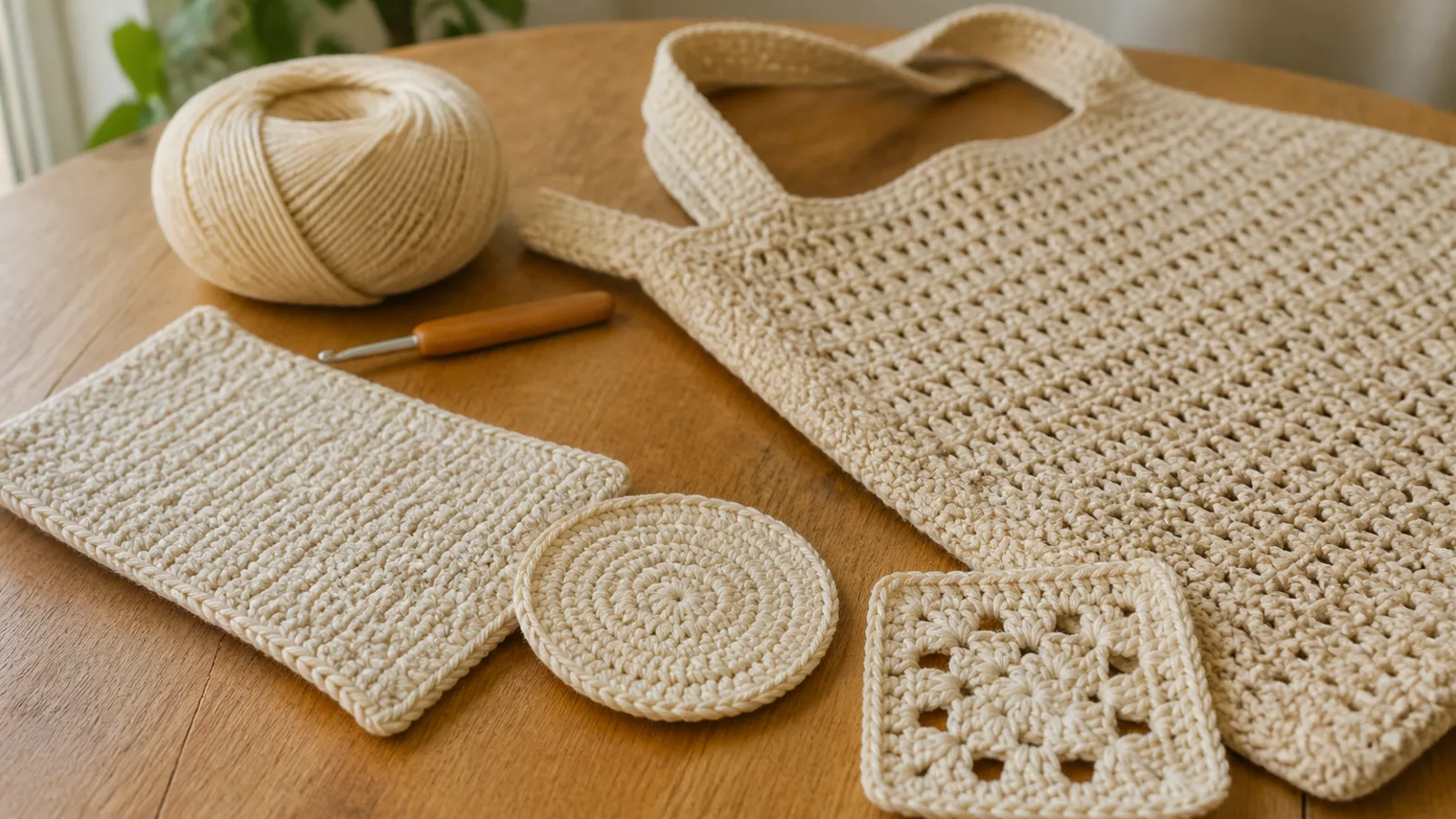
If you’re looking for easy crochet projects for beginners, the smartest way to stay motivated is to choose projects you can actually finish. Small wins build confidence faster than ambitious patterns that sit half-done in a project bag. That’s why this list starts with the simplest, most useful pieces and gradually moves toward projects that ask a little more of your time, focus, and stitch control.
Each project below teaches a specific skill, uses beginner-friendly yarn choices, and gives you something practical at the end. If you work through them in order, you’ll move from basic stitches to shaping, joining, and simple construction without feeling like you’ve jumped too far too fast.
Why these easy crochet projects for beginners work in this order
When you’re new to crochet, the hardest part is often not the stitches themselves but everything around them: holding the yarn, keeping tension even, counting rows, and finishing neatly. A good beginner project should be small enough to finish, simple enough to understand, and useful enough to feel worth your time.
This order builds skills one layer at a time:
- Dishcloths teach the basics with almost no pressure.
- Coasters reinforce the same skills in a smaller format.
- Granny squares introduce working in the round.
- Headbands add shaping and fit.
- Scarves help you practice consistency over a longer piece.
- Totes bring together panels, seams, and simple construction.
For all of these projects, a medium-weight yarn is often the easiest place to start because it is easy to see and hold. Smooth yarn in a light or medium color usually makes stitches easier to read than dark, fluffy, or highly textured yarn. If you want to check basic crochet terminology or stitch names as you go, the Craft Yarn Council is a helpful reference.
1. Dishcloth
A dishcloth is one of the best first projects because it is small, practical, and forgiving. If your stitches are slightly uneven, the result still has a job to do. That makes it a great confidence builder.
What it teaches: foundation chain, single crochet, turning rows, keeping edges even.
Best yarn weight: cotton in a worsted or medium weight. Cotton is a smart choice because it is absorbent and sturdy, which makes it ideal for kitchen use.
Typical time range: a few hours, depending on size and your pace.
Common pitfall to avoid: starting your chain too tightly. A tight foundation chain can make the bottom edge curl or feel narrower than the rest of the piece.
Practical example: make a simple square dishcloth in one color. Keep the stitch pattern basic and focus on building even rows. Once you finish one, you can make a matching pair for your own kitchen or as a small handmade gift.
If your rows aren’t perfect, don’t worry. The goal here is not a flawless piece; it is learning how the fabric behaves as you work. A small tip that helps many beginners: when you turn at the end of a row, pause to find the first stitch before starting the next one. That habit makes it easier to avoid accidental increases or decreases.
2. Coasters
Coasters are almost like practice reps for a dishcloth, only faster. Because they are smaller, they give you a chance to repeat the same basic motions without committing to a larger project. They are also a nice way to use leftover yarn.
What it teaches: tension control, clean finishing, consistent stitch height.
Best yarn weight: cotton or another smooth medium-weight yarn. Cotton works especially well because coasters need to absorb moisture and stay flat.
Typical time range: under a few hours for a set, depending on how many you make.
Common pitfall to avoid: using fuzzy yarn. While soft yarn can be lovely in garments, it can make a coaster less stable and harder to wipe clean.
Practical example: make a set of four square coasters in coordinating colors, or try simple round ones if you want to practice working into a circle. If you are making a gift, tie them together with twine or ribbon for a neat finish.
Coasters are also useful if you want to test how your stitches look before moving on to a larger project. If one doesn’t turn out the way you hoped, you can always remake it quickly.
3. Granny square
The granny square is one of the most beginner-friendly motifs in crochet because it teaches repeating rounds and introduces you to a more classic crochet structure. It is a little more interesting than a flat square because you are working in the round, but it is still very manageable.
What it teaches: chains, cluster stitches or double crochet, corners, joining rounds, working in the round.
Best yarn weight: medium-weight yarn in a smooth fiber that makes each stitch easy to see.
Typical time range: one square in an hour or two, once you understand the rhythm.
Common pitfall to avoid: missing corner stitches or placing stitches in the wrong space. That can make the square pull inward or lose its shape.
Practical example: make one classic granny square in a single color or with a few color changes. You can use it as a coaster, a washcloth, or the first piece of something bigger later on. If you enjoy it, you can keep making squares and join them into a cushion cover or blanket.
The granny square is useful because it teaches you how crochet patterns are built from repeats. That skill will help with almost every project that comes next.
4. Headband
A headband is a great next step because it gives you a wearable item without requiring a full garment. It usually involves making a rectangle, then joining it or twisting it into shape. That means you practice measuring, consistency, and finishing, all in one project.
What it teaches: row consistency, joining or seaming, basic shaping, measuring for fit.
Best yarn weight: light worsted or worsted weight, depending on how thick and warm you want the band to be.
Typical time range: a few hours.
Common pitfall to avoid: not checking size as you go. A headband that is too tight will be uncomfortable, while one that is too loose won’t stay in place.
Practical example: make a simple textured headband from a rectangle and seam the ends together. If you want a polished look, use a soft yarn that feels comfortable against the skin. This makes the project giftable as well as practical.
If you are nervous about fit, measure a headband you already own or wrap the piece around your head before finishing the seam. That small step can save you from having to redo the last part.
5. Simple scarf
A scarf is often the first project that feels truly “real” to beginners because it gives you enough length to see progress over time. It is also a forgiving way to practice rhythm. Once you settle into the stitch pattern, you can work while watching a show or listening to a podcast.
What it teaches: maintaining even tension, reading stitches, keeping edges straight, repeating a stitch pattern over many rows.
Best yarn weight: medium-weight yarn for a quick, beginner-friendly scarf. If you want a warmer, bulkier result, you can go a little thicker, but avoid anything so bulky that it becomes hard to handle.
Typical time range: part of a weekend to a full weekend, depending on length and stitch choice.
Common pitfall to avoid: accidentally adding or dropping stitches at the row ends. That can make the scarf narrower on one side or wavy along the edges.
Practical example: make a simple scarf in one stitch throughout, such as single crochet or double crochet, or add gentle stripes if you want a little visual interest. A solid, neutral color makes the piece easy to wear, while a soft variegated yarn can do some of the design work for you.
The main thing to remember with a scarf is that it does not need to be perfect. Straightening the edges and finishing neatly matter more than making every row identical.
6. Simple tote
A simple tote is an excellent confidence project because it turns your new skills into something genuinely useful. It can carry books, groceries, craft supplies, or everyday essentials, and it makes a lovely handmade gift.
What it teaches: larger panels, shaping, joining seams, handle construction, basic structure.
Best yarn weight: sturdy cotton or a cotton blend in a medium weight. A bag needs yarn with enough strength to support weight without stretching too much.
Typical time range: a full weekend or a little more, depending on size and how detailed the design is.
Common pitfall to avoid: choosing a yarn that is too stretchy or too slippery. A bag made with the wrong fiber can sag once you start using it.
Practical example: make a tote from two simple rectangles and seam them together, then add basic straps. If you are ready for a slightly more advanced version, you can make the bag in the round or add a simple gusset for more depth. Keep the design clean and avoid overcomplicating the pattern for your first attempt.
This is the project on the list that most clearly shows how far you have come. By the time you finish it, you will have practiced most of the essentials: stitch consistency, shaping, seaming, and finishing.
How to choose your first project
If you are standing in the yarn aisle feeling overwhelmed, choose based on what you want from the project, not just what looks pretty in the pattern photo.
- Want the fastest win? Start with a dishcloth or coasters.
- Want something wearable? Try a headband.
- Want to practice a classic motif? Make a granny square.
- Want a relaxing repeat project? Choose a scarf.
- Want something more useful and giftable? Make a tote.
If this is your very first time holding a hook, a dishcloth is usually the least intimidating place to start. If you already know the basics and want to build confidence, the granny square or headband may feel more rewarding.
What supplies beginners really need
You do not need a full craft room to start crocheting. For most beginner projects, a few basic tools are enough.
- Yarn: medium-weight yarn is easiest to handle for most beginners.
- Hook: use the size recommended on the yarn label unless the pattern says otherwise.
- Scissors: a small sharp pair makes finishing easier.
- Yarn needle: helpful for weaving in ends and sewing seams.
- Stitch markers: optional, but useful for rounds, corners, or counting rows.
Light-colored yarn is often easier to learn with because you can see the stitches more clearly. If you are crocheting something that will be washed often, such as a dishcloth or coaster, cotton is a practical choice. If you are making a scarf or headband, choose something soft enough to wear comfortably against the skin.
It also helps to know the basic yarn weight terms used in your region. Labels can vary by country, but the idea is the same: start with a medium-weight yarn that is easy to see, hold, and control. The Yarnspirations site has plenty of beginner-friendly project inspiration and material guidance if you want to compare yarn types and stitch ideas.
Tips to make beginner crochet projects easier
A few simple habits can make your first projects much less frustrating:
- Keep your tension relaxed. If your stitches feel too tight, go up a hook size.
- Count at the end of each row. This catches mistakes early.
- Use stitch markers. They are especially helpful for rounds, corners, and the first and last stitch of a row.
- Practice on a small swatch first. Even five minutes of practice can help you settle into the motion.
- Finish one project before moving on. Completing something matters more than collecting half-finished starts.
If you get stuck, don’t assume you are “bad at crochet.” Most beginners simply need more repetition. A small project like a coaster or dishcloth is often the best way to reset and regain confidence before trying something larger.
The best beginner project is not the prettiest one on the internet. It is the one that teaches you something, fits your skill level, and gives you a finished object you are glad to have made.
FAQ
What is the easiest crochet project for a complete beginner?
A dishcloth is usually the easiest place to start. It is small, useful, and forgiving, so you can practice the basics without worrying about fit or complicated shaping.
How long does it take to finish a beginner crochet project?
It depends on the project and your pace, but many beginner pieces take anywhere from a couple of hours to a weekend. Small items like coasters can be very quick, while a scarf or tote may take longer.
What yarn is best for easy crochet projects for beginners?
Medium-weight yarn is often the easiest to work with at first because it is easy to see and handle. Cotton is a strong choice for dishcloths and coasters, while soft acrylic or blends can work well for scarves and headbands.
Should I start with a pattern or a practice swatch?
If you are brand new, a small practice swatch can help you get comfortable with the hook and yarn. After that, a very simple project like a dishcloth or coaster is a better next step because it gives you a finished result.
What should I make after I finish a dishcloth or coaster?
A granny square or headband is a natural next project because both introduce a little more structure without becoming overwhelming. If you feel confident, a simple scarf is another good step up.
If you start with these easy crochet projects for beginners in order, you will build skills in a way that feels steady and rewarding. The point is not to rush to the hardest pattern. It is to learn enough with each project that the next one feels easier, more enjoyable, and more possible.
Join the conversation
Sign in — Sign in to join the conversation.