
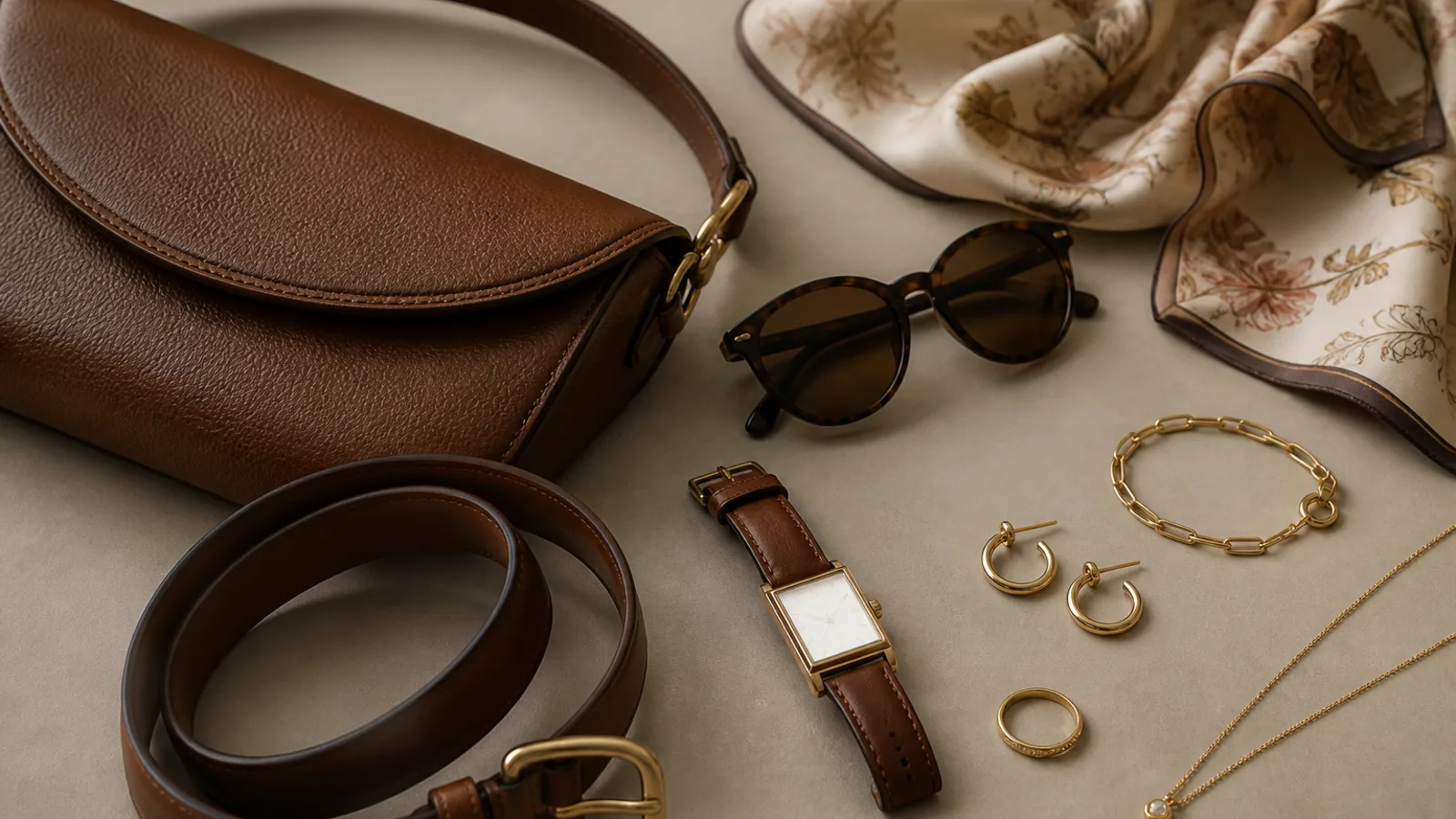
A great accessory does more than finish an outfit. It makes your wardrobe feel sharper, more intentional and easier to wear. But “investment” is a word worth treating carefully: it should mean more than expensive, logo-heavy or difficult to use in real life.
When we talk about timeless accessories worth investing in, the conversation often gets pulled toward status pieces. In reality, the best buys are usually the ones you reach for again and again: a well-made bag, a belt that pulls outfits together, sunglasses with proper protection, a silk scarf you know how to style, a watch that suits your routine and jewellery that feels personal without being precious.
The key is knowing how to judge quality before you buy. Materials matter, but so do construction, comfort, repairability, care and cost per wear. Sometimes luxury is worth it. Sometimes a mid-range piece is the wiser, more wearable choice.
What Makes an Accessory Worth Investing In?
A true investment accessory should earn its place in your wardrobe over years, not just look exciting on the day you buy it. That does not mean it will increase in value or become a collectible. In fashion, “investment” is usually practical: long-term use, durability and consistent enjoyment.
Before buying, ask yourself:
- Will I wear this often enough to justify the cost?
- Does it work with the clothes I already own?
- Is it made from materials suited to how I will use it?
- Can it be cleaned, repaired or serviced?
- Would I still want it if no one knew the brand?
Cost per wear is a useful filter. A beautifully made black leather belt worn several times a week can become excellent value. A vivid evening bag that only suits one dress may be less sensible, even if it feels special.
Spend more where quality improves function: strong bag handles, good sunglass lenses, solid jewellery metals, secure watch clasps. Be more cautious when the appeal is mainly a trend, a logo or a colour you rarely wear.
How to Think About Price Without Getting Carried Away
Accessories exist at every price level. Budget pieces can be perfectly fine for occasional use, especially if you are testing a style. Mid-range often offers the best balance of quality, wearability and comfort. Luxury may be worth considering when craftsmanship, materials, repair options and long-term desire all line up.
The mistake is assuming the highest price is automatically the best buy. A delicate luxury suede bag may be beautiful, but if you commute in rainy weather or carry it on public transport, a sturdy mid-range leather or coated canvas bag may serve you better.
Use cost per wear before you buy
Picture the item in your actual week. Not your fantasy week. Your real one.
- Can you wear it to work, dinner, errands or travel?
- Does it match your usual coat, shoes and jewellery?
- Will you be afraid to use it?
- Does it need more maintenance than you are willing to give?
If the answer is “I love it, but I would save it for best,” pause. Special pieces have their place, but the strongest investment accessories usually make everyday dressing easier.
Know where to spend and where to save
It often makes sense to spend more on items that take regular wear: an everyday bag, quality sunglasses if you wear them daily, a leather belt, simple fine jewellery or a watch you put on most mornings.
Save or choose mid-range for trend-led colours, novelty shapes, very delicate finishes or categories you are still experimenting with. If you are new to silk scarves, for example, buy one good mid-range scarf and learn how you wear it before committing to a luxury piece.
Investment Bags: What to Look For Before You Buy
A bag is often the first accessory people think of as an investment. It takes daily wear, carries weight and can change the tone of simple outfits. Quality shows quickly in the material, hardware and structure.
Materials that age well
Full-grain and high-quality top-grain leather tend to age better than heavily corrected leather, although finish and care matter. Pebbled or textured leather is usually more forgiving than smooth leather, which can show scratches more easily.
Coated canvas can be practical, lighter and easier to wipe clean, but inspect the corners, trim and handles. Suede is elegant but less forgiving around rain, spills and colour transfer from denim. Vegan leather varies widely: some options perform well, while others can peel or crack sooner, so check the feel, backing, seams and flexibility.
Construction details that matter
Look closely before you fall for the shape. Strong bags tend to have:
- Even stitching with no loose threads
- Reinforced handles and stress points
- A lining that feels secure, not thin or sagging
- Smooth zippers and sturdy clasps
- Neatly finished edges, whether painted, folded or bound
- A base that does not collapse unless the style is intentionally soft
Use a few quiet in-store tests. Open and close the zip several times; it should glide without catching. Gently tug the handles where they meet the body of the bag. They should feel stable, not thinly stitched on. Run a fingertip along painted edges; they should feel smooth and even, without obvious bubbles, chips or cracking.
Also consider weight. A heavy bag may feel luxurious in a shop but become irritating once you add a phone, wallet, keys, sunglasses and makeup pouch.
Shapes that stay useful
The most reliable choices are usually a structured or softly structured tote, a shoulder bag, a crossbody or a small evening bag. Neutral colours such as black, tan, chocolate, navy, cream, burgundy and deep green tend to work across seasons.
Practical examples include a black leather shoulder bag for work dinners, a tan crossbody for weekends and travel, or a structured tote if you regularly carry documents or a laptop. Before buying, check that it fits your non-negotiables and closes securely enough for your routine.
Leather Belts: The Quiet Accessory That Makes Outfits Look Finished
A good belt is not always the most exciting purchase, but it can transform jeans, trousers, dresses and coats. It adds definition and makes an outfit look considered.
How to judge belt quality
Look for leather that feels firm and supple rather than plasticky or cardboard-like. Gently flex it. If it creases harshly, cracks at the surface or feels brittle, keep looking.
Check the holes, stitching, buckle and edges. Holes should be cleanly punched, the buckle should feel secure, and the edge finish should be smooth. A solid buckle should have some substance without feeling bulky or uncomfortable.
On a stitched belt, look for even spacing and no loose threads. On an edge-painted belt, lightly run a fingernail along the edge. You are not trying to scratch it; you are checking whether the finish feels smooth, bonded and consistent.
The most useful belt styles
For most wardrobes, two belts go a long way: a slim to medium-width black belt and a tan or brown belt. Black works beautifully with tailoring, denim, black boots and dresses. Brown or tan softens denim, linen, camel, navy and cream.
If you love jewellery, choose hardware that works with what you already wear most often. Gold, silver, brass and mixed metal can all be timeless when the shape is simple. Be careful with oversized logos if your goal is longevity and versatility.
Sunglasses: Quality Is More Than the Frame
Sunglasses are style pieces, but they are also protective accessories. Lens quality should come before the logo or frame trend.
Lens protection comes first
Look for sunglasses labelled UV400 or 99% to 100% UVA and UVB protection. Lens darkness alone does not guarantee UV protection, so read the product information rather than relying on the tint. For general eye-safety guidance, organisations such as the American Academy of Ophthalmology are useful starting points.
In Australia and other high-sun climates, many everyday shoppers look for Category 3 lenses for strong glare reduction in normal outdoor conditions, while remembering that category and UV protection are not the same thing. Always check the label for both comfort and protection.
Polarised lenses can help with glare, especially around driving, water, snow or bright climates. They are not essential for everyone, and some people dislike how they interact with certain screens, but they can make daily wear more comfortable.
Frame materials and fit
Acetate often feels more substantial than basic plastic and can usually be adjusted by an optician. Metal frames should have smooth hinges, comfortable nose pads and no sharp edges.
Open and close the arms a few times. The hinges should move cleanly without wobbling. To check lens clarity, look through the lenses at a straight line such as a shelf edge or window frame, then gently tilt the sunglasses. If the line appears noticeably warped, the lenses may feel tiring to wear.
Fit matters. Sunglasses should not slide down, pinch, touch your lashes or sit crooked. Classic shapes such as soft cat-eye, oval, round, aviator-inspired and wayfarer-inspired frames tend to outlast extreme silhouettes.
When to spend or save
Spend more if you wear sunglasses every day, need prescription lenses or struggle to find frames that fit well. Mid-range can be enough if you want reliable protection and a classic shape without paying primarily for status. Save trend-led colours, tiny frames or novelty shapes for lower-risk purchases.
Silk Scarves: Small, Versatile and Surprisingly Practical
A silk scarf can add colour, softness and polish without taking much space in your wardrobe. It can be worn at the neck, in the hair, around a bag handle, as a belt or under a coat.
What quality silk feels and looks like
Silk twill is popular for scarves because it holds shape while still draping beautifully. Look for smooth fabric, clear printing, saturated colour and neat edges. Hand-rolled edges are a traditional sign of craftsmanship, but a well-finished machine edge can still be very wearable.
Good silk twill often has a visible diagonal rib and a gentle spring when loosely gathered in the hand. It should feel smooth rather than papery. Avoid crushing it aggressively; the point is simply to notice whether it has life and drape.
Always check the fibre label if pure silk matters to you. Some scarves are silk blends or synthetic satin, which may still look pretty but will not feel or behave the same way.
Choose a scarf you will actually wear
The safest place to start is with colours already in your wardrobe. A navy, cream and burgundy square might work with a white shirt, trench coat, navy knit or simple black dress. A muted floral scarf may suit a softer wardrobe better than a bold graphic print.
Medium squares are especially versatile. Larger squares and rectangles can work as shawls, travel wraps or tops, but they may feel less effortless for everyday styling.
When mid-range is smarter
If you plan to tie a scarf on your bag handle, remember it will face friction, weather and stains. If that makes you nervous, a mid-range or vintage option may be more enjoyable than a very expensive one. Second-hand scarves can be excellent finds if you check for pulls, stains, odours and weakened edges.
Watches: Buy for Function, Proportion and Longevity
A watch can be jewellery, a daily tool, a status piece or a quiet signature. The best one for you depends on how you dress and what you need it to do.
Decide what kind of watch suits your life
Mechanical and automatic watches appeal to many people because of their craftsmanship, but they usually need servicing over time. Quartz watches are often accurate, lower maintenance and excellent for daily wear. Smartwatches are useful, but they generally do not have the same timelessness because technology changes.
Think about your routine. Do you want something slim for work and evenings? A bracelet watch that feels like jewellery? A leather strap you can replace? A water-resistant option for travel and busy days?
Quality signs to check
Look for clean case finishing, a secure clasp, smooth bracelet links and a crown that feels easy to use. Leather straps should feel well-made and replaceable. The watch should sit comfortably on your wrist without spinning, pinching or overpowering your frame.
Proportion is crucial. An oversized watch may look fashionable for a season but feel dated or uncomfortable later. A slim steel watch, a leather-strap watch, a simple rectangular case or a two-tone bracelet style can all be enduring when they suit your personal style.
A note on water resistance
Do not assume a watch can handle swimming or showering unless the maker’s guidance clearly says so. Water resistance ratings can be confusing: a watch marked 30 metres or 3 ATM is often intended for splashes rather than immersion. Ratings around 50 metres may still be limited. For regular swimming, many buyers look for 100 metres or more, ideally with clear guidance from the manufacturer or a qualified watchmaker.
Hot showers, steam and old gaskets can compromise water resistance, so treat even a robust watch with care.
Fine Jewellery: The Investment Accessory You Can Wear Every Day
Fine jewellery is often where spending more makes practical sense, especially for pieces you wear constantly. Solid metals and secure settings can last for years with proper care.
Metals that last
Solid gold, platinum and sterling silver generally offer more longevity than plated jewellery. That does not mean plated pieces are never useful; they can be great for trends or occasional wear. But for earrings, necklaces or rings you want to wear often, solid metal usually performs better over time.
Gold karat matters. Lower-karat solid gold, such as 9k or 10k, is usually more accessible and can be harder, though the colour is often paler and it may react differently depending on skin chemistry. 14k and 18k gold offer richer gold content and colour, but can be softer and more expensive. None is universally “best”; the right choice depends on budget, colour preference and how hard you are on jewellery.
Sterling silver is beautiful and comparatively accessible, but it tarnishes. Regular wearing, gentle cleaning and anti-tarnish storage can help. Gold-filled and gold vermeil pieces can be good mid-range choices, though they should not be treated as identical to solid gold. If you have sensitive skin, check the metal content carefully and consider asking a reputable jeweller for guidance.
Stones and settings
A beautiful stone is only as wearable as its setting. Prongs should not snag, stones should not move, and clasps should feel secure. Bezel settings can be practical for everyday pieces because they protect the stone’s edge.
Pearls are timeless but delicate. They are best kept away from perfume, hairspray, sunscreen and harsh products. Softer or porous stones may also need more care than harder stones, so ask how a piece should be worn and cleaned before you buy.
Pieces that earn their place
Strong fine jewellery buys include small studs, simple hoops, a fine chain, a pendant, a signet ring, a plain band or a bracelet you can wear comfortably. The best choice depends on your routine. Solid gold hoops worn five days a week may be better value than several cheaper pairs that tarnish quickly.
If you are unsure whether you prefer yellow gold, white gold, rose gold or silver, start smaller or mid-range before committing to a major piece.
Timeless Accessories Worth Investing In: The 30-Wear and Repair Filter
Before you buy, use this quick filter. It will save you from many expensive mistakes.
- Can I imagine wearing it at least 30 times?
- Does it work with at least five outfits I already own?
- Can I wear it in more than one setting?
- Is the colour practical for my wardrobe and climate?
- Does it suit my body, proportions and lifestyle?
- Are the materials right for how I will use it?
- Is the construction clean, sturdy and comfortable?
- Can it be repaired, cleaned or serviced?
- Am I paying for quality and design, or mostly for a logo?
- Would I still love it if it were not recognisable?
For example, a pale suede bag may look exquisite, but consider rain, denim transfer, public transport, storage and specialist cleaning. If that sounds stressful, a darker textured leather bag may be the better investment for your real life.
How to Care for Investment Accessories So They Last
Even the best accessory will age badly if it is tossed into a cupboard, exposed to damp or cleaned incorrectly. Care does not have to be complicated, but it should be consistent.
Bags and belts
- Store bags upright and lightly stuffed to help maintain shape.
- Use breathable dust bags rather than sealed plastic.
- Keep leather away from prolonged direct sunlight and damp spaces.
- Rotate bags and belts so one piece does not take all the wear.
- Repair small issues early, such as loose stitching, worn edges or weakening handles.
Sunglasses and watches
- Keep sunglasses in a hard case, especially inside handbags.
- Clean lenses with a proper cloth instead of rough fabric.
- Have loose screws or uneven frames adjusted before they worsen.
- Service watches according to guidance from the maker or a qualified watchmaker.
- Avoid exposing watches to water, heat or magnets beyond their stated limits.
Scarves and jewellery
- Store silk flat or loosely rolled to avoid sharp creases.
- Keep scarves away from makeup, perfume and wet hair.
- Store jewellery separately to prevent scratches and tangles.
- Put jewellery on after lotions, fragrance and hair products.
- Have fine jewellery checked periodically if you wear it often, especially rings and bracelets.
A Practical Capsule of Accessories to Build Over Time
You do not need every accessory at once. A thoughtful capsule built slowly is usually more useful than a drawer full of impulse buys.
The Modern Minimalist: black, navy, silver and clean lines
- Black shoulder bag
- Black leather belt
- Black or smoke-grey sunglasses
- Silver watch
- Small silver hoops or studs
- Navy or charcoal silk scarf
The Warm Tailored Wardrobe: camel, espresso, cream and gold
- Tan crossbody or structured tote
- Brown leather belt
- Tortoiseshell sunglasses
- Gold or two-tone watch
- Gold hoops
- Cream, burgundy and camel silk scarf
The Soft Feminine Capsule: taupe, pearl, muted florals and gentle shine
- Taupe or mushroom leather bag
- Slim neutral belt
- Oval sunglasses
- Pearl studs
- Delicate pendant
- Muted floral silk scarf
Use these as starting points, not rules. The goal is a small set of accessories that makes your existing clothes feel more finished.
FAQ
Are designer accessories always worth the investment?
No. Some designer accessories are beautifully made and offer strong materials, craftsmanship and repair options. Others carry a large premium for branding. Judge the item itself: materials, construction, fit, usefulness and how often you will wear it.
Which accessory should I invest in first?
Start with the item you will use most. For many wardrobes, that is an everyday bag, a quality belt, sunglasses with proper UV protection or simple fine jewellery. The best first investment is the one that improves your daily outfits, not the one that looks most impressive online.
Is fine jewellery better than fashion jewellery?
For daily wear, fine jewellery usually lasts longer, especially in solid metals. Fashion jewellery can still be a smart choice for occasional pieces, trends or styles you are testing before spending more.
What colours are the most timeless for accessories?
Black, tan, brown, navy, cream, burgundy, deep green, gold and silver are all versatile. The most timeless choice is the one that works with your wardrobe. If you rarely wear black, a black bag may not be your best investment.
How do I know if a luxury accessory is worth it?
Ask whether the quality, design, comfort, repairability and expected use justify the price for you. If you would be afraid to use it, or if it only works with a few outfits, a mid-range option may be wiser.
Final Thoughts
The best timeless accessories worth investing in are not necessarily the most expensive or recognisable. They are the pieces that fit your wardrobe, your routine and your standards for quality.
Choose accessories that make getting dressed easier. Look closely at materials and construction. Be honest about care, comfort and cost per wear. When a piece is well made, genuinely useful and loved enough to be worn often, that is when it becomes a true investment.
Join the conversation
Sign in — Sign in to join the conversation.