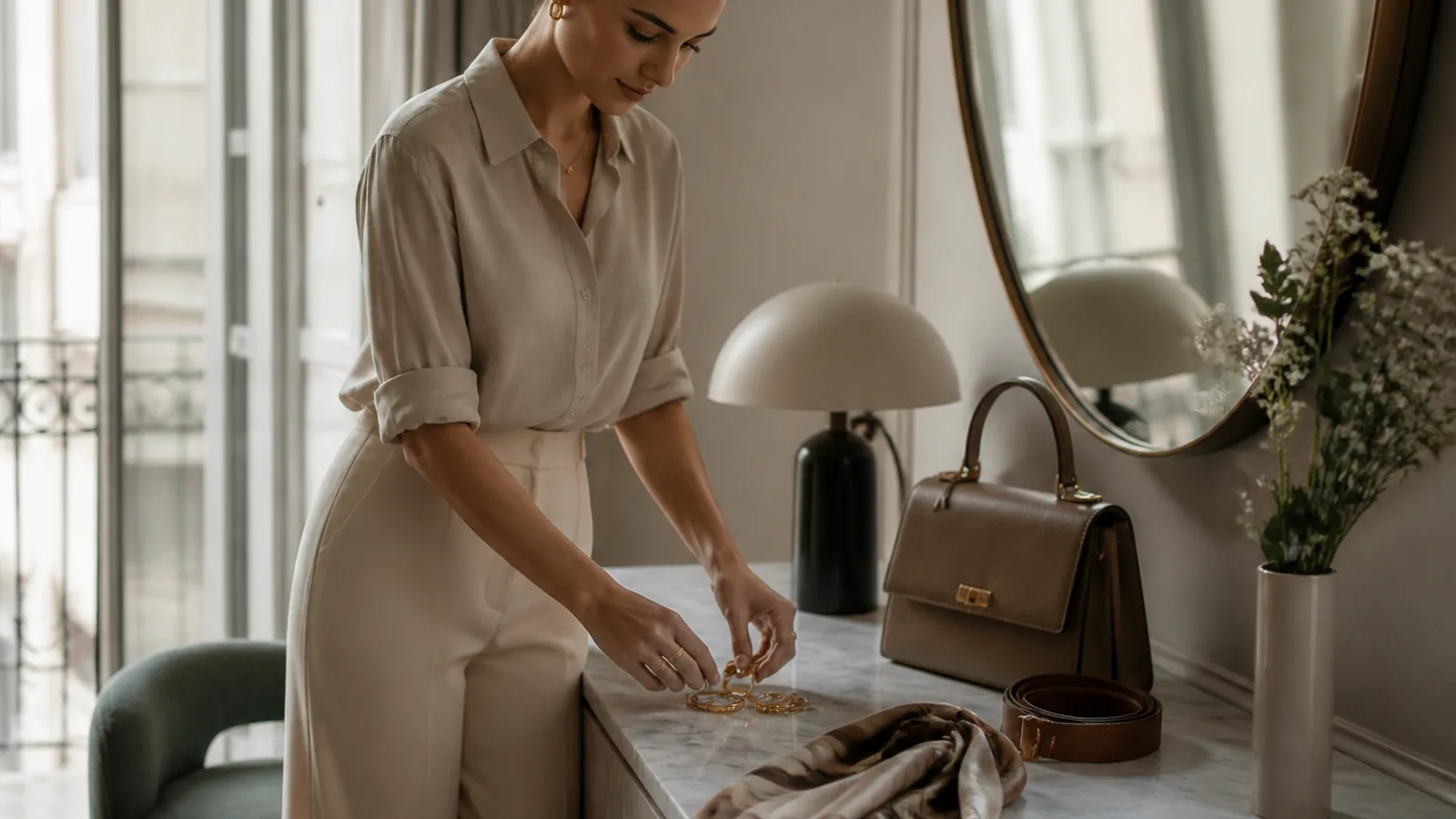
An unfinished outfit is rarely missing a new garment; it is usually missing intention. Learning how to accessorize an outfit is about deciding what your clothes need next: shape, colour, polish, softness, contrast or one clear focal point.
The best accessories do not compete with what you are wearing. They finish the thought. A belt can give a loose dress shape. Earrings can bring light to your face. A scarf can soften tailoring. A bag can turn jeans and a white shirt from basic into deliberate.
Use this as a practical styling method, not a list of rigid rules. Once you understand proportion, focal points, metal mixing, colour and texture, you can apply the same thinking to almost anything in your wardrobe.
The simple formula for accessorising any outfit
Start with the outfit, not the accessory drawer. Accessories work best when they answer a specific styling question.
- What is the plainest part of the outfit? A simple neckline, block-colour dress or basic shirt may need interest.
- Where do I want the eye to go? Up to your face, in at the waist, or toward a beautiful bag or shoe?
- What does the outfit need? More structure, softness, colour, contrast, texture or polish?
This stops accessorising from becoming random. A black slip dress might need brushed-gold organic drop earrings and a small oxblood box bag. Jeans and a white shirt might need a leather belt, sharp loafers and a structured shoulder bag. A printed dress may already have enough visual movement, so small hoops and a simple bag could be all it needs.
Think of accessories as punctuation. One strong piece can be the exclamation point; everything else can be a comma.
Choose one focal point first
A focal point is where the eye lands first. It might be a statement necklace, silk scarf, wide belt, bright bag or sculptural earring. The easiest way to make accessories look intentional is to choose one main focal point, then let the rest support it.
If every accessory is trying to be the star, the outfit can feel busy. If none has presence, the outfit can feel unfinished.
How to pick your focal point
- Choose earrings when you want attention near your face, especially with short hair, an updo, a high neckline or a bare neckline.
- Choose a necklace when the neckline leaves visual space, such as a V-neck, scoop neck or open shirt collar.
- Choose a belt when the outfit needs shape, waist definition or stronger structure.
- Choose a bag when the clothes are simple and you want colour, texture or polish.
- Choose a scarf when the outfit needs softness, movement, pattern or a more styled finish.
For example, a navy dress can be led by a burgundy bag, with small gold hoops and simple shoes. A cream jumper with black trousers can be led by a patterned silk scarf while the jewellery stays quiet.
Get proportion right: size matters more than price
Accessories do not need to be expensive to look good, but they do need the right visual weight. Proportion is one of the main reasons an outfit feels balanced or slightly off.
Fine jewellery can disappear against a chunky knit, oversized blazer or wide-leg trousers. Very large jewellery can overpower delicate fabrics unless the contrast is intentional. Neither is wrong; the point is to choose consciously.
- A fine chain works beautifully with a silk blouse, soft dress or open shirt.
- Chunky hoops or a bold cuff can balance a blazer, denim jacket or substantial knit.
- A narrow belt suits a floaty dress or tailored trouser.
- A medium leather belt is the easiest choice for jeans, trousers and shirt dresses.
- A wider belt works best over a blazer, coat, shirt dress or heavier knit.
- A structured tote complements tailoring, while a slouchy suede or leather bag feels natural with relaxed denim or linen.
Comfort counts too. If earrings feel heavy, a bracelet is noisy or a bag keeps sliding off your shoulder, it will distract you. The most stylish accessory is one you can actually wear with ease.
Match jewellery to the neckline
Necklines give useful clues about jewellery. You do not have to follow these ideas every time, but they are a strong starting point when something feels wrong and you cannot work out why.
- V-neck: Try a pendant, lariat or fine chain that follows the line of the V, or skip the necklace and wear earrings instead.
- Crew neck: Try a short necklace, collar necklace, brooch, scarf or statement earrings. A long pendant can elongate a fine-gauge knit, but may fight a bulky sweatshirt or ribbed neckline.
- Button-down shirt: Wear a pendant inside the open collar, layer fine chains, or keep the neck bare and choose earrings.
- Strapless or off-shoulder: Choose statement earrings or a choker-style necklace. Leaving some space can look especially elegant.
- Turtleneck: Try hoops, a cuff, a brooch or a longer necklace. Short necklaces often look cramped unless they sit cleanly over the fabric.
- Square neck: Simple drop earrings, a short pendant or no necklace at all can keep the clean line intact.
A white shirt with two buttons open looks easy with a fine gold chain and small hoops. A black turtleneck may need only silver hoops and a cuff. A square-neck dress often looks fresher with drop earrings than with a necklace that interrupts the neckline.
Mix metals without making it look accidental
Gold and silver can absolutely be worn together. So can rose gold, gunmetal and mixed hardware. The trick is to make the mix look deliberate.
Use the 70/30 metal rule: let roughly most of your visible metal be one dominant finish, then use the other as an accent. For example, choose mostly yellow gold jewellery with a silver watch, or mostly silver jewellery with a gold buckle and gold ring.
If possible, repeat each metal at least once so nothing looks stranded. A mixed-metal watch, ring stack or bag chain can act as the bridge. Finish matters too: shiny metals tend to sit neatly with other shiny metals, while brushed, antique or vintage finishes often look calmer together.
- Gold hoops, a silver watch and a bag with mixed hardware can look relaxed and modern.
- A silver necklace, gold rings and a black belt with a gold buckle can work if the gold appears more than once.
- If your outfit already has strong colour or print, keep the metal mix minimal so the look does not become crowded.
Use colour to connect the outfit
Accessories can blend in, echo a colour or create contrast. Each creates a different mood.
Tonal colour looks polished
A tonal approach uses related shades: cream with camel and tan, navy with denim and soft blue, grey with silver and charcoal. Beige trousers, a white shirt, a tan belt and a chocolate bag feel connected without looking too matched.
Echoing a colour makes the outfit feel intentional
Echoing means repeating one colour from the outfit in an accessory. This is especially useful with prints. If a floral dress has a small amount of green in it, a green bag or earrings can make the whole outfit feel pulled together.
The colour does not need to match exactly. It only needs to relate. A burgundy bag with a navy dress, or amber earrings with a brown print, can be more interesting than a perfect match.
Contrast adds energy
Contrast is useful when an outfit feels flat. A red scarf with a black blazer, a green bag with jeans and a white shirt, or a cobalt clutch with a neutral dress can bring the look to life. One contrast piece often has more impact than several.
Add texture when colour is not the answer
Sometimes an outfit does not need another colour. It needs texture. This is especially true with neutral or monochrome looks.
Texture changes the mood. Leather feels structured, suede feels soft, patent feels sharp, silk feels elegant, raffia feels summery, pearls feel luminous and brushed metal feels understated.
- An all-black outfit can feel more interesting with a patent belt, silver jewellery or textured leather bag.
- A cream knit can look beautiful with pearl earrings and a suede bag.
- A linen dress feels natural with a woven tote and leather sandals.
- A work blazer can be softened with a silk scarf at the neck or tied to a bag handle.
How to Accessorize an Outfit: 3 Wardrobe Formulas
The principles become easier when you apply them to clothes you already wear. Here are three common outfit bases and several ways to change their mood.
The plain dress
A plain dress is easy to transform because accessories define the mood. First identify the shape: shift, slip, wrap, shirt dress, knit dress or column dress. Then choose what the dress needs.
- Polished day: Black midi dress, small gold hoops, tan leather belt, structured top-handle bag and simple flats.
- Evening: Black slip dress, brushed-gold organic drop earrings, slim cuff, oxblood box clutch and barely-there kitten heels.
- Casual weekend: Cream shirt dress, woven belt, raffia tote and leather sandals.
- Work: Navy wrap dress, silver pendant, watch, burgundy bag and a tailored blazer.
If the dress has a high neckline, focus on earrings, cuffs or a brooch. If it has a lower neckline, a necklace may make more sense.
Jeans and a white shirt
Jeans and a white shirt are a blank canvas. The same base can look classic, relaxed, modern or evening-ready depending on the accessories.
- Classic: Straight-leg jeans, crisp shirt, black leather belt, black loafers, small silver hoops and a clean-lined shoulder bag.
- Modern: Wide-leg denim, tucked shirt, tan belt, sculptural earrings and a sleek suede bag.
- Relaxed: Soft shirt, pale denim, canvas tote, trainers and layered fine necklaces.
- Evening: Dark denim, sharp white shirt, bold earrings, heeled ankle boots and a small structured bag.
If the shirt is oversized, a belt can stop the outfit from looking shapeless. If the jeans are wide-leg, stronger jewellery or a structured bag can balance the volume.
The work blazer
A blazer already has structure, so accessories should support it rather than compete with it. Look at the blazer’s details first. Strong shoulders, large lapels or a checked pattern may call for quieter accessories. A very plain blazer can handle a scarf, brooch, statement earring or more distinctive bag.
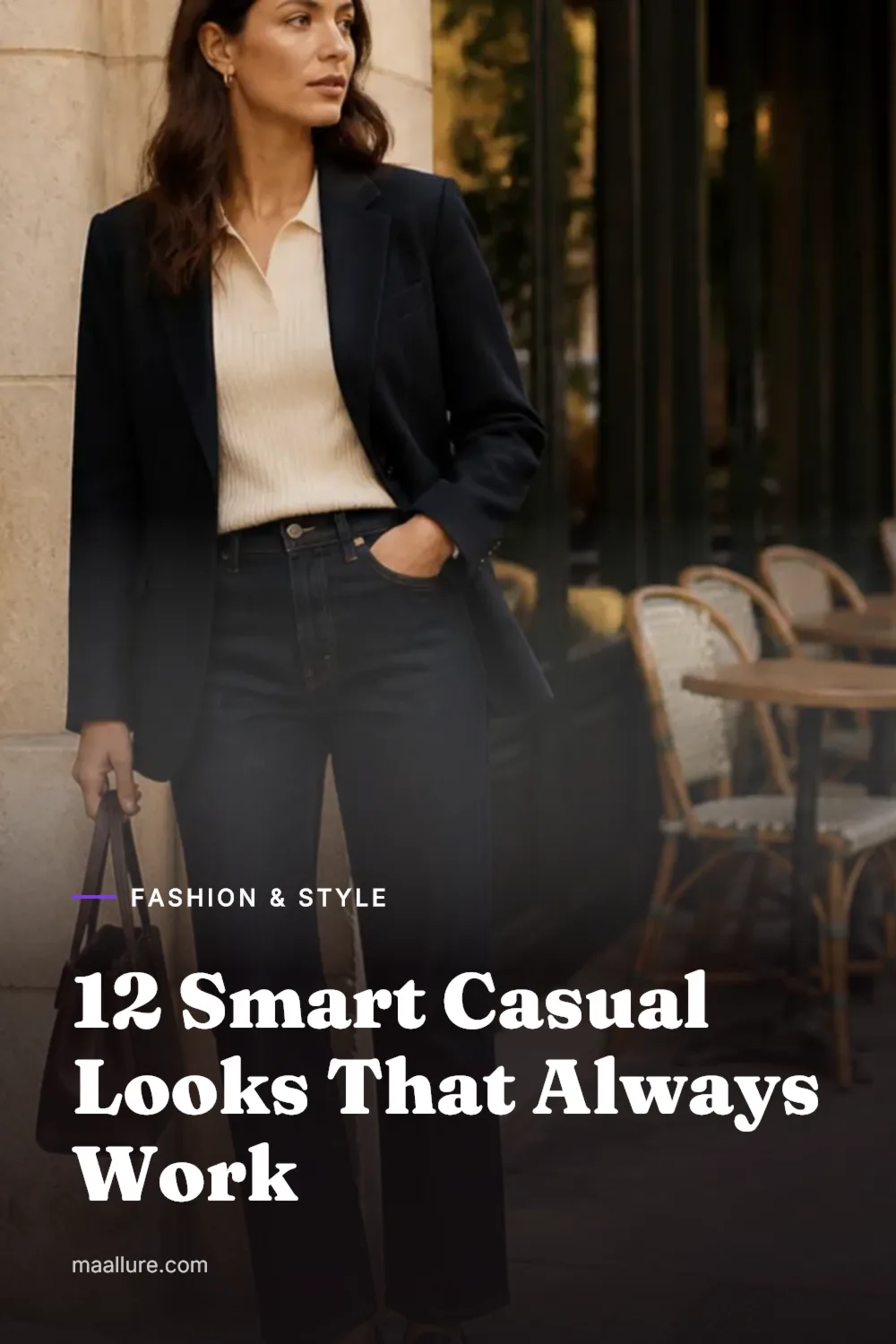
- Smart casual: Navy blazer, white tee, jeans, leather belt, loafers and gold hoops.
- Office polished: Black blazer, tailored trousers, ivory blouse, silk scarf and structured tote.
- Patterned blazer: Checked blazer, plain knit, minimal earrings and a simple leather bag.
For conservative workplaces, avoid pieces that are noisy, distracting or hard to manage. Small hoops, studs, a watch, a fine pendant and a structured bag are reliable. In creative settings, you may have more room for colour, larger earrings or a more unusual belt.
Scarves, belts and bags: how to use each one well
Scarves
Scarves add colour, pattern, softness and movement. A small silk scarf can make a simple knit or blazer look styled. A larger scarf can add warmth and drama to a coat. Wear one around the neck, tied to a bag, used as a belt on a simple dress, or draped loosely over the shoulders.
If the scarf is patterned, simplify the jewellery and let the scarf lead.
Belts
Belts are not only practical; they create shape. A thin belt feels subtle and elegant. A medium belt is the most versatile for jeans, trousers and shirt dresses. A wide belt makes a stronger statement and works best when the clothes have enough structure to support it.
Your belt can match your shoes or bag, but it does not have to. It can also pick up a colour in the outfit, echo your hair colour or contrast deliberately.
Bags
A bag can change the formality of an outfit immediately. Structured bags make clothes look sharper. Slouchy bags feel relaxed. Mini bags feel evening-ready or fashion-forward, though they are less practical. Totes work for daily life, but they still affect how polished the outfit looks.
Notice the hardware too. A gold chain, silver zip or brass buckle counts as part of your metal mix.
The 3-second mirror rule
The old advice to remove one accessory before leaving can be useful if an outfit feels busy, but it is not a rule. Some personal styles rely on layering, colour and abundance. Minimal is not automatically better.
Instead, do this quick mirror check:
- Name the focal point. If you cannot identify it in three seconds, the outfit may need editing.
- Check the triangle. Do your top area, waist or hand area, and bag or shoe area feel balanced rather than crowded in one place?
- Repeat one detail. A metal, colour, texture or shape should appear more than once if you want the look to feel connected.
- Test the real day. Remove anything uncomfortable, noisy, impractical or likely to annoy you.
Quick accessory formulas to try
- Plain dress: statement earrings, structured bag and simple shoes. This works because the dress gives the accessories room to lead.
- Jeans and white shirt: leather belt, hoops and polished bag. This adds shape, shine and intention.
- Work blazer: watch, small earrings and structured tote. This keeps the look sharp without becoming distracting.
- Knitwear: pendant or brooch with a textured bag. This gives soft clothing a defined detail.
- Printed dress: simple earrings and a bag that echoes one colour in the print. This lets the pattern lead.
- Monochrome outfit: patent, suede, pearls or mixed metals. This adds depth without adding more colour.
- T-shirt and trousers: belt, necklace stack and shoulder bag. This turns basics into a styled outfit.
- Evening outfit: one bold jewellery piece, clutch and sleek shoes. This keeps the finish focused.
FAQ
How many accessories should you wear at once?
There is no fixed number. A simple outfit can often handle more accessories, while a printed, textured or highly detailed outfit may need fewer. A good starting point is one main focal point with two or three quieter supporting pieces.
Do your bag, shoes and belt have to match?
No. Matching can look polished, especially for formal outfits or workwear, but it is optional. Your accessories simply need to relate through colour, texture, mood or hardware. A tan belt, chocolate bag and cream shoe can look more modern than a perfectly matched set.
Can you mix gold and silver jewellery?
Yes. Mixed metals look best when they seem intentional. Choose one dominant metal, then repeat the accent metal if you can. A mixed-metal watch, ring stack or bag hardware can help connect the tones.
How do you accessorize an outfit that already has a bold print?
Let the print lead. Choose simpler jewellery, then pick one colour from the print for your bag, shoes or scarf if you want the outfit to feel connected. Avoid adding several competing colours or large statement pieces unless you want a deliberately maximal look.
What is the easiest accessory to make an outfit look more finished?
A belt, earrings or a structured bag often makes the biggest difference. The best choice depends on what the outfit is missing. Choose a belt for shape, earrings to draw attention to your face, or a structured bag for polish.
Conclusion
Once you know how to accessorize an outfit, getting dressed becomes much easier. Start with the clothes, choose one focal point, balance the proportions, connect the colours or metals, and use texture when the outfit feels flat. You do not need a huge accessory collection. You need a few pieces that help your outfits feel deliberate, comfortable and completely your own.
Join the conversation
Sign in — Sign in to join the conversation.