
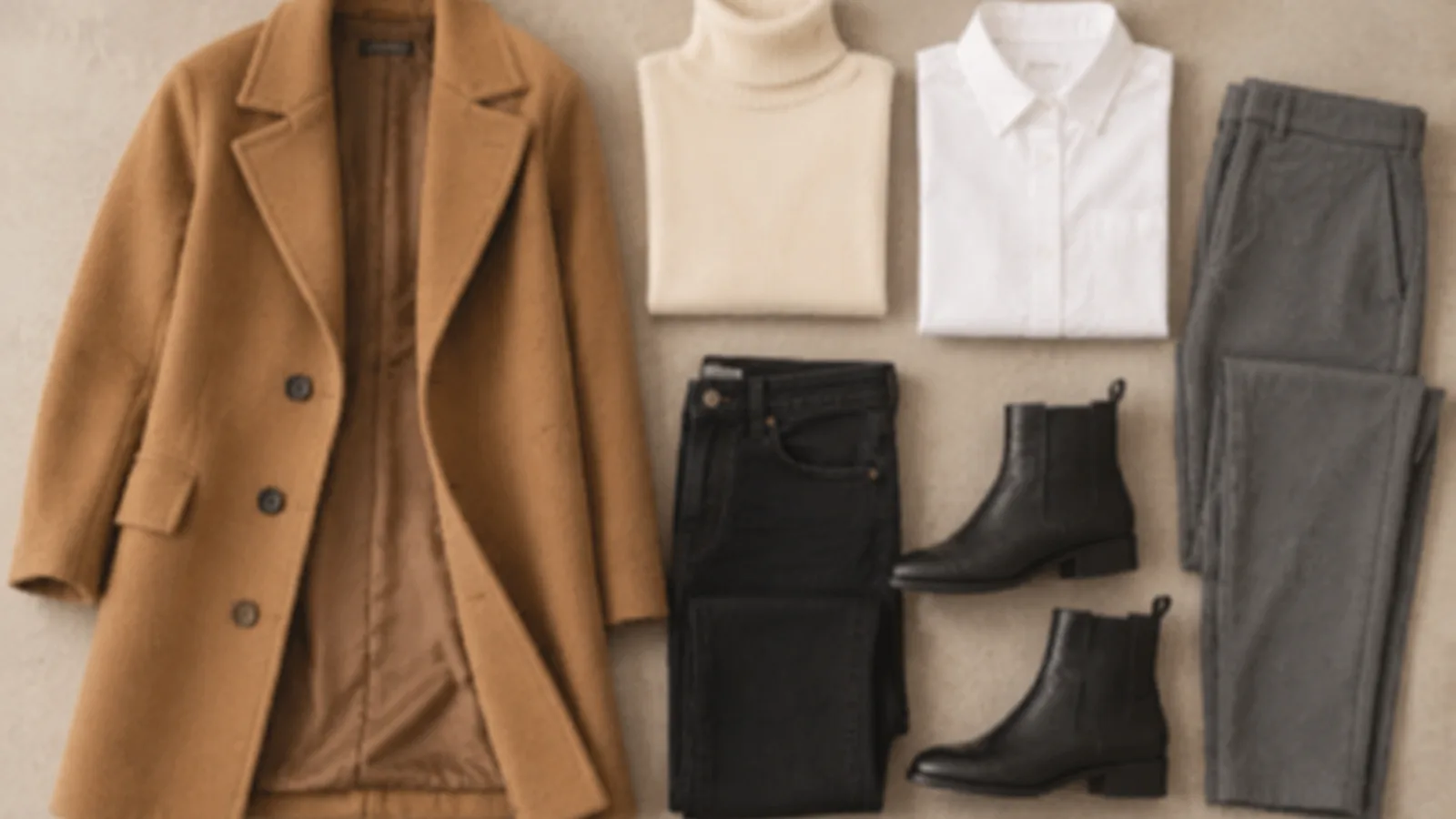
Most capsule wardrobe advice dumps a checklist of 30-40 essentials on you and calls it minimalism. But here's the truth: when you rethink capsule wardrobe outerwear as the foundation rather than the final layer, the rest of your wardrobe practically builds itself. No more buying pieces that sit unworn because they don't layer right or clash with your only warm coat. This is the smarter way in.
Why Starting with Outerwear Changes Everything
Your coat is the most visible, most expensive, and most weather-dependent piece you own. It dictates silhouette, formality level, and color palette for everything underneath. Yet most wardrobe-building advice treats it as an afterthought—something you buy last and hope works with what you already own.
That's backward. When you choose your hero coat first, you're setting the rules for everything else. A tailored camel wool coat in a straight cut works over jeans, trousers, and dresses. It anchors a neutral wardrobe and reads polished without trying. Contrast that with a cropped puffer, which limits your silhouettes and skews casual no matter what you wear underneath.
One great coat also eliminates decision fatigue. You're not standing in front of your closet every morning choosing between three mediocre jackets that kind of work. You have one that always works, and you can focus your energy on what matters.
The 1-5-8 Rule: One coat you love + Five versatile bottoms + Eight tops that harmonize = A system that dresses you in under two minutes
The Real Buying Criteria for Capsule Wardrobe Outerwear
Forget vague advice about timeless and neutral pieces. Here's what actually matters when you're building around one coat.
Match It to Your Coldest Regular Month
If winter regularly drops below freezing where you live, a wool topcoat won't cut it—you need insulation or enough room to layer a thick sweater underneath. If you rarely see snow (Sydney, coastal California, much of the UK outside Scotland), a floor-length down coat is dead weight most of the year.
A knee-length wool-blend coat with a removable liner works for temperatures between 4 and 15 degrees Celsius (roughly 40 to 60 Fahrenheit) and layers over chunky knits when it dips lower. That's a realistic range for much of the US, UK, Canada, and temperate Australia. For milder climates, a trench coat in water-repellent cotton gabardine or a heavy chore jacket can serve as your anchor piece without thermal insulation.
Understand Fabric Architecture
The fabric determines whether your coat can span multiple seasons or needs a dedicated replacement. Wool weight matters: anything below 300 grams per square meter is a spring coat, not a winter one. Double-faced wool (fabric with no separate lining, finished on both sides) offers clean lines and moderate warmth. Look for natural fibers—wool, cashmere blends, heavyweight cotton—over synthetics. Polyester doesn't breathe and pills quickly.
Water-repellent cotton gabardine works beautifully for damp autumn chills without overheating you on the train. Shearling linings add warmth but limit wearing season. Quilted linings are warmer than smooth ones. If you're in a region with variable weather, a coat with a zip-out liner gives you range.
Check the Sleeve and Shoulder
Slim, set-in sleeves look sharp, but they limit what you can layer. If you live somewhere that requires sweaters from October through April, you need raglan or dropped shoulders that give you room.
Test this at the store: wear your thickest sweater to the fitting room. If the coat pulls across the shoulders or restricts your arms, pass. You won't wear it when you actually need it. This is non-negotiable for anyone who layers seriously.
Consider Your Daily Terrain and Transit
Commuting by car versus walking twenty minutes to the train versus biking changes everything about length, weight, and practicality. A long coat drags in subway slush and catches in car doors. A cropped jacket leaves your legs cold on a bike. An unstructured style works better if you're constantly taking it on and off in overheated offices.
Be honest about your real life, not the aspirational version. If you drive everywhere, a dramatic floor-length coat is fine. If you're on foot in bad weather, knee-length and water-resistant wins. Check these practical details:
- Double vents in back make sitting in cars comfortable; single vents or no vents suit walkers
- Two-way zippers let you unzip from the bottom when sitting
- Deep pockets that close (zips or snaps) keep your phone safe on a bike
- Adjustable cuffs keep wind out during walks
Pick a Backbone Color
Camel, black, navy, charcoal, or olive let you add color and pattern underneath without clashing. These aren't boring—they're strategic. They make every other piece in your wardrobe work harder.
Avoid trendy colors like rust or lavender. They date fast and limit your options. If you love color, save it for tops and accessories that cost less and rotate more often. Your coat is infrastructure, not self-expression.
The Outfit Formula: Two Approaches
Once your coat is locked, work backward. The formula shifts slightly depending on whether you've chosen a structured coat or a relaxed one. Both work—you just need internal consistency.
Formula One: The Structured Coat (Tailored Wool, Classic Trench)
A black wool trench or straight-cut camel overcoat reads polished and pairs best with clean lines underneath. Choose bottoms in cuts that suit its length and structure: straight or wide trousers, high-waisted jeans, midi skirts, tailored shorts for summer. Everything should share a tonal range—all cool neutrals, all warm, or a deliberate accent.
Here's what this looks like in practice:
- Bottoms (5): Black straight jeans, gray wool trousers, black midi skirt, dark denim, tailored navy shorts
- Tops (8): White button-down, cream turtleneck, charcoal merino sweater, striped Breton, black tee, chambray shirt, navy knit, silk cami for layering
- Shoes (3): Black ankle boots, white sneakers, loafers
Every combination works because the coat is the constant. You're not wondering whether your rust sweater clashes with your navy coat or whether your cropped jacket makes your long skirt look odd.
Formula Two: The Relaxed Coat (Utility Jacket, Oversized Blazer, Shacket)
An olive chore jacket or oversized wool blazer suits a slightly more casual, textured approach. You can mix in roomier silhouettes underneath and layer more freely. This works well for milder climates or car commuters who don't battle serious cold.
- Bottoms (5): Black slim jeans, olive cargo trousers, denim midi skirt, wide-leg linen pants, bike shorts (for under long sweaters)
- Tops (8): Oversized white tee, chunky oatmeal sweater, black ribbed tank, denim shirt, striped long-sleeve tee, camel knit, linen button-down, fitted black turtleneck
- Shoes (3): Chelsea boots, canvas sneakers, leather sandals
The principle stays the same: the coat sets the tone, and every piece underneath aligns with that tone.
The 60-Second Dressing Room Test
Before you buy any coat, run through these checks while you're still in the store:
- The sweater test: Wear or bring your thickest sweater. Can you move your arms freely? Does the shoulder seam sit where it should?
- The sit test: Sit down. Does the coat bunch uncomfortably? Can you fasten your seatbelt without wrestling fabric?
- The walk test: Take twenty steps. Does the hem hit you at an awkward spot on your leg? Does it swing naturally or pull to one side?
- The mirror test: Turn around. Does the back look as considered as the front? Many coats photograph well but have a messy back vent or lining.
- The fabric test: Check the content tag. Is it mostly natural fibers? Rub the fabric between your fingers—does it feel substantial or flimsy?
What This Eliminates (and What It Doesn't)
You're not stuck wearing one coat forever. But you are anchoring this wardrobe around it for the season it serves. You might own a winter wool coat and a spring trench, but each anchors its own small capsule. You're not juggling six jackets that kind of work with some of your clothes.
Seasonal swaps follow the same process. When you replace your heavy coat with a lightweight trench or denim jacket for spring, you apply the same logic: choose the coat first, then ensure your tops and bottoms work with it. The method doesn't mean never buying another coat. It means one coat per season is enough if it's the right one.
When to Replace Versus Repair
A well-made coat can easily anchor your wardrobe for several seasons. Rather than focusing on a specific price tag, look for fabric composition and weight—a dense wool or robust twill will outlast lightweight synthetic blends, whether you find it vintage, on the high street, or from an investment label.
Construction quality matters more than brand. The lining should be sewn in, not glued, and stitching should be even with no loose threads. Buttons should feel substantial, not hollow plastic. Seams should lie flat. Hems should have adequate depth for future alterations.
Red flags for replacement: pilling that won't resolve with a fabric shaver, lining tears that affect structure, or a fit that no longer works for your body or style. Worth repairing: loose buttons, minor lining issues, hem adjustments, replacing a broken zipper. A good tailor can extend the life of a quality coat by years.
If you're replacing your coat, donate or sell the old one before buying new. It forces you to commit instead of letting the old one hang in your closet just in case.
Frequently Asked Questions
What if I live somewhere with wildly variable weather?
Choose the coat for your coldest regular month, not the one polar vortex that happens every few years. Then layer strategically underneath. A medium-weight wool coat with room for a thick sweater covers more range than a heavy parka you'll overheat in half the time. Variable weather actually makes the case for the one-coat rule stronger—you need a piece that works across a span, not three specialized coats taking up closet space.
Can I do this with a statement coat, or does it have to be neutral?
Neutral is easier, but a bold color works if you're disciplined. A red coat demands black, white, denim, and gray underneath—nothing else. If you're willing to stick to that constraint, go for it. Just don't expect to wear your patterned tops or colored trousers with it. The tradeoff is clear: the coat becomes the outfit's focal point every single time.
How do I know if a coat's quality is worth the price?
Check the fabric content first. Wool or cashmere blends beat polyester for warmth, breathability, and longevity. The lining should be sewn in, not glued, and stitching should be even with no loose threads or puckering. Buttons should feel substantial when you press them, not flimsy or hollow. Try it on over your thickest sweater and move your arms, sit down, and walk—if it pulls, restricts, or bunches awkwardly, pass, no matter how good the price looks.
What if I already own multiple coats?
Pick one for the current season and build around it. Wear it exclusively for two weeks and see if you reach for the others. If you don't miss them, sell or donate them. Owning fewer pieces you actually wear beats a closet full of options you ignore. Most people discover they've been defaulting to one coat anyway—this just makes that choice intentional.
Should I buy my coat at the end of season for discounts?
Yes, if you know exactly what you need—cut, color, length, fabric weight—and can resist impulse buys. But if you're still figuring it out, buy in-season so you can test it in real weather before the return window closes. A coat that looks perfect on the hanger but doesn't work in a rainstorm or on a windy platform isn't a deal. Better to pay full price for something you'll wear constantly than save money on something that sits unworn.
The Bottom Line
Most capsule wardrobe guides treat outerwear as an afterthought or insist you need three essential coats, which defeats the purpose. Treating capsule wardrobe outerwear as your anchor piece flips the entire process. Choose one great coat for your climate, your commute, and your real life, then build backward. Every piece earns its place, nothing sits unworn, and getting dressed becomes faster and more satisfying. That's what a working wardrobe actually looks like.






Join the conversation
Sign in — Sign in to join the conversation.