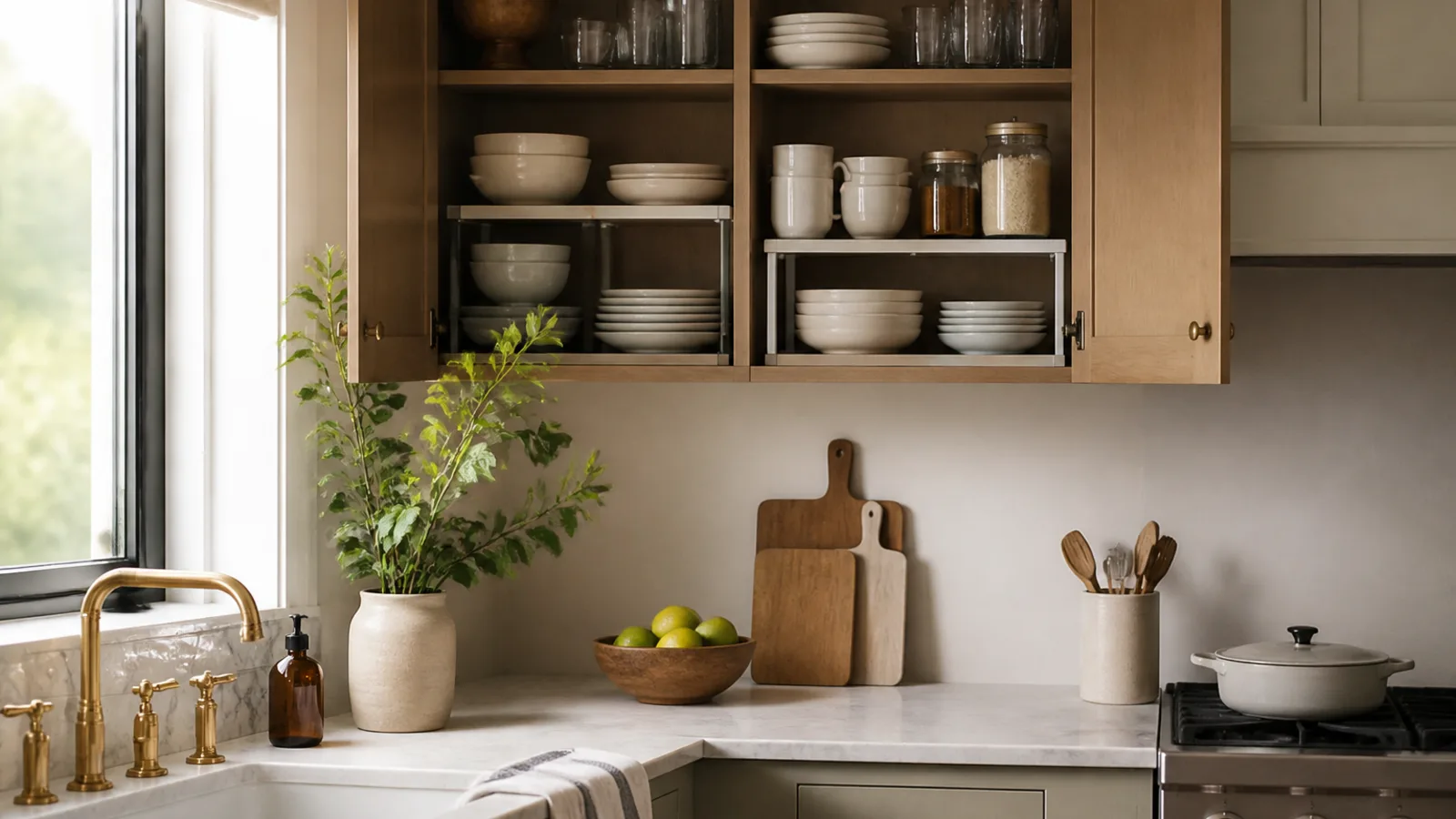
A small kitchen rarely fails because it is truly too small. More often, it fails because the storage does not match the way you cook, clean, shop and move. The best small kitchen organization ideas are not about buying matching containers for everything; they are about putting the right things in the right places.
Whether you have a narrow galley kitchen in a city flat, a compact European-style kitchen, a rental apartment with awkward cabinets or a small older home with limited counters, the same logic applies: protect your easiest-to-reach storage for the things you use most, use vertical and door space, and stop letting rare-use items take over prime real estate.
Before You Buy Anything, Do a 20-Minute Kitchen Reset
Organizers only help when they solve a real problem. If you buy them before editing, you may simply end up with neater clutter.
Start with one area, not the whole kitchen. Choose a drawer, food cupboard, countertop or under-sink cabinet. Remove everything from that one zone and sort it into three groups:
- Keep in the kitchen: items you use weekly or genuinely need close at hand.
- Store elsewhere: seasonal pieces, bulk supplies, entertaining items or occasional appliances.
- Donate, recycle or bin: duplicates, broken tools, expired food and lids with no containers.
Then identify your kitchen’s prime real estate: the most accessible drawers, the cabinets at waist-to-eye level and the counter space where you actually prepare food.
If you make coffee every morning, mugs, coffee, filters or pods and spoons deserve a convenient home together. If you bake twice a year, your cake tins probably do not need the easiest cabinet in the room.
12 Small Kitchen Organization Ideas That Create More Space
1. Use the 5-Zone Rule for Tiny Kitchens
Many kitchens are organized by category: all plates together, all food together, all tools together. In a small kitchen, that often creates extra steps. Instead, organize by task.
- Prep zone: chopping boards, knives, mixing bowls, measuring cups and peelers.
- Cooking zone: pans, oils, salt, pepper, everyday spices and cooking utensils.
- Serving zone: plates, bowls, glasses, cutlery and napkins.
- Cleaning zone: dish soap, cloths, trash bags or bin liners, dishwasher tablets and sponges.
- Breakfast or coffee zone: mugs, tea, coffee, cereal, toaster items and sweeteners.
This works in owned homes and rentals because it does not require installation. It simply asks each cabinet and drawer to support a job. If lunch boxes are always filled near the fridge, store them near the fridge rather than with a random pile of plastic containers.
2. Move Rarely Used Items Out of the Kitchen
A small kitchen cannot hold every serving platter, backup appliance, bulk pack and seasonal baking tin. The fastest way to create space is to remove things that do not need daily access.
Look for kitchen-adjacent storage: a sideboard, hallway cupboard, utility room, garage shelf, basement, linen cupboard or a lidded box on top of a wardrobe. This is especially useful in apartments and UK or European kitchens, where lower cabinet space may be limited.
Good candidates to move include large roasting pans, fondue sets, party glassware, holiday cookie cutters, spare water bottles, bulk paper towels and appliances used monthly or less. Keep your weekly-use items in the kitchen. Store the rest where they are still accessible, but not in the way.
3. Use Vertical Space Inside Cabinets
Most cabinets waste height. Plates, mugs, tins and bowls often sit in one short stack while empty air sits above them. Shelf risers are one of the most useful purchases for a small kitchen because they create a second level without permanent changes.
Use a riser to store dinner plates below and side plates above. Add one to a mug shelf so cups do not disappear into a crowded back row. Under-shelf baskets can hold light items such as napkins, wraps, dish towels or tea towels, and small packets.
If you do not want to buy anything, adjust shelf pins if your cabinet allows it, or repurpose a shallow box or sturdy tray to separate items. The aim is to avoid tall, unstable stacks that require unloading half the cabinet to reach one bowl.
4. Make Cabinet Doors Work Harder
The inside of cabinet doors is valuable hidden storage. It is best for flat, light and frequently used items. Before adding anything, check that the door can still close and that hinges are not strained.
Renter-friendly options include removable hooks, over-door racks and light adhesive organizers, but choose carefully. Adhesive strips can damage foil-wrapped MDF, painted surfaces and soft veneers when removed, which may matter in a rental. Check the manufacturer’s weight limit, test on an inconspicuous interior spot if possible, and leave about 2–3 cm, or roughly an inch, of clearance from shelves and door edges.
Inside the baking cabinet, hang measuring spoons on a hook. Inside the under-sink door, add a slim caddy for cloths or dishwasher tablets. Near the stove or hob, hang pot holders instead of burying them in a drawer.
5. Fix the Corner Cabinet Problem
Corner cabinets can become storage caves. Small items get pushed to the back, bulky items jam together and nobody wants to crouch down to find anything.
Give each corner cabinet one clear purpose. It might hold baking supplies, occasional-use appliances, serving bowls or pots that are not used every day. Avoid mixing lots of unrelated small items in a blind corner.
A turntable can work well for oils, vinegars, jars or spices. Large handled bins are useful for grouping baking supplies or snack overflow. If you own your home and the cabinet suits it, a pull-out corner system can be worthwhile, but it is not essential.
For a free fix, place grouped items on a baking tray so you can slide them forward, or keep rarely used pieces at the back and your most accessible items at the front.
6. Treat Drawers Like a System
A drawer works hardest when every item has a lane. Divide drawers by task and frequency. One true utility drawer is fine; three junk drawers are not.
Expandable drawer dividers are useful because they can adapt if you move. A cutlery tray should fit the drawer properly rather than wasting half the space. For a free option, use small boxes, jar lids or clean food containers as dividers.
Keep cooking utensils in a drawer near the hob or stove. Put peelers, bottle openers and small tools in a narrow tray so they do not migrate everywhere. Roll dish towels or tea towels instead of stacking them if a drawer is shallow.
7. Store Pans, Lids and Baking Sheets Upright
File flat cookware upright and cooking gets easier immediately. If you have to lift three pans to reach the one you need, the system is working against you.
Store pans, lids, chopping boards and baking sheets vertically where possible. A pan rack, lid rack, file-style organizer or tension rods can turn a narrow cabinet into useful storage. Magazine files can work for lightweight boards or wraps.
Keep the pan you use most at the front. Store lids separately in a shallow bin, door rack or vertical divider so they are not sliding around under heavy pots. If you stack non-stick pans, place a dish towel, tea towel or pan protector between them to reduce scratches.
8. Use the Fridge Like a Mini Pantry
A messy fridge makes a small kitchen feel smaller because it leads to duplicate buying, forgotten leftovers and overcrowded shelves. This is especially common in compact fridges found in many apartments, UK homes and European kitchens.
You do not need a full set of matching fridge bins. Start with clear zones. Use one shelf for ready-to-eat foods and leftovers, one area for breakfast or dairy items, and one area for raw ingredients in sealed containers where appropriate. Follow your fridge manufacturer’s guidance for safe storage, as layouts and temperatures vary.
A simple use-first area can be as basic as a plate or small tray for foods that need eating soon. Put newer items behind older ones. Keep the door for condiments and drinks rather than delicate perishables, unless your fridge guidance says otherwise.
Avoid overfilling the fridge. Cold air needs room to circulate, and crowded shelves make it harder to see what you own.
9. Build a Pantry System, Even Without a Pantry
Many small kitchens do not have a separate pantry. You may have one cupboard, a few shelves or a narrow cabinet. That can still work if the system is clear.
Cabinet depth matters. Compact rental cupboards may be only about 25–30 cm, or 10–12 inches, deep, while many North American base cabinets are closer to 60 cm, or 24 inches, deep. Sizes vary, so measure before buying. Shallow cupboards often benefit from tiered risers and door racks. Deep cupboards need pull-out bins or baskets so food does not vanish into the dark back half.
Group food by use, not just by packaging:
- Breakfast: cereal, oats, spreads, tea and coffee supplies.
- Quick dinners: pasta, rice, noodles, sauces, tins, cans and jars.
- Baking: flour, sugar, raising agents, chocolate chips and extracts.
- Snacks: crackers, bars, nuts, dried fruit, chips or savoury snacks.
- Oils and sauces: cooking oils, vinegars, soy sauce and condiments.
Clear bins, baskets, cut-down delivery boxes or shoe boxes can stop packets spreading across shelves. A tiered shelf helps with tins or cans. Airtight containers are useful for foods that go stale quickly, spill easily or attract pests, but decanting everything is optional.
10. Clear Countertops Strategically
Clear counters make a kitchen feel bigger, but the goal is not an empty showroom. The goal is usable prep space.
Use the 60-second countertop rule: if an item is not used daily or it makes the counter take more than 60 seconds to wipe down, it should probably move. Keep out what earns its place daily, such as a kettle, coffee maker, knife block, utensil pot or toaster, depending on your habits.
Move appliances used less often into a cabinet, sideboard or nearby storage area. A stand mixer, blender, air fryer or bread machine may not deserve permanent counter space if you use it occasionally.
Protect at least one clear landing area near the fridge, sink or stove. This gives you somewhere to unload groceries, chop vegetables or plate food. If your kitchen has only one real prep area, do not let decorative canisters or bulky organizers take it over.
11. Use Wall, Rail and Magnetic Storage Carefully
Wall storage can replace missing drawers, but too much open storage can make a small kitchen look busy. Use it for items you reach for often and can keep reasonably tidy.
A rail near the prep area can hold measuring cups, scissors, a microplane or a small utensil basket. Magnetic spice tins only make sense if they are easy to reach and away from heat and steam.
A magnetic knife strip can free drawer space, but install it with care. Place it high enough that young children cannot reach it, even with a small step stool. Avoid high-traffic spots where someone could brush against the knives. It should be securely anchored into studs or with suitable heavy-duty wall fixings, not held up with light adhesive strips.
If you rent, check your lease before drilling. Consider tension rails, over-door hooks, freestanding shelves or removable hooks, but be cautious with heavy adhesive products on delicate finishes.
12. Create a Safe Under-Sink System
Under-sink cabinets are awkward because of plumbing, moisture and odd shapes. Use this area for cleaning supplies, trash bags or bin liners, dishwasher tablets, spare cloths and sponges rather than food or paper goods that could be damaged by leaks.
A waterproof tray or liner can protect the cabinet base. A small caddy works well for daily cleaning items, while a bin or box can hold refills. Stackable drawers designed around pipes can be useful if you measure carefully first.
For a free version, use an old dish tub or washing-up bowl to contain bottles. Keep only one open product of each type if you can. Store chemicals according to their labels, and use childproofing or higher storage if children or pets are in the home.
Buy vs. Skip: What Organizers Are Actually Worth It?
The best organizers are the ones that solve a measured, specific problem. Before buying, measure the width, depth and height of the space. Check hinges, pipes, shelf depth, handle clearance and whether doors can still close.
Usually Worth Buying
- Shelf risers for cabinets with wasted height.
- Drawer dividers for utensils, tools and dish towels.
- Turntables for corner cabinets, oils, condiments or jars.
- Clear bins or baskets for pantry and fridge zones.
- Vertical racks for pans, lids, trays and chopping boards.
- Over-door or inside-door organizers for light items.
- An under-sink caddy, tray or small drawer unit.
Usually Skip
- Full matching container sets bought before measuring.
- Bulky countertop organizers that steal prep space.
- Overly specific gadget holders for items you rarely use.
- Spice racks that require transferring every spice when you do not want that upkeep.
- Anything that blocks a door, drawer, walkway or appliance.
A beautiful organizer that does not fit your cabinet or your habits is still clutter.
How to Adapt This to Your Kitchen Layout
Galley Kitchen
In a galley kitchen, avoid storage that protrudes into the walkway. Keep one side focused on cooking and the other on prep or cleaning if the layout allows. Use upper cabinets, doors and vertical storage instead of floor-standing carts that narrow the path.
L-Shaped Kitchen
In an L-shaped kitchen, the corner cabinet needs a clear job. Keep the longest counter stretch as prep space and store cooking tools close to the stove rather than across the room.
Studio or Open-Plan Kitchen
Open kitchens can look cluttered quickly. Use closed storage where possible, keep counters calm and create a boundary between the kitchen and living area with a sideboard, compact cart or attractive baskets for overflow.
Tiny Rental Kitchen
Choose reversible solutions: shelf risers, drawer dividers, over-door racks, freestanding shelves, tension rods and removable hooks. Avoid drilling or heavy adhesive products unless your lease allows it and the surface is suitable.
A Simple Weekend Plan
If the kitchen feels overwhelming, use a short plan instead of trying to finish everything at once.
- Clear the counters: remove non-kitchen items and relocate appliances you rarely use.
- Edit food storage: check dates, group pantry foods and set up a use-first area in the fridge.
- Sort cookware: separate daily pans from occasional pieces and store lids vertically if possible.
- Create task zones: move items closer to where you use them.
- Measure problem spaces: note cabinet, drawer and shelf dimensions before buying anything.
- Add only targeted organizers: choose products that solve the problems you found.
Small kitchens work best when every easy-to-reach spot has a job. If an item is hard to put away, it will probably end up on the counter.
Common Mistakes That Steal Space
- Buying containers before decluttering.
- Keeping too many mugs, water bottles and food containers.
- Letting appliances live on the counter by default.
- Stacking pans, lids and trays horizontally.
- Wasting cabinet height.
- Using the fridge as unplanned overflow.
- Keeping bulk purchases in the kitchen when there is no room.
- Filling open shelves with items that collect grease and dust.
- Ignoring the back of cabinet doors.
FAQ
How do I organize a small kitchen with no pantry?
Treat one cabinet, shelf or cart as your pantry. Group food by use, such as breakfast, quick dinners, baking, snacks and tins or cans. Use bins, baskets or boxes to stop packets spreading and keep the foods you use most at eye level.
What should I keep on the counter in a small kitchen?
Keep only what you use daily and what does not steal essential prep space. For many households, that may be a kettle or coffee maker, a knife block or utensil pot, and possibly a toaster. Store occasional appliances in a cabinet or nearby storage area.
Are matching containers worth it?
Sometimes, but they are not the first step. Matching containers can help with foods that go stale quickly or come in messy packaging, but they can also waste money and space if they do not fit your shelves. Declutter, group and measure first.
How can renters add storage to a small kitchen?
Use reversible options such as shelf risers, drawer dividers, over-door racks, freestanding shelves, tension rods and removable hooks. Avoid drilling or heavy adhesive products unless your lease allows it and the surface is suitable.
How do I make a small kitchen look less cluttered?
Clear the main prep counter, reduce duplicates, use closed storage for visually busy items, group similar things in bins and limit open shelves or rails to pieces you use often and can keep tidy.
Conclusion
The most effective small kitchen organization ideas start with how you actually live. Put daily items in the easiest places, move rare-use pieces out of prime storage, use vertical and door space, and buy only the organizers that fit a measured need.
Your kitchen does not need to look perfect. It needs to make cooking, cleaning and putting things away easier. That is what creates the feeling of more space.



Join the conversation
Sign in — Sign in to join the conversation.