Learning how to declutter your home should not require a lost weekend, a strict challenge or the dramatic moment where every cupboard is emptied onto the floor. For most people, the version that actually works is calmer: start where clutter bothers you most, make a few clear decisions at a time, and build systems you can repeat when life gets busy.
This is a room-by-room decluttering plan for real homes: shared spaces, children’s belongings, sentimental items, limited storage, busy weeks and donation bags that somehow never leave the hallway. You do not need to become a minimalist. You need a home that is easier to live in, clean and reset.
Before you start: choose the right level of decluttering
Before you pull anything out of a drawer, decide what you are trying to improve. “Declutter the whole house” is too vague and too tiring. A better goal sounds like: “Make the entryway easier to leave from in the morning,” or “Clear the kitchen counters enough to cook dinner without moving ten things first.”
Choose one of these levels:
- Light reset: visible surfaces, obvious rubbish or trash, items that belong elsewhere and easy donations.
- Practical declutter: drawers, cupboards and categories that create daily friction, such as mugs, toiletries, paperwork or laundry.
- Deep purge: storage areas, sentimental boxes, furniture, long-term excess and bigger emotional or logistical decisions.
If you are in a demanding season of life — a new baby, illness, grief, a house move, caring responsibilities or a stressful job — a full-home purge may not fit right now. That is not failure. Aim for safety, function and a few calmer areas first.
Do not start a decluttering session unless you know what “finished enough” looks like.
For example, “declutter the bedroom” may be too much. “Clear both bedside tables, remove clothes from the chair and fill one donation bag” is specific, doable and easier to finish.
How to declutter your home without making a bigger mess
The most common decluttering mistake is starting with enthusiasm and ending with piles everywhere. The fix is simple: set up your exits before you begin.
Use a quick decision cheat sheet
Label bags, boxes or laundry baskets with these five choices:
- Keep here: items that belong in this space and earn their spot.
- Keep elsewhere: mugs, chargers, paperwork, toys and anything that has wandered.
- Donate: clean, safe, useful items that no longer suit your life.
- Sell: items worth the time, photos, messages, postage or collection arrangements.
- Recycle or bin/trash: broken, unsafe, expired, mouldy or unusable items.
You may also want one unsure box, but use it carefully. Label it with a date and review it later. If every difficult item goes into “maybe,” you have created a second clutter system.
Use a timer, not willpower
A 15-minute session is enough for a drawer, bathroom shelf, entryway surface or one category of paperwork. A 45–90 minute session can handle a pantry section, part of a wardrobe or a cupboard. Stop while you still have enough energy to put things away and move donations to their exit point.
Avoid starting with memory boxes, inherited items or the garage unless there is a safety issue. Decluttering when overwhelmed works best when the first decisions are low-emotion and visible.
Plan where things will go
Before you declutter, decide where donations can be dropped off, how you will handle recycling, and what is worth selling. Local rules vary for electronics, batteries, paint, medicines and textiles, so check your local council or municipal guidance. For general information on safer disposal of medicines in the US, the FDA has guidance on unused medicines.
If you plan to sell items, set a deadline. For example: “If this is not collected or sold within two weeks, it goes to donation.” Selling can be worthwhile, but it can also become clutter with a price tag.
For donations, attach the drop-off to an errand you already do: the supermarket trip, school run, commute or weekend coffee. If the bag sits in your car boot or trunk for weeks, it is still part of your clutter system.
Where to start decluttering for quick wins
The best first area is one that irritates you daily but is not emotionally loaded. Try the entryway, kitchen counter, bathroom sink, bedside table or sofa area. Quick wins build momentum because they make tomorrow easier.
Use this 15-minute starter session:
- Set a timer.
- Remove obvious rubbish or trash.
- Put items that belong elsewhere into a basket.
- Choose easy donations only.
- Reset the surface before stopping.
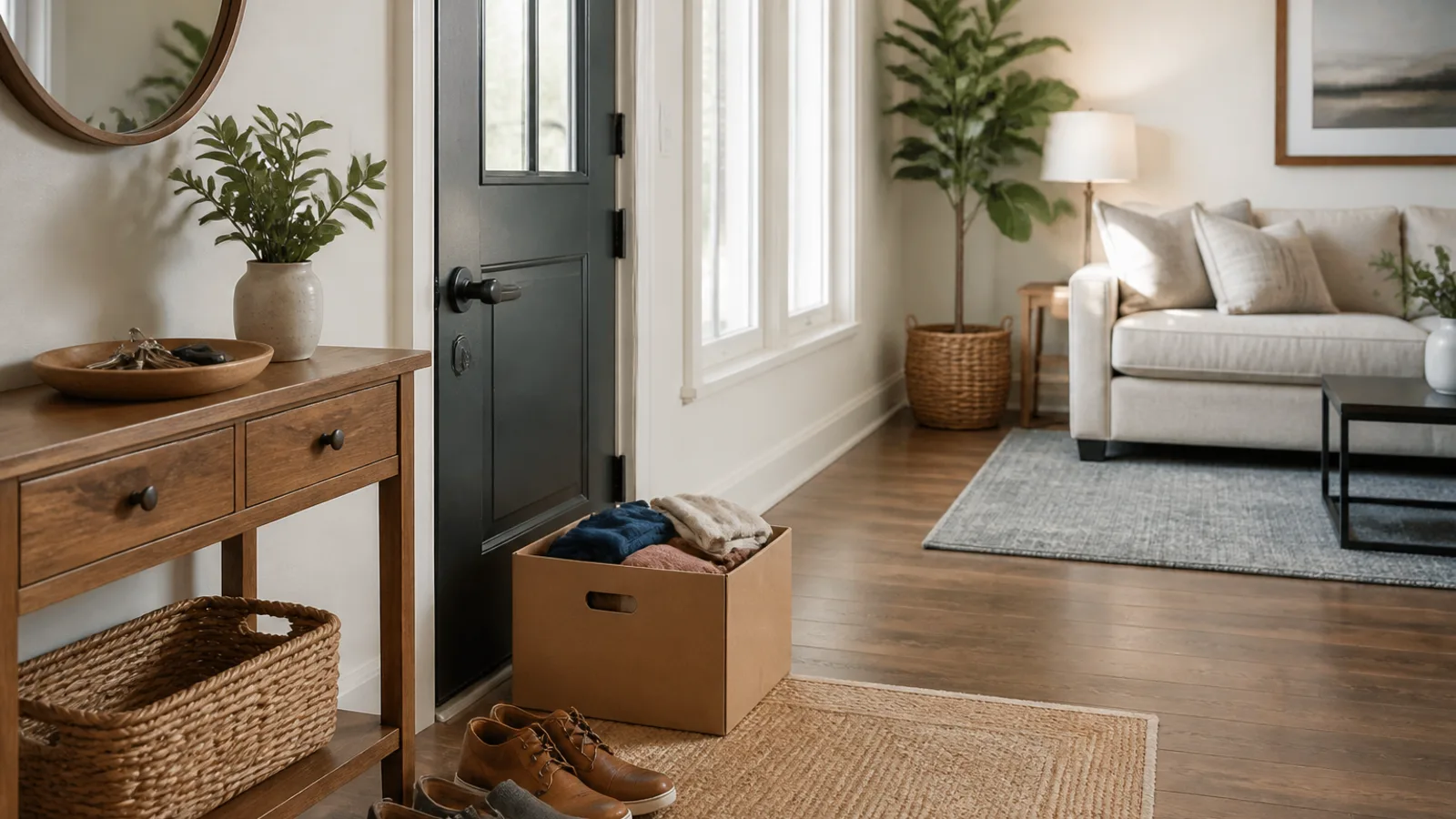
For an entryway, that might mean recycling old flyers, returning shoes to their owners, hanging coats, creating a small tray for keys and placing a donation bag by the door. It will not solve the whole house, but it will remove one daily irritation.
The keep, donate, sell, recycle or bin rules
Clutter often lingers because every item feels like a special case. These rules make decisions less personal and more practical.
Keep it if it earns its space
Keep items you use, love, need or would realistically replace if they disappeared. Seasonal items are fine if you use them each year and can store them without blocking everyday things.
Be cautious with backups. One spare toothpaste may be useful. Twelve half-used shampoos taking over a cupboard may be a sign the system needs a reset.
Donate it if it is useful, but not useful to you
Good donation candidates include duplicate kitchen tools, books you will not reread, toys in good condition, clothes that no longer fit your life and unopened products accepted by local organisations. Donate only clean, safe and usable items. A broken appliance or stained cushion is not a gift; it is someone else’s disposal problem.
Sell it if the return is worth the effort
Selling makes sense for higher-value, in-demand, easy-to-describe items: a quality small appliance, a barely used baby item or a piece of furniture in good condition. It is less useful for low-value items that require photos, messages, haggling, postage or repeated no-shows.
If the selling pile is blocking your hallway, simplify. Money matters, but so does having your home back.
Recycle or bin it when it cannot be used safely
Cracked food containers, dried-out pens, broken toys, expired sunscreen, unsafe electrical items and mouldy textiles do not need to stay because you feel guilty. Recycle what your area accepts, and dispose of hazardous items according to local guidance. In the US, the Environmental Protection Agency offers general recycling information; outside the US, check your local authority.
A room-by-room decluttering plan
To declutter room by room, begin with the areas that affect daily life before moving into storage spaces. Work by surface, shelf or category rather than attacking an entire room at once.
Entryway and hallway
This area should help you leave and return without chaos. Remove excess shoes, coats, bags, post or mail, returns and mystery items. Keep only the current season’s outerwear here if space is tight.
Create simple homes: a tray for keys and wallets, hooks for regular coats, a basket for each household member or a small outgoing zone for library books, returns and donations. Do not buy more storage until you have reduced the volume.
Living room
Start with flat surfaces: coffee table, side tables, TV unit and shelves. Return mugs, laundry, paperwork and toys to their proper rooms. Edit magazines, books, cushions, throws, games, chargers and remote controls.
If the living room is shared with children, use one basket for current toys or games and reset it at the end of the day. Closed storage can create visual calm, but avoid using it to hide items you have not sorted.
Kitchen
Declutter the kitchen by function, not by fantasy. Start with counters and keep out only what you use daily or almost daily. Then tackle one category at a time: mugs, water bottles, food containers, utensils, spices, pantry food, baking supplies or gadgets.
Ask whether each item matches the way you actually cook. If weeknight dinners are simple, you may need one reliable pan more than several speciality tools. Store items near where you use them: mugs by the kettle or coffee maker, knives near the prep area, food containers near the leftovers zone.
When checking pantry dates, remember that food labelling varies by country and product. In many places, “best before” often relates to quality, while “use by” or expiry-style dates may be more closely tied to safety, but wording and rules vary. If food looks unsafe, smells off or packaging is damaged, do not risk it. For UK guidance, the Food Standards Agency explains best before and use-by dates; elsewhere, follow your local food safety authority.
Bathroom
Bathrooms collect half-used products quickly. Pull out one shelf or drawer at a time and sort into daily face, hair, dental, first aid, travel and cleaning. Toss products that smell odd, have changed texture or are clearly expired. Dispose of medicines according to local advice.
Keep daily items accessible and occasional products separate. A small basket for daily skincare or shaving supplies can stop the sink becoming a permanent product shelf.
Bedroom
The bedroom’s main job is rest, dressing and recovery. Clear bedside tables, floor piles and laundry first. Remove mugs, work papers, children’s toys, random receipts and anything that belongs elsewhere.
If clothes always land on a chair, do not pretend they will magically start going straight into the wardrobe. Create a realistic landing zone: two hooks for clothes that can be worn again, plus a laundry basket that is easy to reach.
Wardrobe or closet
You do not have to empty every item onto the bed. That works only if you have the energy to finish. Instead, work by category: jeans, workwear, coats, shoes, activewear, underwear or occasionwear.
Ask:
- Does it fit my current body and life?
- Is it comfortable enough that I actually choose it?
- Can I wear it with what I already own?
- Would I be annoyed if I had to wear it tomorrow?
If it would annoy you to wear it tomorrow, it does not belong in your prime wardrobe space.
Be gentle with body changes. If you need an out-of-season, uncertain-size, maternity or special-occasion box, give it a clear limit and store it out of daily sight. Let the clothes hanging in your main closet fit the body and life you have this week, so getting dressed is not a daily argument with the past.
Home office and paperwork
Paper clutter grows when every sheet requires a decision. Sort broadly first: action, file, shred, recycle, scan and sentimental. Create one small action tray for forms, bills or letters that need attention this week.
Keep important documents according to the legal and tax guidance in your country, state or province. If you are unsure about financial, legal or tax records, ask a qualified professional. Shred anything with sensitive personal or financial details before recycling.
Children’s spaces
For children, simple categories are easier to maintain: blocks, dolls, cars, books, craft, dress-up. Remove broken toys, dried-out pens, outgrown clothes and games with too many missing pieces.
Involve children where age-appropriate, but offer controlled choices. “Pick five stuffed animals for your bed” is easier than “What do you want to get rid of?” Toy rotation can also help: keep fewer items out and store the rest to swap later.
Laundry and linen storage
Match linens to the beds, towels and real routines in your home. A practical system might be one set on the bed, one clean set in storage, plus guest or seasonal extras if you genuinely use them. The right number varies by household, climate, laundry frequency and guests.
Donate clean surplus linens if local organisations accept them. Some animal shelters accept certain towels or blankets, but check first. Remove anything worn, uncomfortable, badly stained or no longer useful.
Garage, loft, attic, basement or storage unit
Leave these spaces until you have momentum, time and an exit plan. They often hold delayed decisions: tools, holiday décor, sports equipment, luggage, keepsakes, DIY supplies and inherited items.
Work by shelf or category, not by whole room. Watch for safety issues such as chemicals, pests, mould, heavy boxes and blocked access. If you rent a storage unit, look carefully at the ongoing cost. Monthly fees can quietly turn indecision into a long-term bill, especially when the contents are not used, displayed or missed.
How to handle sentimental items
Sentimental clutter is different because the item is carrying a memory, a person or a version of your life. Go slowly. You do not have to keep every object to honour what it represents.
Try separating memory from volume. Choose representative pieces rather than entire boxes: one sweater, a handwritten note, a few photos, a favourite recipe card. Photograph bulky or fragile items if the memory matters more than the object itself.
A memory box can help, but give it a limit. Choose the container first, label it clearly and decide whose memories or which life chapter it holds. If you are grieving or going through divorce, illness or a major transition, it is fine to pause and make only practical safety decisions for now. A trusted friend, therapist, professional organiser or estate specialist can help if the process feels too heavy.
What to do with other people’s belongings
Do not declutter another adult’s belongings without permission. It can damage trust, even if your intentions are good. Start with your own items and shared spaces you can agree on.
Use neutral language. “Can we make the hallway easier to use?” is more productive than “Your stuff is everywhere.” Set zones and limits, such as one shelf per person in the hall cupboard or one basket for items that need to go upstairs.
For mystery items in shared spaces, try a claim-by date. Put them in a labelled box, tell the household where it is and agree when it will be reviewed. With children, partners, housemates or older relatives, offer help without taking over. Clutter can be tied to stress, disability, neurodivergence, mental health, grief or attachment — not laziness.
A 15-minute decluttering plan for busy weeks
When life is full, use micro-sessions. The only rule is that you finish the exit step: rubbish leaves, donations move to the door or car, and kept items go back where they belong.
- Monday: Clear one kitchen counter or drawer. Remove rubbish, return dishes and keep only daily-use items.
- Tuesday: Sort one bathroom shelf. Remove expired or unsafe products, group daily items and wipe the shelf.
- Wednesday: Reset the entryway. Shoes, coats, post or mail, keys and returns go to their homes.
- Thursday: Clear one bedside table. Remove cups, receipts, old tissues, extra books and random chargers.
- Friday: Tackle the clothes chair or laundry pile. Wash, hang, fold or donate the obvious rejects.
- Weekend: Do one donation drop, recycling run or selling task. Getting items out is part of decluttering.
If you only have energy for one thing, move the donation bag to its exit point. That small step turns decisions into progress.
How to stop clutter coming back
Decluttering only lasts when your systems match your real habits. If putting something away is annoying, it will not happen consistently.
Give daily items easy homes
Store things where you use them, not where an ideal version of your home says they “should” go. Keys need a landing spot by the door. Chargers need a basket or drawer near the sofa or bed. School forms need one visible action tray, not five piles across the house.
Use one-in, one-out selectively
This works well for clothes, mugs, books, toys, beauty products and kitchen gadgets. It may not work for essentials, growing children, medical supplies or temporary life changes. Use it as a guide, not a punishment.
Create tiny reset habits
- Do a five-minute evening reset.
- Sort post or mail over the recycling bin.
- Clear kitchen counters before bed.
- Keep a donation bag in a wardrobe or closet.
- Use a basket for items that belong in another room.
Pause before buying
Before buying storage, décor, sale items or another kitchen tool, ask: Where will this live? What will it replace? Do I need it now? Buying organisers before decluttering often creates prettier clutter, not less clutter.
When decluttering is not enough
Sometimes clutter is not just about having too much stuff. A home may lack storage, have too many people for the space, or be affected by chronic illness, mobility needs, ADHD, depression, grief, trauma or financial stress.
If clutter is creating safety risks, blocked exits, pest issues, severe distress or rooms that cannot be used normally, consider outside support. Depending on the situation, that might mean a doctor, therapist, local services, social worker, professional organiser or hoarding-informed specialist. The first goal does not have to be a beautiful home. It may be clear walkways, access to the bed, a usable kitchen sink and safer exits.
FAQ
What is the best room to declutter first?
Start with the area that causes daily frustration but has low emotional weight. The entryway, kitchen counter, bathroom cabinet or bedside table are often good first choices. Save sentimental boxes, garages and long-term storage for later.
How do I declutter when I feel overwhelmed?
Set a 15-minute timer and choose one small area, such as a drawer or surface. Remove rubbish first, put misplaced items in a basket and choose only easy donations. Do not empty a whole room if you do not have the energy to finish it.
Should I donate or sell my clutter?
Sell items only if they are likely to be worth the time and effort. Donate clean, usable items that would otherwise slow your progress. If you do sell, set a deadline so the selling pile does not become another form of clutter.
How do I declutter sentimental items?
Choose a few representative pieces, use a limited memory box and take photos of bulky items when the memory matters more than the object. Go slowly during grief or major life changes, and ask for support if the process feels too difficult.
How often should I declutter my home?
Small weekly resets are usually more sustainable than rare dramatic purges. Add seasonal reviews for clothes, toys, pantry items, paperwork and storage areas so clutter does not have time to rebuild.
Conclusion: make decluttering something you can repeat
The most effective way to learn how to declutter your home is not to force one perfect method onto every room. Start with visible, low-emotion areas. Use clear keep, donate, sell, recycle and bin rules. Respect sentimental items and other people’s belongings. Most importantly, finish each session by getting things to their next destination.
A calmer home is built in small, repeatable decisions. Fifteen minutes counts. One drawer counts. One donation bag leaving the house counts. Keep going at a pace your life can actually support.





Join the conversation
Sign in — Sign in to join the conversation.