
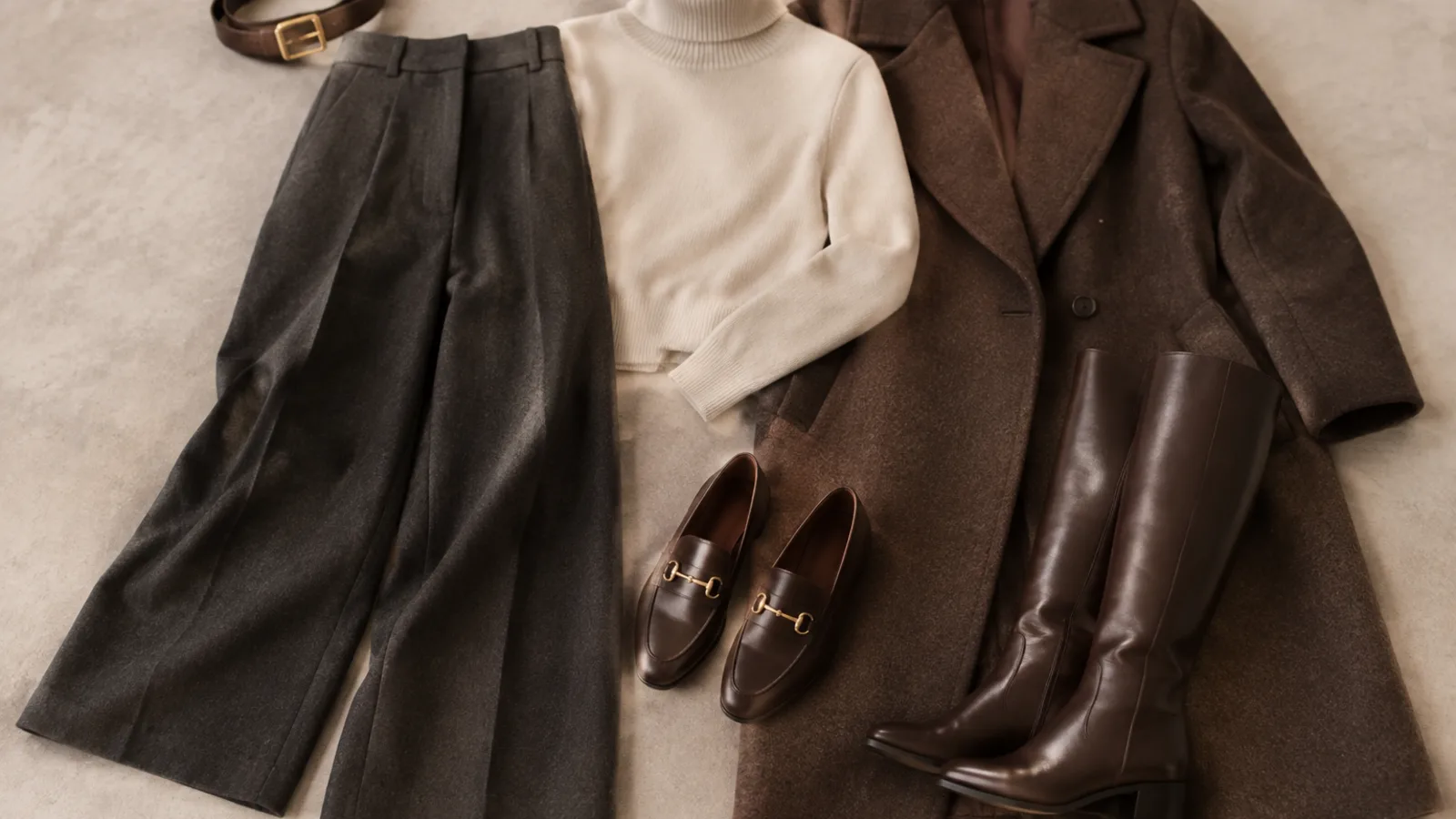
Wide-leg trousers have one structural demand: they need a clear visual anchor to look intentional rather than shapeless. Get that right and they are one of the most elegant things you can wear when the weather turns cold. Get it wrong — usually through the wrong shoe or a bulky top layer — and the whole outfit works against you. Learning how to style wide leg trousers in winter really comes down to one proportion principle, applied consistently across every footwear and layering decision.
The good news is that the principle is simple once you see it. This guide covers the rules that actually matter: which shoes lengthen the leg instead of shortening it, how to layer for warmth without adding bulk, and how to build outfits that feel polished in real life, not just on a mood board.
The One Proportion Rule That Governs Everything
A wide hem carries a lot of visual weight at the bottom of an outfit. To stop it reading as heavy or shapeless, it needs one of two anchors: a long, unbroken leg line running into it from above, or a clearly defined waist sitting above it. Without at least one of those, the trouser dominates the outfit in the wrong way.
Every decision about footwear and layering should serve one of those anchors. A shoe that extends the leg line without creating a visual break at the hem serves the first. A slim knit tucked into a high waist serves the second. The strongest wide-leg outfits do both at once.
Trouser length is part of the shoe decision
Most style advice treats hemming as an afterthought, but for wide-leg trousers it is part of the outfit formula. A full-length trouser that grazes the floor or just above it works with almost any footwear because it hides the shoe-to-hem transition. An ankle-grazing hem depends entirely on the shoe: the wrong cut creates a sharp horizontal break that shortens the visual leg.
If you are hemming a pair for winter, hem them for the shoe with the highest heel in your regular rotation, or use temporary hem tape when you want to switch between heels and flats. That gives you flexibility without compromising the line.
Footwear That Works — and Why Ankle Boots Are the Tricky Option
The ankle boot has become the default recommendation for wide-leg trousers, but it is actually one of the hardest pairings to get right. The boot shaft cuts the leg at the widest point of the hem, creating a visual break rather than a continuous line. It can work, but it requires a precise trouser length and a boot with a slim enough profile to disappear under the fabric.
Loafers and lug-sole loafers
The most reliable choice. A loafer's low profile lets the trouser skim the top of the foot and flow into the shoe without interruption, keeping the leg line uninterrupted. The hem should just touch the top of the foot — too long and it bunches, too short and you create an awkward gap.
A heavyweight wool wide-leg in charcoal with a leather lug-sole loafer in cognac or black is a complete outfit from the waist down. Thick wool socks visible at the ankle are an intentional detail in this pairing, not a cold-weather compromise. A pinstripe wide-leg with a classic horsebit loafer reads immediately as tailored.
Pointed-toe block-heel shoes
The pointed toe extends the line of the leg downward even under a full-length hem, which is why this pairing feels longer and more elegant than the shoe's heel height would suggest. It works best when the trouser just grazes the top of the shoe — not so long that it covers the shoe entirely, but long enough that the fabric breaks neatly over the vamp rather than pooling.
A wide-leg trouser in deep burgundy velvet or fine flannel with a pointed-toe block-heel pump is a strong evening or smart-office option. The heel adds height; the pointed toe provides the elongating line; the structured fabric holds the trouser's shape at the hem.
Knee-high and over-the-knee boots
These work because the boot shaft disappears under the trouser entirely, so the hem lands on a clean column of leather rather than breaking on a visible cuff. One firm requirement applies: the trouser must be long enough that the hem clears the top of the boot shaft cleanly, with no gap visible between the two. Any gap draws the eye exactly where you do not want it.
A wide-leg trouser in camel wool over a chocolate suede knee-high boot is a tonal combination that feels effortless. An ivory wide-leg with a black over-the-knee boot uses contrast deliberately and reads best when balanced by a matching black or dark top to anchor the upper half.
Mary Janes and strap-detailed heels
Worn with a full-length wide-leg trouser, a heeled mary jane creates a deliberately fashion-forward proportion — the strap glimpsed at the ankle as the fabric moves is part of the effect. This works best with dressier fabrics: satin, fine flannel, or wide-rib cord. With heavier denim, the shoe can feel too delicate for the trouser weight.
For warmth, opaque tights in a shade matching the trouser or the shoe extend the leg line without breaking it. That makes this one of the cleanest cold-weather workarounds for shoes that do not offer much coverage.
When ankle boots do work
A pointed-toe ankle boot with a slim shaft can work with a trouser that is exactly ankle-grazing, so the hem clears the boot entirely and the pointed toe picks up the leg line below the fabric. A deliberately cropped wide-leg worn as a contrast-proportions look is the other legitimate use.
What to avoid: a chunky lug-sole ankle boot paired with a mid-length wide-leg trouser. The boot's bulk combined with the hem stopping partway up the shaft creates precisely the heavy-bottomed silhouette most people are trying to avoid.
How to Style Wide-Leg Trousers in Winter Without Adding Bulk
The top half of a wide-leg outfit needs to do one of two things: stay close to the body so the volume lives only in the trouser, or be structured and tailored so the volume on top is controlled rather than shapeless. Anything loose and unstructured above the waist creates an A-frame — wide at the bottom, wide at the top, with no visible waist.
Fitted knitwear and roll-necks
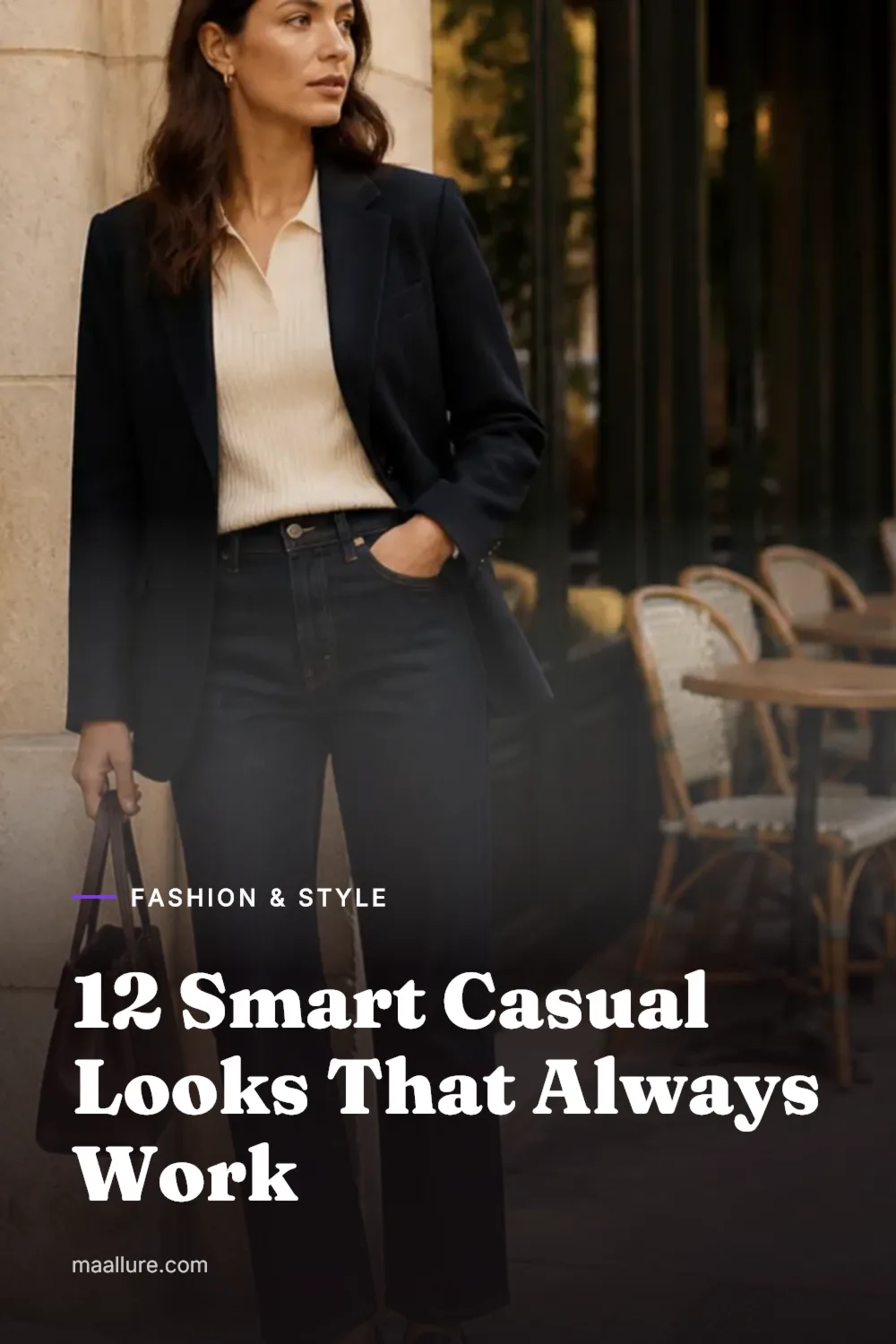
The easiest cold-weather answer. A slim-fit ribbed roll-neck tucked into the trouser defines the waist, keeps visual mass below the hip, and adds real warmth without adding width. A fine-gauge merino roll-neck in cream tucked into wide-leg navy trousers is a complete outfit before outerwear enters the picture. A fitted chunky-rib polo in oatmeal with high-waisted black wide-leg trousers is the casual equivalent of the same logic.
If you need more warmth, add a thin thermal base layer underneath the knit. Because wide-leg trousers have more room through the leg, they can hide slim insulating layers easily, which is one of the most practical advantages of this silhouette in winter.
The blazer, used correctly
A tailored blazer works because its structure disciplines the top half. Wear it open over a tucked knit to keep the waist visible. Length matters: a hip-length blazer is neutral; a cropped blazer is intentional and makes the leg appear longer; a long blazer approaches tunic length and begins competing with the trouser for visual dominance.
A strong office outfit: a double-breasted blazer in Prince of Wales check over a fitted black polo neck, wide-leg trousers in black, and a knee-high boot. The pattern on top against the solid dark bottom makes the proportions clear and keeps the whole outfit composed.
Long coats as the outer layer
A longline coat hitting at or below the knee is the most reliable outer layer for wide-leg trousers. It creates a single vertical column and the trouser reads as a continuation of that line at the hem. The coat should not add volume at the hip or thigh — a structured wrap, a straight-cut wool coat, or a belted trench all work well. A long, oversized puffer does not.
A camel wool straight-cut coat over wide-leg rust or ivory trousers is a clean, season-appropriate pairing. A belted charcoal trench over wide-leg grey flannel applies the same logic to a slightly more formal register.
The waistcoat as a layering tool
A fitted waistcoat over a slim knit or fine shirt defines the waist and adds visual interest without adding width. It works particularly well for work and smart-casual dressing. A tailored waistcoat in dark tweed over a fine-rib roll-neck and coordinating wide-leg trousers creates a soft-suit effect without requiring an exact fabric match.
What to avoid
Some layers simply fight the shape of the trouser.
- Oversized hoodies and sweatshirts: they add volume where you do not need it and hide the waist entirely.
- Bulky padded gilets over fine knits: the hem of the gilet cuts the torso at the widest visual point.
- Very long tunics or oversized shirts left untucked: they obscure the waist and shorten the leg visually.
- Long, boxy outer layers without structure: they can make the whole outfit feel heavy rather than streamlined.
Five Cold-Weather Outfits You Can Actually Build
These are not aspirational runway ideas. They are practical formulas you can recreate from familiar wardrobe pieces, with notes on why the proportions work and what to adjust when the weather is harsher.
1. Office, moderate cold
- Formula: High-waisted wide-leg trousers in charcoal wool flannel, fine merino roll-neck in ivory tucked in, cropped double-breasted blazer in charcoal, leather lug-sole loafer in black.
- Why it works: The cropped jacket shows the waist, the roll-neck keeps the top half slim, and the loafer lets the trouser fall naturally.
- Cold-weather tweak: Add sheer thermal tights or thin wool socks if you need more warmth.
2. Weekend, bitter cold
- Formula: Wide-leg trousers in camel wool, fitted chunky roll-neck in cognac tucked in, straight-cut mid-length wool coat in deep brown, leather knee-high boot in tan.
- Why it works: The tonal palette keeps the outfit cohesive and the boot disappears under the hem for a long line.
- Cold-weather tweak: Choose a coat with a substantial lining and add thermal layers under the trousers if needed.
3. Smart evening
- Formula: Wide-leg trousers in deep burgundy velvet, fitted satin camisole tucked in, single-breasted tailored blazer in black worn open, pointed-toe block-heel pump in black.
- Why it works: The velvet holds the hem shape, the blazer adds structure, and the pointed toe lengthens the line without needing a dramatic heel.
- Cold-weather tweak: Add sheer black tights under the trouser if the evening is especially cold.
4. Smart-casual day
- Formula: Wide-leg jeans in a dark indigo rinse, fitted ribbed polo-neck in black tucked in, tailored waistcoat in dark navy, lug-sole loafer in cognac.
- Why it works: The waistcoat replaces a cardigan or sweatshirt with something more defined, so the denim feels polished rather than slouchy.
- Cold-weather tweak: Layer a thin thermal top under the polo-neck for extra insulation.
5. Formal or festive
- Formula: Full-length wide-leg trousers in ivory fine flannel, fine-knit fitted crew-neck in ivory tucked in, long structured wrap coat in camel worn open, heeled mary jane in black with opaque black tights.
- Why it works: The monochrome palette creates one uninterrupted column, and the black shoe-and-tights pairing grounds the look without breaking the line.
- Cold-weather tweak: Keep the tights opaque and choose a coat with enough room for a slim thermal layer underneath.
Fabric and Colour: A Few Decisions That Make Everything Easier
Heavyweight fabrics drape better and hold the wide-leg shape through a full day of wear. Wool, flannel, velvet, and wide-rib cord all behave well; they create a clean hem that falls predictably on the shoe. Lightweight fabrics like washed cotton or linen lose structure in cold weather and make the trouser look limp rather than intentional — worth knowing before you buy.
If you want the easiest possible winter formula, think in terms of either contrast or continuity. Dark trousers with a lighter or brighter top half draw the eye upward and lengthen the visible leg. Tonal dressing — staying within one shade or a close range — is a strong alternative that avoids any top-to-bottom division entirely. Both work; the choice comes down to whether you want the trouser to stand out or to become part of a single, elongated silhouette.
A quick winter fabric cheat sheet:
- Best: wool flannel, heavyweight wool, velvet, corduroy, dense tailoring fabrics.
- Good with care: denim, ponte, structured cotton blends.
- Skip for cold weather: linen, washed cotton, anything too thin to hold a clear hem.
Frequently Asked Questions
What shoes make wide-leg trousers look longer in winter?
Loafers worn with a full-length hem and pointed-toe heeled shoes both elongate the leg without creating a break at the hem. Knee-high boots worn under a long trouser extend the line from inside rather than below it. The consistent factor across all of them is a smooth transition between hem and shoe rather than an abrupt horizontal cut.
Can I wear wide-leg trousers with a chunky knit without looking oversized?
Yes, if the knit is fitted rather than oversized. A chunky-rib knit that follows the body and tucks in at the waist adds warmth and texture without competing with the trouser's volume. An oversized or boxy knit on top of a wide-leg trouser creates the A-frame problem immediately. Fit is the deciding factor, not thickness alone.
How long should wide-leg trousers be for winter footwear?
Full-length, grazing the floor or just above it, is the most versatile option because it works with nearly every shoe and hides the shoe-to-hem transition. For ankle-grazing hems the trouser must clear the top of whatever boot you are wearing, with no overlap. If you are having a pair hemmed for winter specifically, hem them for the shoe with the highest heel in your regular rotation.
What coat works best over wide-leg trousers?
A straight-cut or slightly fitted longline coat in a structured fabric — wool, trench cotton, or a belted wrap — creates one vertical column with the trouser beneath it. It does not need to be strictly tailored, but it should avoid adding volume at the hip or thigh, which is where oversized and heavily padded styles cause trouble.
Can wide-leg jeans follow the same styling rules as tailored wide-leg trousers?
Largely yes, with one adjustment for fabric register. Wide-leg jeans are stiffer than wool or flannel, so they hold their hem shape reliably, but they read as casual, which affects what shoes and layers sit naturally alongside them. A lug-sole loafer, a fitted waistcoat, and a knee-high boot all transfer directly from the tailored versions. Very dressy shoes — heeled mary janes, velvet mules — tend to look at odds with denim weight. Keep the footwear in a comparable register to the fabric and the same proportion rules apply.
The goal when you are working out how to style wide leg trousers in winter is not to memorise a fixed list of pairings but to understand the two anchors — the long, unbroken leg line and the defined waist — and check each outfit against them. When both are present, almost any combination works. When one is missing, that is the single adjustment to make, and the formulas above tell you exactly where to look.
For more on coat and shoe proportions, the British Fashion Council and Vogue style guides are useful reference points for tailoring and silhouette balance. See British Fashion Council and Vogue.
Join the conversation
Sign in — Sign in to join the conversation.