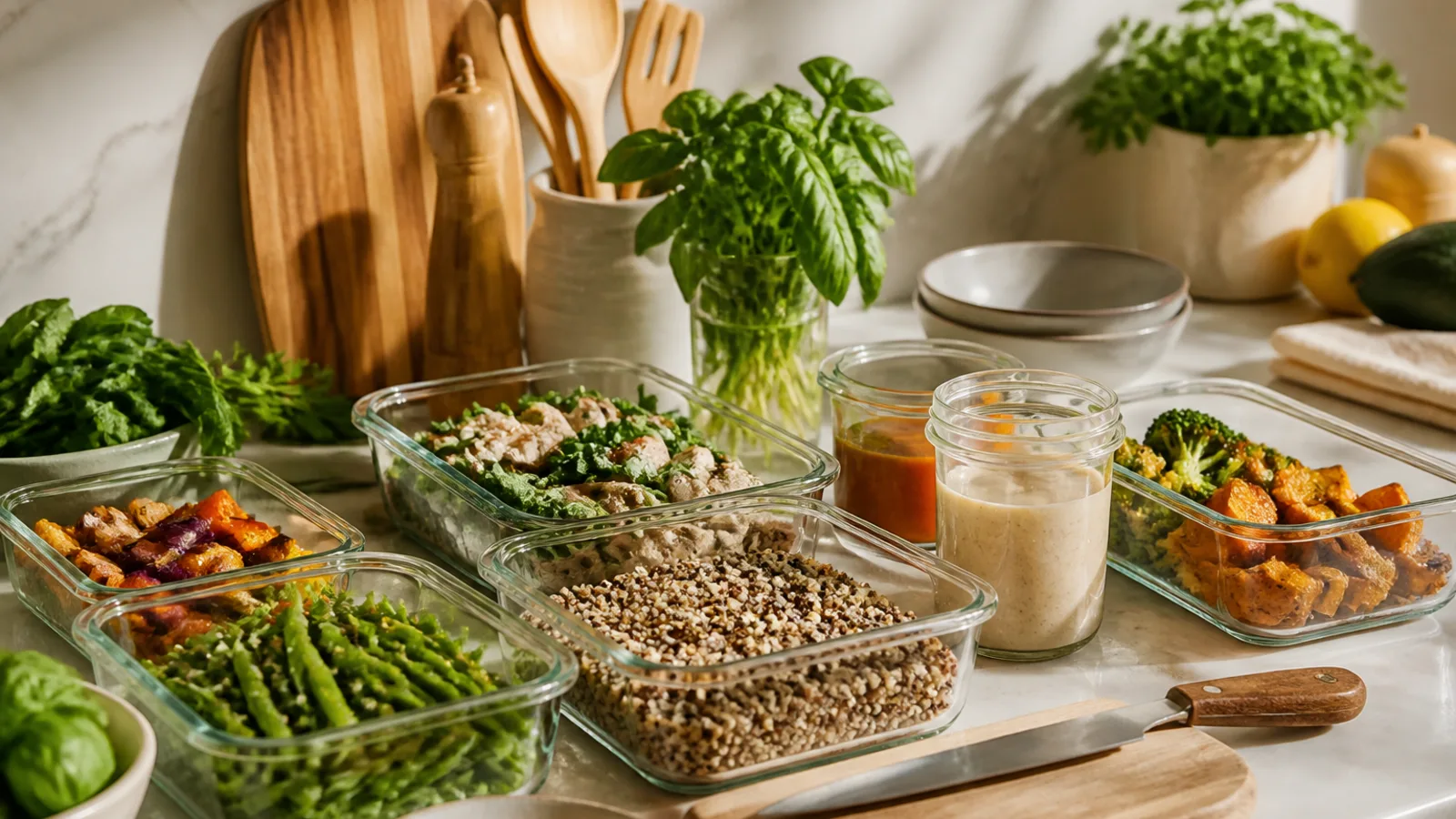
Meal prep does not have to mean eating the same chicken-and-rice bowl for five days straight. If you are looking for meal prep for beginners, the best place to start is with a simple system: choose a few meals you already like, prep the parts that save you the most time, store them clearly, and leave yourself enough flexibility to change your mind midweek.
For your first week, aim for progress rather than perfection. You do not need special equipment, a colour-coded fridge, or an entire Sunday in the kitchen. A focused 90-minute prep session can give you breakfasts, lunches, and dinner shortcuts without making the week feel repetitive.
The beginner rule: prep for three or four days first, not seven. You will waste less food, learn what you actually enjoy, and build a routine you can repeat.
What Meal Prep Really Means
Meal prep simply means preparing some part of your food ahead of time. That might be full meals packed into containers, but it can also be as small as washing salad leaves, cooking rice, chopping vegetables, boiling eggs, or making a sauce.
There are two main styles:
- Batch cooking: making a larger quantity of a complete meal, such as chilli, soup, curry, pasta bake, or overnight oats.
- Ingredient prep: preparing separate components, such as cooked grains, roasted vegetables, boiled eggs, washed greens, and sauces, so you can assemble different meals later.
Most beginners do best with a hybrid approach: one or two ready-to-eat meals, plus a few flexible ingredients that can become bowls, wraps, salads, omelettes, pasta, or stir-fries.
Meal Prep for Beginners: Batch Cooking or Ingredient Prep?
When batch cooking works best
Batch cooking is ideal if you like routine, need grab-and-go lunches, or want to make fewer decisions during the week. It works especially well for meals that reheat nicely, such as soups, stews, lentil bolognese, bean chilli, curries, casseroles, and breakfast muffins.
The trade-off is repetition. If you make five portions of a recipe you only feel lukewarm about, Wednesday lunch can feel like a punishment. For your first week, batch cook something you already know you enjoy.
When ingredient prep works best
Ingredient prep is better if you get bored easily or cook for a household with different preferences. A tray of roasted vegetables, a cooked grain, a protein, and two sauces can become several different meals.
For example, cooked chicken or chickpeas, rice, roasted peppers, courgette or zucchini, and a lemon yoghurt sauce could become:
- A rice bowl with herbs and cucumber
- A wrap with salad and hummus
- A quick fried rice with egg
- A loaded baked potato topping
- A pasta dinner with pesto or tomato sauce
The trade-off is that you still need to assemble meals during the week. For many people, that five-minute assembly is worth it for the variety.
The easiest first-week choice
Start with this middle ground:
- One breakfast shortcut, such as overnight oats, boiled eggs, or yoghurt parfait ingredients
- One lunch base, such as soup, grain bowls, wraps, or leftovers
- Two or three dinner ideas using the same prepared ingredients in different ways
This gives you structure without locking your whole week into identical meals.
Step 1: Choose Recipes You Will Actually Eat
Your first meal prep week is not the moment to test five new recipes from different cuisines with long ingredient lists. Choose meals you already like and understand. Familiar food is easier to shop for, cook, and adjust.
Look for recipes with overlapping ingredients. If one meal uses rice, peppers, beans, and chicken, choose another meal that can use the same rice and peppers in a different way. This keeps the shopping list shorter and reduces the chance of forgotten produce wilting in the fridge.
A simple first-week menu
- Breakfast: overnight oats with fruit, or boiled eggs with toast
- Lunch: grain bowls with roasted vegetables, chicken, tofu, beans, or chickpeas
- Dinner 1: tacos or wraps using the same protein and vegetables
- Dinner 2: pasta with roasted vegetables and pesto or tomato sauce
- Dinner 3: stir-fry or fried rice using leftover rice and vegetables
- Snacks: yoghurt, fruit, cut carrots, hummus, cheese and crackers, or nuts
Choose foods that hold up well
Sturdy ingredients such as grains, beans, lentils, roasted vegetables, cooked proteins, potatoes, soups, and stews usually store and reheat well.
Be more careful with delicate greens, crispy foods, seafood, avocado, and creamy dressings. They can still work, but they are often better assembled fresh or stored separately. Keep sauces, dressings, herbs, and crunchy toppings apart until serving.
Step 2: Write a Shopping List Without Overbuying
Before you shop, check your fridge, freezer, and cupboards. Meal prep becomes cheaper and easier when you build around what you already have: half a bag of rice, frozen peas, a tin of beans, pasta, oats, eggs, or a jar of sauce.
Then write your list by meal, and group it by section so shopping is faster.
The beginner shopping list framework
- Protein: chicken, turkey, tofu, eggs, beans, lentils, mince, fish, yoghurt, or cottage cheese
- Carbohydrate base: rice, pasta, potatoes, oats, wraps, quinoa, couscous, noodles, or bread
- Vegetables: a mix of hardy vegetables for cooking and fresh options for crunch
- Fruit: for breakfast, snacks, lunchboxes, or quick desserts
- Sauces and flavour: salsa, pesto, hummus, curry paste, vinaigrette, tahini, herbs, lemon, or lime
- Extras: nuts, seeds, cheese, crackers, pickles, olives, or yoghurt
If you are cooking for one, buy fewer fresh items and use freezer staples where possible. If you are cooking for a family, focus on flexible bases and toppings so everyone can customise their plate.
Step 3: Set Up Containers and Labels
You do not need a matching set of expensive containers. Start with what you have: lidded bowls, jars, reusable tubs, freezer bags, or baking dishes with covers. Clear containers are useful because you can see what needs using, but they are not essential.
What to use for what
- Glass containers: useful for reheating and storing leftovers, though often heavier and more expensive
- Plastic containers: light and convenient; check whether they are suitable for microwave, freezer, or dishwasher use if that matters to you
- Jars: good for oats, sauces, dressings, layered salads, and chopped fruit
- Freezer bags: useful for smoothie packs, freezer meals, marinated proteins, and flat storage
- Small pots: ideal for sauces, dips, nuts, seeds, and toppings
How to label meal prep properly
Labelling is one of the easiest ways to stop food being forgotten. Use masking tape, freezer tape, washable labels, or a marker on suitable lids.
- Write the name of the food.
- Add the date you prepared it.
- Include a reheating note, if useful.
- Mark allergens or spice level if cooking for others.
Examples:
- “Roasted veg — Sunday — use first”
- “Bean chilli — 2 portions — freezer”
- “Peanut dressing — contains nuts”
- “Rice — Monday — cooled quickly, reheat once until steaming”
Put older items at the front of the fridge so they are used first.
Step 4: Run a 90-Minute Sunday Prep Session
This 90-minute plan is a guide, not a test. If it takes longer the first time, that is normal. You will get faster once you know your recipes and your kitchen rhythm.
Before you start: 10-minute setup
Clear your counters, empty the dishwasher or drying rack, and set out containers and labels. Read your recipes fully before you cook. Wash produce, preheat the oven, and start boiling water if needed.
Minutes 0–20: start the longest-cooking foods
Begin with anything that needs the most time. Cook rice, quinoa, potatoes, pasta, or another base. If you are making soup, chilli, lentils, or a stew, get it started now.
This is also the time to put eggs on to boil, preheat the oven, and prepare a sheet pan of vegetables. Try chopped sweet potatoes, onions, peppers, broccoli, carrots, or courgette. Season simply with oil, salt, pepper, and spices you like.
Minutes 20–45: cook proteins and prep vegetables
Next, cook your protein or plant-based option. This might be chicken thighs, turkey mince, tofu cubes, lentils, chickpeas, beans, or boiled eggs.
If you are handling raw meat, poultry, or seafood, keep it separate from ready-to-eat foods. Use a separate board if possible, wash your hands well, and clean knives and surfaces before moving on.
While food cooks, chop raw snack vegetables, wash salad leaves, grate cheese, slice spring onions or scallions, or portion fruit for the next few days.
Minutes 45–65: make sauces and flavour boosters
Sauces are what make beginner meal prep feel less dull. You do not need five complicated options. One or two simple sauces can transform the same ingredients.
- Lemon yoghurt sauce: yoghurt, lemon juice, salt, pepper, garlic, and herbs
- Peanut-lime dressing: peanut butter, lime juice, soy sauce or tamari, a little water, and chilli if you like heat
- Quick vinaigrette: oil, vinegar, mustard, salt, and pepper
- Pesto shortcut: pesto loosened with olive oil, lemon, or a splash of pasta water
- No-cook options: salsa, hummus, tahini, chutney, or shop-bought dressing you enjoy
Minutes 65–80: portion, cool, and pack
Portion lunches if you know you need grab-and-go meals. Otherwise, store ingredients separately so you can mix and match.
Let hot food cool slightly before refrigerating, but do not leave it sitting out for long periods. To cool food faster, divide large batches into shallow containers. For grains or roasted vegetables, you can spread them across a clean, rimmed baking sheet for 10–15 minutes to vent steam before boxing them.
As a general food safety rule, many authorities advise not leaving cooked food at room temperature for more than two hours, or one hour in very hot conditions. Cooked rice needs extra care: cool it quickly, refrigerate promptly, and reheat it only once until steaming hot. Some guidance is more conservative for rice, so check your local food safety agency if you prep it often.
Minutes 80–90: label, store, and reset
Label everything, move older food forward, wipe the counters, and wash or load dishes. Before you finish, make one quick note for next time: “make more sauce,” “buy fewer greens,” “freeze half the chilli,” or “prep wraps fresh.”
Save this 90-minute Sunday timeline:
- 0–10 minutes: clear counters, set out containers, wash produce, preheat the oven.
- 10–30 minutes: start grains, potatoes, eggs, soup, chilli, or sheet-pan vegetables.
- 30–60 minutes: cook protein, chop raw vegetables, wash greens, portion snacks.
- 60–80 minutes: make one or two sauces, portion lunches, cool food safely.
- 80–90 minutes: label, store, wipe down, and write one note for next time.
Food Safety Basics for Meal Prep
Food safety matters, but it does not need to feel intimidating. The essentials are simple: wash hands, keep raw and ready-to-eat foods separate, refrigerate prepped food promptly, and reheat foods thoroughly where appropriate.
Storage times vary depending on the ingredient, how it was cooked, and your fridge temperature. For specific guidance, check well-known food safety resources such as FoodSafety.gov, the UK Food Standards Agency, Health Canada, or Food Standards Australia New Zealand.
- Do not rely on smell alone if something has been stored too long.
- When in doubt, throw it out.
- Freeze extra portions early rather than waiting until they are nearly past their best.
- Reheat cooked foods until steaming hot where appropriate.
- Avoid repeatedly reheating and cooling the same portion.
Some foods are best finished fresh: dressed salads, crispy toppings, avocado, delicate herbs, and anything you want to keep crunchy.
How to Avoid Flavour Fatigue
Flavour fatigue is one of the main reasons people give up on meal prep. The solution is not cooking more food; it is creating more contrast.
Use the same base ingredients, then change the sauce, texture, and serving style.
The mix-and-match system
- Base: rice, pasta, potatoes, wraps, salad, noodles, couscous, or quinoa
- Protein: chicken, tofu, eggs, beans, lentils, mince, yoghurt, or fish
- Vegetables: roasted, raw, sautéed, steamed, or frozen
- Sauce: salsa, yoghurt herb sauce, pesto, curry sauce, vinaigrette, tahini, or hummus
- Freshness and crunch: cucumber, herbs, nuts, seeds, pickles, lemon, spring onions, or slaw
Save this “1 protein, 3 dinners” idea:
- Cooked chicken, tofu, beans, or chickpeas plus rice and roasted vegetables.
- Dinner 1: tacos or wraps with salsa, salad, and yoghurt.
- Dinner 2: fried rice or stir-fry with egg, frozen peas, and soy-style sauce.
- Dinner 3: pasta, loaded potatoes, or salad bowls with pesto, hummus, or vinaigrette.
Another trick is to keep some ingredients plain or lightly seasoned. A simply cooked protein is much easier to turn into tacos, pasta, soup, or salad than one locked into a strong flavour from the start.
Meal Prep for One Person or a Family
If you are meal prepping for one
Keep your first prep session small. Cook two portions of a complete meal and prep ingredients for two more. Freeze extra portions early, especially soups, stews, curries, and sauces.
Choose ingredients that work in several meals. A bag of spinach can go into smoothies, eggs, pasta, wraps, and bowls. A tray of roasted vegetables can become lunch, a side dish, or a frittata filling.
If you are meal prepping for a family
Families often do better with component prep than fully assembled meals. Keep sauces and toppings separate so everyone can adjust their plate.
For scaling, make extra of the parts that are easiest to stretch: a larger pot of rice or pasta, an extra tray of roasted vegetables, more potatoes, or a double batch of beans. Proteins can be more expensive and more preference-driven, so flexible bases and vegetables help fill plates without forcing one fixed meal.
Try build-your-own dinners:
- Taco kit: cooked protein or beans, wraps, lettuce, cheese, salsa, yoghurt, and chopped vegetables
- Bowl night: rice, roasted vegetables, chicken or tofu, sauce, herbs, and crunchy toppings
- Baked potato bar: potatoes, beans, cheese, tuna, yoghurt, salad, and leftover vegetables
- Lunchbox station: fruit, yoghurt, crackers, cut veg, sandwich fillings, and snacks
This gives structure without forcing everyone to eat the exact same plate.
A Beginner’s First-Week Meal Prep Plan
If you want a plan to copy, start here.
What to prep on Sunday
- Cook one grain or carb base, such as rice, pasta, potatoes, or quinoa.
- Roast one tray of vegetables.
- Cook one protein or plant-based option.
- Make one sauce or dressing.
- Wash and chop one or two raw vegetables.
- Prep one breakfast shortcut, such as oats, boiled eggs, or yoghurt pots.
- Label everything with the name and date.
How to use it during the week
- Monday lunch: grain bowl with roasted vegetables, protein, and sauce
- Monday dinner: tacos or wraps with salad and toppings
- Tuesday breakfast: overnight oats or boiled eggs with toast
- Tuesday lunch: leftovers or a second grain bowl
- Wednesday dinner: fried rice, stir-fry, or pasta using leftover vegetables
- Thursday lunch: wrap, salad bowl, soup, or pasta salad
- Friday dinner: use-up meal, omelette, loaded potato, or freezer portion
Common Beginner Meal Prep Mistakes to Avoid
- Trying to prep every meal for seven days: start with three or four days instead.
- Choosing too many new recipes: keep the first week familiar.
- Forgetting sauces and toppings: they are the difference between useful and boring.
- Not labelling containers: mystery tubs are easy to ignore.
- Overbuying fresh produce: mix fresh, frozen, and pantry ingredients.
- Packing salads too early with dressing: store dressing separately.
- Ignoring the freezer: it is your best backup plan.
- Cooking food you do not enjoy: meal prep should support your real appetite, not a fantasy version of your week.
Your Simple Meal Prep Checklist
- Pick two or three meals or meal ideas.
- Decide whether you are batch cooking, ingredient prepping, or doing a hybrid.
- Check your fridge, freezer, and cupboards before shopping.
- Write a grouped shopping list.
- Set out containers and labels.
- Start with the longest-cooking foods.
- Make at least one sauce or dressing.
- Portion food in a way that suits your week.
- Label with the name and date.
- Store safely and freeze anything you will not eat soon.
- Make one note about what to change next time.
FAQ
How many days should a beginner meal prep for?
Start with three or four days rather than a full week. It is easier to manage, reduces waste, and helps you learn what you actually like eating. Once you have a routine, you can prep more if it genuinely suits your schedule.
Do I need special containers for meal prep?
No. Use clean containers with lids, jars, bowls, baking dishes, or freezer bags you already own. If you decide to buy containers, start with a few practical sizes for lunches, family portions, sauces, and snacks.
Is it better to meal prep full meals or ingredients?
Full meals are best when you need grab-and-go convenience. Ingredient prep is better if you want variety or cook for people with different tastes. Most beginners do well with a mix: one batch meal plus several flexible ingredients.
How do I stop meal prep from getting boring?
Keep the main ingredients simple and change the sauces, toppings, textures, and serving style. The same rice, vegetables, and protein can become a bowl, wrap, fried rice, pasta, or loaded potato.
Can I meal prep if I only cook for myself?
Yes. Prep smaller amounts, freeze extra portions early, and choose ingredients that can be used in several ways. Avoid making a huge batch of a new recipe until you know you enjoy it as leftovers.
Conclusion
The best meal prep for beginners is not the most elaborate plan. It is the one that makes your week easier without turning food into a chore. Start with a few familiar meals, prep one base, one protein, one tray of vegetables, and one sauce, then label everything clearly. After one week, you will know what to repeat, what to change, and how to build a meal prep habit that actually fits your life.

Join the conversation
Sign in — Sign in to join the conversation.