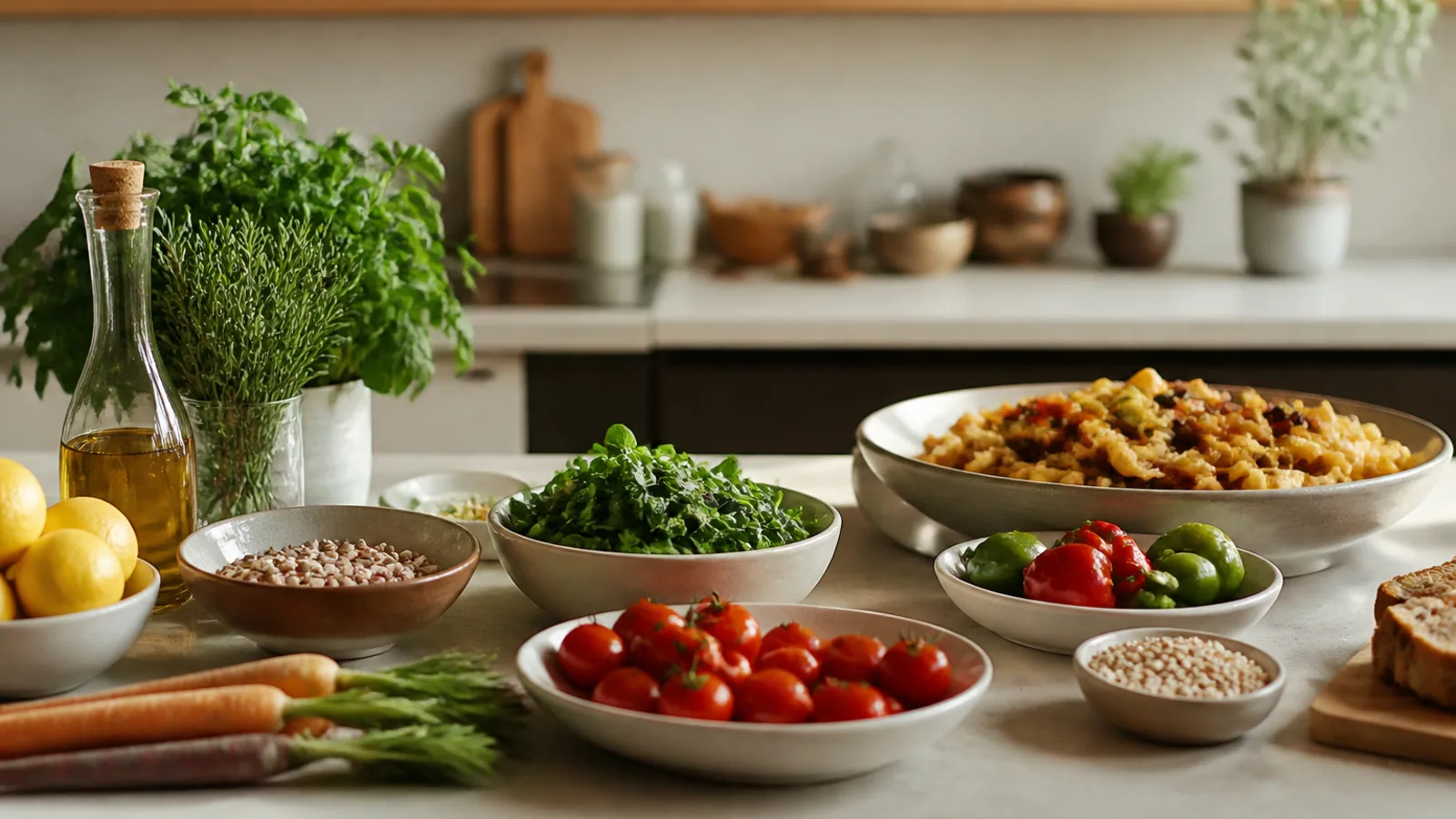
You do not need to turn every dinner into a salad or replace all your favourite ingredients to make a meal better for you. The most useful approach to how to make recipes healthier is usually more practical: add more plants, increase fibre, use fats with purpose, season intelligently, and choose cooking methods that build flavour instead of taking it away.
The aim is not to make food joyless. A good healthier version should still taste like the dish you wanted in the first place: creamy pasta, fragrant curry, tender muffins, crisp potatoes, a comforting bake. The trick is to understand what each ingredient is doing, then adjust the recipe without removing its personality.
Think of healthier cooking as editing, not rewriting. Keep the best parts of the recipe, then make the supporting ingredients work harder.
Start with the dish you actually want to eat
Before changing anything, ask one question: what makes this recipe satisfying? Is it the crisp topping, the rich sauce, the spice, the sweetness, the softness, the cheese, the contrast?
That answer tells you what to protect. If a pasta bake is all about a golden cheesy top, keep the topping and lighten the sauce. If a curry is loved for its aromatic warmth, focus on building a strong spice base before adding extra vegetables or lentils. If muffins need to feel tender, do not remove all the sugar and fat at once.
A helpful rule: make one to three changes at a time. When you overhaul everything, it becomes hard to know what worked, and the dish can end up tasting like a compromise.
How to make recipes healthier by adding before subtracting
The easiest, most family-friendly way to improve a recipe is often to add something useful before you take anything away. Extra vegetables, beans, lentils, fruit, oats, nuts and seeds can bring more fibre, texture and flavour while keeping the meal familiar.
This approach also avoids the “diet version” feeling. A pasta sauce with mushrooms, peppers and spinach still feels like pasta sauce. A chilli stretched with black beans still feels hearty. Muffins with grated apple and oats still feel like muffins.
Add vegetables where they naturally fit
Vegetables work best when they match the dish rather than feeling forced. Think about flavour, moisture and texture.
- Tomato sauces: mushrooms, peppers, aubergine/eggplant, grated courgette/zucchini, spinach or carrots.
- Curries: cauliflower, peas, green beans, spinach, sweet potato, aubergine/eggplant or pumpkin.
- Meatballs, burgers and mince dishes: finely chopped mushrooms, grated carrot or squeezed-dry courgette/zucchini.
- Soups and stews: lentils, beans, leafy greens, root vegetables and celery.
- Bakes and muffins: grated apple, carrot, mashed banana, berries or pumpkin purée.
Watery vegetables need a little care. Mushrooms should be browned until their liquid cooks off. Courgette/zucchini is often better grated and squeezed. Frozen spinach should usually be thawed and pressed dry before going into bakes, fillings or sauces.
Use beans, lentils and chickpeas to stretch richer dishes
Legumes are one of the most useful tools in healthier cooking because they add substance and fibre without demanding a complete recipe change. They can replace part of the meat, extend a sauce, or make a vegetarian dish feel more filling.
- Add lentils to bolognese, shepherd’s pie filling or chilli.
- Stir chickpeas into curry, tray bakes or chunky soups.
- Blend white beans into soup or sauce for creaminess.
- Add black beans to tacos, burrito bowls or rice dishes.
If you are using canned beans or lentils, rinsing them can give a cleaner flavour and reduce some of the salty liquid. Start with a modest amount if you are cooking for people who are unsure; you can increase it next time.
Upgrade carbohydrates without making the meal joyless
Carbohydrates are not something you have to eliminate to cook well. Pasta, rice, bread, potatoes and noodles all have a place. The goal is often to improve fibre and balance, not to make portions tiny or replace every grain with cauliflower.
Wholegrain options can be excellent, but they are not identical to refined versions. Wholegrain pasta tastes nuttier. Brown rice takes longer. Wholemeal flour absorbs liquid differently. In many recipes, a half-and-half approach is the most realistic first step.
Try higher-fibre swaps where they suit the texture
- Use wholegrain pasta, or mix wholegrain and regular pasta in a bake.
- Try brown rice, barley, quinoa or buckwheat in grain bowls and salads.
- Add oats or part wholemeal flour to muffins, pancakes and crumble toppings.
- Choose higher-fibre wraps or bread when the flavour works with the filling.
Do not force a swap if it ruins the dish. A delicate cake may not respond well to a full flour replacement. A risotto made with pearl barley can be delicious, but it will not be exactly the same as one made with arborio rice. That is fine, as long as you know what you are changing.
Add volume instead of simply reducing portions
A common mistake is to cut the pasta, rice or noodles and leave the rest of the recipe untouched. The plate looks smaller, the meal feels less satisfying, and everyone snacks later.
Instead, balance the refined carbohydrate with vegetables and protein. Toss pasta with roasted vegetables and a tomato sauce. Add peas, spinach or cauliflower to rice dishes. Mix courgette/zucchini noodles with regular noodles rather than replacing them completely. The meal still feels generous, just better balanced.
For general plate-balance ideas, the Harvard Healthy Eating Plate, the NHS Eatwell guide and the Australian Dietary Guidelines are useful starting points.
Use fats with purpose
Fat carries flavour, helps with texture and makes food feel satisfying. The aim is not to remove it completely, but to use it where it has the most impact.
Start by noticing where the fat is most enjoyable. Is it the olive oil in the dressing, the toasted nuts on top, the cheese crust, the buttery crumb, the coconut milk in the sauce? Keep the part you can taste. Reduce the part you barely notice.
Put flavourful fats where they count
- Use a smaller amount of strong cheese on top of a bake rather than lots stirred through the sauce.
- Finish soup with a small swirl of good olive oil instead of using excess oil at the start.
- Toast nuts and seeds before adding them to salads, porridge or grain bowls so a little goes further.
- Measure oil for roasting or dressings if you tend to pour generously without noticing.
Measuring does not have to be fussy. It is simply a way to understand how much you are using, especially in recipes where oil can creep up quickly.
Make creamy dishes lighter without losing creaminess
Creamy food is often comforting because of texture as much as richness. You can keep that feeling in several ways.
- Blend roasted squash, cauliflower or white beans into sauces.
- Use Greek-style yoghurt off the heat in soups or curries, so it is less likely to split.
- Combine a smaller amount of cream with stock and blended vegetables.
- Use ricotta or cottage cheese in some bakes where the texture suits the dish.
For vegetable-based sauces, texture matters. Roasted squash or cauliflower usually gives a richer result than vegetables boiled in lots of water. If you steam or boil them, drain them thoroughly before blending so the sauce stays thick rather than loose or grainy.
Sometimes the best option is to keep a little of the original ingredient. A small amount of cream, butter, cheese or coconut milk can make a dish feel complete, while vegetables, beans or stock do the rest of the work.
Reduce salt without making food bland
Salt matters. It sharpens flavour and makes ingredients taste more like themselves. But many recipes can rely less on salt when you build flavour in other ways.
First, check where salt is already coming from: stock, cheese, olives, capers, bacon, soy sauce, miso, shop-bought sauces, seasoning blends and cured meats. Then taste before adding more.
Use acid to brighten flavour
Acid is one of the quickest ways to make food taste livelier. It can reduce the urge to keep adding salt because it wakes up the whole dish.
- Lemon: soups, fish, chicken, greens, pasta and grain salads.
- Lime: curries, tacos, noodle dishes, salsas and bean dishes.
- Vinegar: lentils, stews, roasted vegetables, dressings and slaws.
- Yoghurt or buttermilk: marinades, dressings and cooling sauces.
Add acid near the end where possible. A squeeze of lemon or splash of vinegar can be the difference between flat and fresh.
Build flavour with herbs, spices and aromatics
Onion, garlic, ginger, chilli, herbs and spices are not afterthoughts; they are the backbone of many healthier recipes. Bloom spices in a little oil when appropriate, add woody herbs early, and finish with fresh herbs for lift.
Try smoked paprika on roast vegetables, cumin in bean dishes, oregano and basil in tomato sauces, ginger and garlic in stir-fries, or coriander/cilantro and lime over curry. Toasting spices, nuts and seeds also adds depth without relying on more salt.
Add umami carefully
Umami-rich ingredients make food taste savoury and satisfying. Tomato paste, well-browned mushrooms, parmesan, miso, soy sauce, anchovy, Worcestershire sauce and nutritional yeast can all help.
Many of these ingredients are naturally salty, especially parmesan, miso, soy sauce and anchovies. Their advantage is not that they are salt-free; it is that a small amount can bring deep savoury flavour, so you may need less plain salt overall. Add them deliberately and taste as you go.
For example, cooking tomato paste for a minute or two before adding liquid gives a sauce more depth than simply adding extra salt at the end.
Reduce sugar while keeping pleasure and texture
Sugar is not only sweetness. In baking, it affects moisture, browning, tenderness and structure. That is why dramatic reductions can lead to dry muffins, pale cakes or biscuits/cookies that do not spread properly.
For everyday bakes, start with a modest reduction and see how the recipe behaves. Many muffins, quick breads, pancakes and crumbles can tolerate a reduction of about 15 to 25 percent, though results vary by recipe. Cakes, meringues and delicate biscuits/cookies are more sensitive and are better made from recipes designed with less sugar from the start.
Make small changes in baking
- For muffins or quick breads, try reducing the sugar by about one-sixth to one-quarter first, rather than cutting it in half.
- Replace about 25 to 50 percent of white flour with wholemeal flour or oats in sturdy bakes, then adjust next time if needed.
- Use very ripe bananas, grated apple, berries or carrot for natural sweetness and moisture.
- Add cinnamon, ginger, cardamom, vanilla or citrus zest to make the flavour more interesting.
Avoid changing everything at once. If you reduce sugar, swap flour, remove oil and add fruit all in the same batch, you will not know which change caused the result.
Balance sweetness with contrast
Sweet recipes often taste better when they are not just sweet. Acid, spice, nuttiness, bitterness and a tiny pinch of salt can make a smaller amount of sugar feel more satisfying.
Add lemon zest to berry muffins, toasted nuts to banana bread, cinnamon to porridge, cocoa or coffee to chocolate recipes, or yoghurt alongside fruit and a small drizzle of honey.
Choose cooking methods that create flavour
The way you cook can change how much fat, salt or sugar a dish seems to need. Browning, roasting, grilling, broiling and air-frying can build flavour and texture. Steaming and poaching can be useful too, but they need seasoning, herbs, sauces or acid so the food does not taste flat.
Use heat properly
Browning adds savoury depth. For better browning, do not overcrowd the pan. Give mushrooms, chicken, tofu or vegetables enough space so they sear rather than steam.
- Roast cauliflower before adding it to curry.
- Brown mushrooms well before stirring them into pasta sauce.
- Grill or broil fish or chicken with a punchy marinade.
- Roast chickpeas until crisp for salads, bowls or soups.
Make crispy food with less oil
Crispness comes from dryness, heat and space as much as oil. Pat ingredients dry, spread them out, and use a hot tray, rack or air fryer if you have one.
Oven wedges, crisp tofu, roasted chickpeas and crumb-topped fish can all work with a modest amount of oil when the technique is right.
Before and after: pasta bake
Typical version: white pasta, cream-heavy sauce, lots of cheese throughout, little or no vegetable content.
Healthier version: keep the pasta and the golden top, but aim for roughly a 1:1 visual ratio of cooked pasta to vegetables. Use roasted peppers, mushrooms, courgette/zucchini, aubergine/eggplant or spinach. Wholegrain or half-wholegrain pasta works if you enjoy the texture.
Choose a tomato-based sauce, or make a lighter creamy sauce with roasted cauliflower, squash or white beans blended until smooth. Keep most of the cheese on top, where you taste it most. Finish with basil, oregano, black pepper and a splash of lemon juice or vinegar if the sauce tastes flat.
Key lesson: add volume and flavour first, then reduce the richest ingredients where they are least noticeable.
Before and after: curry
Typical version: generous oil, a large amount of cream or coconut milk, mostly meat, and white rice as the only side.
Healthier version: use enough oil to cook the onions and bloom the spices, but measure it if needed. Add cauliflower, spinach, peas, aubergine/eggplant or sweet potato. Stir in chickpeas, lentils or beans for extra substance.
Instead of using a full can of rich coconut milk, try using half a can with a splash of vegetable or chicken stock, then adjust to taste. If you use Greek-style yoghurt for creaminess, stir it in off the heat so it stays smooth. Finish with lime, herbs and chilli for freshness.
Serve with brown rice if you like it, basmati rice with a side of greens, or a mix of rice and cauliflower rice if that suits your household.
Key lesson: keep the aromatic base strong so lighter adjustments do not taste thin.
Before and after: muffins
Typical version: white flour, plenty of added sugar, little fruit or fibre.
Healthier version: keep the tender texture, but reduce sugar by about 15 to 25 percent first. Replace 25 to 50 percent of the flour with oats or wholemeal flour, depending on the recipe. Add berries, grated apple, carrot or mashed banana. Use cinnamon, vanilla, ginger or lemon zest for more flavour, and add nuts or seeds on top if you like crunch.
Key lesson: baking is chemistry. Small, tested changes work better than ambitious substitutions.
A practical checklist for better everyday cooking
- What do I love about this recipe: creaminess, crunch, spice, sweetness, comfort?
- Can I add a vegetable, bean, lentil, fruit, nut or seed?
- Can I increase fibre with whole grains, oats, legumes or extra vegetables?
- Is there a hidden fat I can reduce while keeping the flavourful fat?
- Can lemon, lime, vinegar, herbs, spices or aromatics reduce the need for more salt?
- Can I reduce sugar slightly or add contrast with spice, citrus or nuts?
- Would roasting, grilling, baking or air-frying improve texture?
- Am I changing too many things at once?
- Would I genuinely want to eat this version again?
Common mistakes that make healthier recipes disappointing
- Removing fat, salt and sugar all at once: the dish can taste flat and feel unsatisfying.
- Ignoring texture: watery vegetables, overcooked whole grains or dry bakes can ruin good intentions.
- Using substitutes blindly: low-fat or alternative ingredients do not always behave like the original.
- Forgetting acid: lemon, lime or vinegar often fixes dullness quickly.
- Under-seasoning vegetables and beans: healthy ingredients still need flavour.
- Making family favourites unrecognisable: gradual changes are usually more successful.
If you have a medical condition, allergies, a history of disordered eating, or specific dietary needs, get personalised advice from a qualified professional. General healthy eating guidance is useful, but it cannot replace individual care.
FAQ
What is the easiest way to make a recipe healthier?
Start by adding something useful rather than removing something you enjoy. Extra vegetables, beans, lentils, oats, fruit, nuts or seeds can improve the balance of a dish while keeping it familiar.
Can I replace all white pasta, rice or flour with wholegrain versions?
Sometimes, but not always. Wholegrain ingredients have different flavours and textures, and they may need more liquid or longer cooking. A half-and-half approach is often a better first step, especially in family meals and baking.
How can I reduce salt without losing flavour?
Use flavour builders such as lemon or lime juice, vinegar, garlic, ginger, herbs, spices, tomato paste, mushrooms, or a small amount of parmesan, miso or soy sauce. Remember that some of these are salty, so taste before adding more salt.
How much sugar can I remove from baking recipes?
It depends on the recipe. Many muffins, quick breads and crumbles can handle a reduction of about 15 to 25 percent, but cakes, cookies and meringues are more sensitive. Start small and avoid changing several ingredients at once.
Are low-fat ingredients always healthier?
Not necessarily. Fat affects flavour, texture and satisfaction. A smaller amount of a flavourful fat may work better than a larger amount of a substitute that tastes thin or behaves poorly in the recipe.
The bottom line
Learning how to make recipes healthier is not about stripping away pleasure. It is about making smart edits: add plants and fibre, use fats where they count, season with acid and aromatics, reduce salt and sugar thoughtfully, and choose cooking methods that create flavour.
If the food still tastes good, you are far more likely to cook it again. That is the real measure of a healthier recipe that works.





Join the conversation
Sign in — Sign in to join the conversation.