
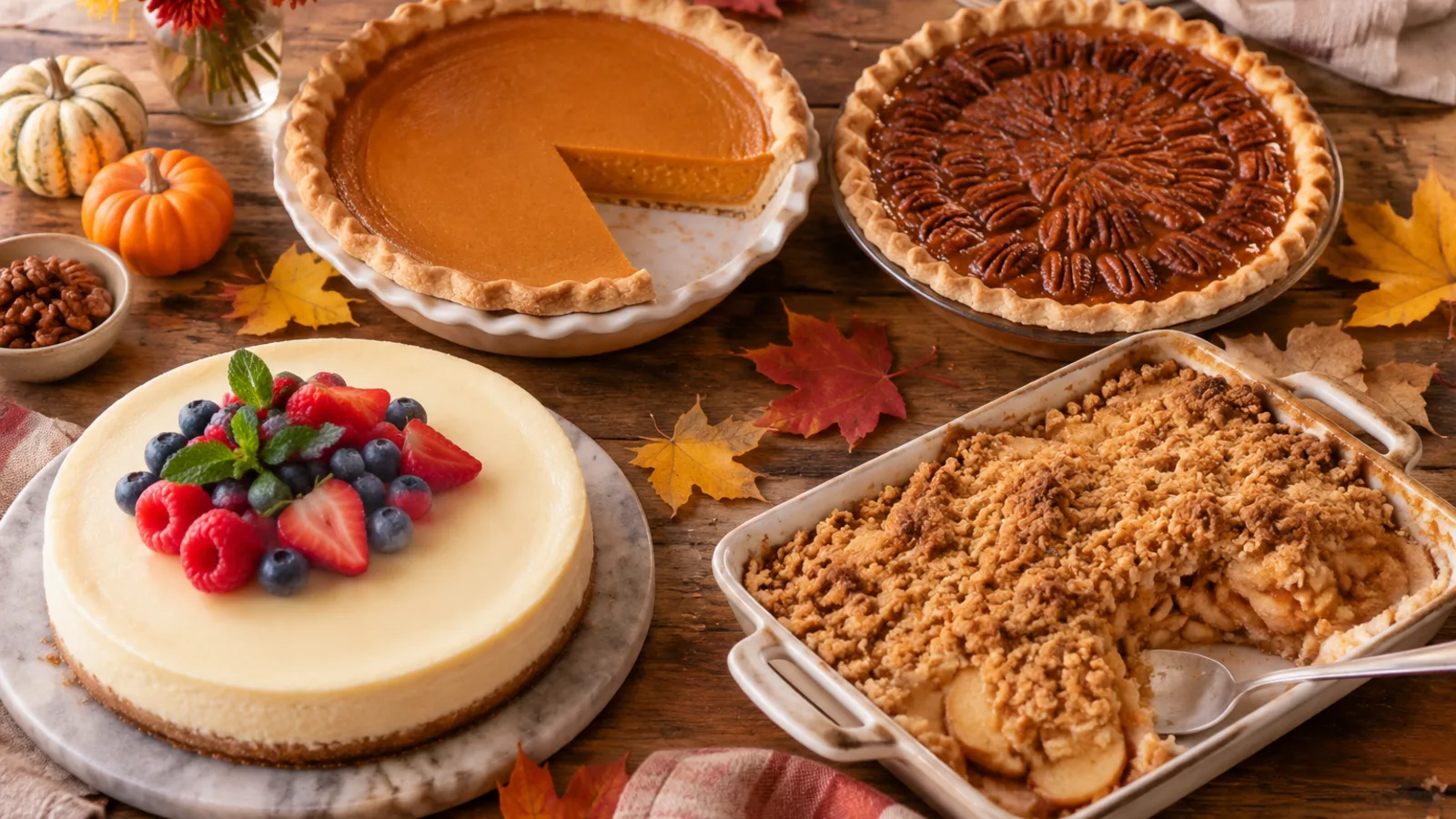
Thanksgiving timing is brutal. You're wrestling a turkey, timing six side dishes, and somewhere in the chaos, dessert gets shoved to the back burner—literally and figuratively. The good news? Some desserts don't just survive advance prep; they actually improve with it. This guide covers make-ahead Thanksgiving desserts that taste genuinely fresh on the day, with honest windows for when to bake, when to assemble, and what actually holds without turning soggy or stale.
The Best Make-Ahead Thanksgiving Desserts to Bake 2 to 3 Days Early
These are your MVPs. Make them early, store them properly, and they'll reward you with better texture and deeper flavor. The science works in your favor here: starch retrogradation stabilizes custards, fats crystallize into cleaner slicing textures, and spices have time to bloom.
Pumpkin Pie
Pumpkin pie is practically designed for advance prep. The filling sets completely as the starches cool and stabilize, the spices have time to bloom and meld, and the crust stays crisp if you store it correctly. Make it two to three days ahead, tent it loosely with aluminum foil—tight wrapping creates condensation that makes the crust soggy—and refrigerate. On the day, bring it to room temperature 30 minutes before serving so the filling isn't cold and dense and the flavors open up.
One critical note: you can refrigerate baked pumpkin pie, but never freeze it. Custard-based pies suffer from syneresis when frozen and thawed—the proteins squeeze out water, leaving you with a watery pool on a soggy crust. Unbaked fruit pies freeze beautifully, but pumpkin and sweet potato pies do not.
Pecan Pie
The corn syrup or golden syrup filling in pecan pie needs time to firm up properly. Make it two days early and you'll get clean slices instead of gooey puddles. The flavors deepen, too—the toasted pecans, butter, and vanilla have time to settle into something richer and more cohesive. Cover and refrigerate, then decide on the day whether you want to serve it at room temperature or rewarm it gently in a low oven at 150°C / 300°F / Gas Mark 2 for about 15 minutes. Unlike pumpkin pie, baked pecan pie freezes reasonably well for up to a month if wrapped tightly in plastic wrap and foil, though the texture is always better when simply refrigerated.
Cheesecake (Any Style)
Cheesecake is the rare dessert that actually needs advance prep. The texture stabilizes over a couple of days as the proteins set fully and any residual moisture evaporates slightly from the surface, giving you clean slices with no drag. Make it up to three days ahead, wrap it tightly in plastic wrap, and refrigerate. To prevent surface condensation from creating pockmarks, place a sheet of paper towel between the top of the springform pan and the plastic wrap—it absorbs moisture droplets before they can mar the surface.
Save fresh toppings—fruit compote, whipped cream, caramel drizzle—for just before serving so they look and taste fresh. Cheesecake also freezes exceptionally well for up to two months; thaw it overnight in the refrigerator.
Desserts That Hold Well (Make 1 to 2 Days Ahead)
These won't improve dramatically with time, but they hold their quality without much fuss as long as you follow the storage rules.
Apple Crisp or Crumble
You can assemble and bake an apple crisp a day ahead, or assemble it unbaked and keep it in the fridge until you're ready. The fruit softens and the juices thicken, which is exactly what you want. The topping won't be quite as crisp as fresh-baked, but there's a professional trick to bring most of that crunch back: after baking, let the crisp cool completely uncovered for two to three hours before you cover it loosely or leave it uncovered in the fridge overnight. This prevents steam from condensing back onto the topping. On Thanksgiving, reheat it at 160°C / 325°F / Gas Mark 3 on a preheated baking sheet or pizza steel for 15 to 20 minutes—the contact heat crisps the bottom while the oven revives the topping.
Bread Pudding
Bread pudding benefits from resting—the custard soaks evenly through every cube, and the flavors meld as the vanilla, cinnamon, and any liqueur distribute fully. Make it one to two days ahead, cover tightly, and refrigerate. Reheat it covered with foil at 150°C / 300°F / Gas Mark 2 so it doesn't dry out. For extra insurance against dryness, place a shallow pan of water on the rack below to create steam. Add your bourbon sauce, hard sauce, or whipped cream fresh at serving time.
Brownies or Blondies
Dense, fudgy brownies and blondies actually improve after a day or two. The texture becomes more cohesive as the fat and sugar crystallize, and they slice cleanly without crumbling or tearing. Wrap them tightly in plastic wrap and store at room temperature, or refrigerate if your kitchen runs warm. Dust with powdered sugar or serve with vanilla ice cream right before you bring them to the table.
Assemble-Ahead Desserts (Prep Components 1 to 3 Days Early, Finish Day-Of)
These need a hybrid approach: do the heavy lifting early, then pull it all together on Thanksgiving so textures stay distinct and fresh.
Trifle
A trifle looks impressive and feeds a crowd, but the layers turn to mush if you assemble it too early. Bake the cake (sponge, pound cake, or brownies), make the custard or pudding, and macerate the fruit up to two days ahead, then store everything separately in airtight containers. Layer it all together two to four hours before serving—long enough for the components to marry and the flavors to meld, but not so long that the cake disintegrates and the cream weeps. If using whipped cream, stabilize it with a tablespoon of mascarpone or cream cheese per cup of double cream or heavy cream so it holds without deflating.
Icebox Cake or Tiramisu
These are the exceptions—they actually need advance assembly. The cookies or ladyfingers soften into cake-like layers as they absorb the cream, mascarpone mixture, or coffee, and that transformation takes time. Assemble one to two days early, cover tightly with plastic wrap, and refrigerate. Dust with cocoa powder or add a final garnish of chocolate shavings or fresh berries right before serving.
Pavlova or Meringue-Based Desserts
Bake the meringue shell up to two days early and store it in an airtight container at room temperature. For the crispest result, leave the meringue in the turned-off oven overnight with the door propped open slightly with a wooden spoon—this dries out the exterior completely and prevents any residual moisture from making it chewy. Once fully cool and dry, it'll stay crisp and light in a sealed container.
But don't top it until one to two hours before serving. Whipped cream and fresh fruit will turn a crisp meringue into a soggy mess in no time. The contrast between the crisp shell and soft topping is the whole point, and that contrast has a short lifespan once assembled.
Your 3-Day Thanksgiving Dessert Prep Timeline
Here's how to organize your dessert schedule so nothing is rushed and everything peaks at the right moment.
Tuesday (3 days ahead):
- Bake pumpkin pie, pecan pie, and cheesecake
- Store pies loosely tented with foil in the refrigerator
- Wrap cheesecake tightly with paper towel barrier and refrigerate
- Bake meringue shells for pavlova; cool and store airtight at room temperature
- Make trifle components (cake, custard, macerated fruit) and store separately
Wednesday (2 days ahead or 1 day ahead):
- Bake brownies or blondies; wrap and store at room temperature
- Bake apple crisp fully, cool uncovered, then refrigerate loosely covered
- Bake bread pudding, cover, and refrigerate
- Assemble tiramisu or icebox cake; cover and refrigerate
Thursday morning (Thanksgiving Day):
- Remove pies and cheesecake from refrigerator 20 to 30 minutes before serving to bring to room temperature
- Reheat apple crisp and bread pudding in a low oven, covered, while the turkey rests
- Whip cream for pavlova and assemble 1 to 2 hours before dessert
- Layer trifle 2 to 4 hours before serving
- Add fresh garnishes to cheesecake, dust tiramisu with cocoa, plate brownies with ice cream
What Not to Make Ahead (And Why)
Some desserts just don't cooperate, and it's better to know that now than to serve something disappointing. Cream pies and custard tarts with wet fillings make the crust soggy—blind-baking helps, but the battle is uphill. Anything deep-fried—beignets, churros, funnel cakes—loses its texture within an hour as steam softens the crust from the inside. Delicate plated desserts with multiple contrasting textures blur into sameness overnight; a crisp tuile goes soft, a frozen element weeps, and carefully piped components slump.
If a dessert's appeal relies on a crisp-soft contrast or extreme freshness, make it the day of or skip it entirely and choose something more forgiving from the lists above.
Storage and Transport Tips That Actually Work
Refrigerator real estate is precious on Thanksgiving, so stack strategically. Use sheet pans with parchment paper between them for brownies and bar cookies—you can stack three or four layers this way. Invest in a cake carrier with a tall dome for pies; it protects the surface and makes stacking possible without crushing anything. For whipped cream, freeze dollops on a parchment-lined tray, then transfer them to a zip-top bag once solid. They'll thaw perfectly on each slice in about five minutes.
Transporting desserts without disaster takes a little strategy. Line your car floor or trunk with non-skid shelf liner or a yoga mat so nothing slides during turns or stops. Nestle pie boxes with crumpled kitchen towels or rolled dish towels acting as wedges to keep them level. If you're driving more than 30 minutes with a cheesecake or any refrigerated dessert in warm weather, tuck a cold pack or a bag of ice wrapped in a towel inside the carrier.
Reheating without drying everything out means low and slow. Cover with aluminum foil, use a 150°C / 300°F / Gas Mark 2 oven, and for bread pudding or crisps, set a shallow pan of water on the rack below to add a little steam. For fruit desserts, start covered for the first 10 to 15 minutes, then uncover briefly to re-crisp any topping. Skip the microwave—it makes fruit weep and turns streusel or crumble toppings leathery.
FAQ
Can I freeze Thanksgiving desserts?
It depends on the dessert. Unbaked fruit pies freeze exceptionally well and can be baked straight from frozen—just add 15 to 20 minutes to the baking time. Baked pecan pie freezes reasonably well for up to a month, though refrigeration is better for texture. Cheesecakes, brownies, blondies, and cookie dough all freeze beautifully for up to two months. But custard-based pies like pumpkin, sweet potato, and buttermilk do not freeze well—the filling separates and weeps when thawed, leaving a watery, curdled mess. Meringue-based desserts also don't freeze cleanly; the texture breaks down and becomes spongy or weepy.
How do I keep pie crust from getting soggy?
Blind-bake the crust if your filling is very wet or custard-based—this sets the structure before the filling goes in. Brush the inside of the blind-baked shell with a thin layer of melted chocolate, white chocolate, or beaten egg white before adding the filling. It creates a moisture barrier that keeps the crust crisp. After baking, store pies loosely covered or tented with foil, not wrapped airtight, so steam can escape instead of condensing back onto the crust. If you're making pie a couple of days ahead, leaving it loosely tented makes all the difference.
What's the best way to reheat fruit desserts?
Use a low oven—150 to 160°C / 300 to 325°F / Gas Mark 2 to 3—and cover with foil for the first half of reheating, then uncover briefly for the last five to ten minutes to re-crisp the topping. Placing the dish on a preheated baking sheet or pizza steel helps crisp the bottom. Skip the microwave entirely. It heats unevenly, makes fruit release liquid and turn mushy, and renders streusel or crumble toppings tough and leathery instead of crisp and crumbly.
Can I make whipped cream ahead?
Stabilized whipped cream, made with a bit of cream cheese, mascarpone, or a small amount of unflavored gelatin dissolved in warm water, holds for about 24 hours in the fridge without deflating. Regular whipped cream loses volume and weeps liquid within a few hours. Your best bet for truly fresh whipped cream is to whip it right before serving, or use the freeze-ahead method: pipe or dollop whipped cream onto a parchment-lined tray, freeze until solid, then transfer the frozen dollops to a zip-top bag or airtight container. They'll thaw on each plate in about five minutes and taste freshly whipped.
Do I need to bring refrigerated desserts to room temperature before serving?
Pies and cheesecakes benefit from 20 to 30 minutes at room temperature before you serve them. Cold filling is dense, muted, and harder to slice cleanly. A little warming brings the flavor forward, softens the texture slightly, and makes slicing much easier—you'll get clean cuts instead of dragging the knife through cold, stiff filling. Custard-based desserts like trifle and anything with dairy frosting or cream filling should stay cold until you're ready to serve for both texture and food safety.
Conclusion
The best make-ahead Thanksgiving desserts aren't just about convenience—they're about planning for quality. Some desserts genuinely improve with time as starches stabilize, flavors bloom, and textures set. Others hold steady if you store them right and know which components to finish fresh. The difference between a soggy pie and a perfect one often comes down to knowing whether to cover it tightly or leave it loose, whether to assemble two hours early or two days early, and whether freezing will ruin it or make your life easier. Plan with these windows in mind, follow the three-day timeline, and dessert becomes the least stressful and most impressive part of the meal.




Join the conversation
Sign in — Sign in to join the conversation.