
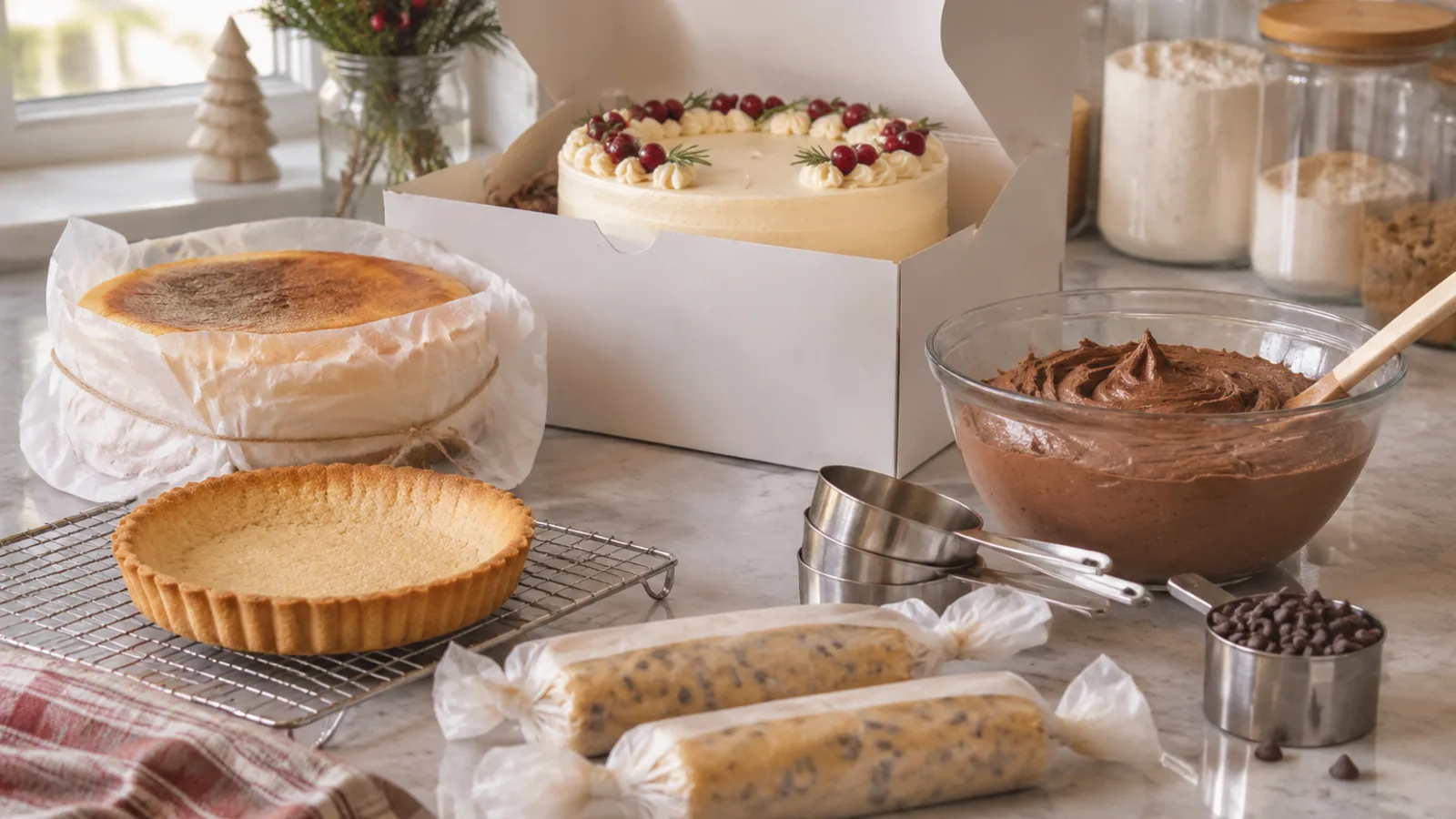
The idea behind make-ahead desserts is simple: do the work early so serving day feels calm instead of chaotic. The catch is that not every sweet survives the same way. A cheesecake can improve after a night in the fridge, while a whipped-cream-topped tart can lose its texture in hours. If you know which desserts hold, which need a short chill, and which should be finished at the last minute, you can plan a holiday menu without guessing.
This guide breaks desserts into practical time windows: one week ahead, three days ahead, one day ahead, and same-day only. It focuses on texture, storage, and assembly so you can choose desserts that fit your schedule instead of fighting soggy crusts, collapsed cream, and rushed finishing touches.
A quick way to think about dessert timing
Most dessert problems come down to three things: moisture, air, and temperature. Moist fillings soften crisp pastry. Airy toppings lose volume. Cold desserts need time to set, but too much time can dull flavor or soften a crust. The best planning strategy is to match the dessert to the ingredient that is most fragile.
A useful rule of thumb: the wetter the filling, the shorter the final assembly window. The more delicate the topping, the closer to serving it should be added. And if a dessert depends on a crisp shell or a whipped topping, store the parts separately for as long as you can.
If a dessert is fragile, treat the fragile part as the deadline. Build around the component that is most likely to fail.
1 week ahead: desserts that freeze well or improve with time
This is the best window for desserts that are sturdy, low in moisture, or designed to be frozen. It is also the safest stage for holiday prep because it removes pressure from your final days of cooking.
Cheesecake
Cheesecake is one of the most reliable make-ahead desserts because its texture benefits from a long chill. Bake it, cool it completely, then refrigerate until fully set before wrapping and freezing if needed. Thaw it in the fridge, still wrapped, the day before serving. Add fruit, caramel, or whipped cream only after thawing.
If you want a clean slice, let the cheesecake sit in the fridge overnight after thawing. That extra time helps the structure settle without drying out.
Brownies, blondies, and bar cookies
Dense bars freeze beautifully. Cool them completely, wrap them tightly, and freeze the whole slab if you want to cut later. That keeps edges neater and reduces crumble. Brownies with a fudgy center usually hold best; very cakey bars can dry out faster, so wrap them well and thaw without exposure to air.
Cookie dough
Cookie dough is one of the easiest things to make ahead. Slice-and-bake dough can be frozen in logs. Drop-cookie dough can be portioned into scoops and frozen on a tray, then transferred to a bag. Rolled dough can be flattened into disks. In all cases, label the dough with the bake temperature and approximate baking time so you do not have to search later.
Frozen desserts
Ice cream cakes, semifreddos, frozen terrines, and parfait-style desserts are ideal for early prep because the freezer is part of the recipe. Keep them tightly covered to prevent freezer odor and ice crystals. If the dessert includes a crumb crust, make sure it is compact and well packed before freezing so it slices cleanly later.
Shelf-stable sweets
Some desserts are better after a little time at room temperature. Shortbread, biscotti, fruitcake, panettone, and stollen all keep well when wrapped properly. Their flavor often deepens over several days. These are especially useful for holiday entertaining because they can be finished well in advance and still taste fresh.
3 days ahead: the best window for many cakes and creamy desserts
Three days ahead is the sweet spot for desserts that need chilling but do not contain fragile toppings. This is the point where you can build flavor and reduce workload without pushing texture too far.
Layer cakes without fragile toppings
Unfrosted cake layers can usually be baked a few days ahead, cooled fully, wrapped well, and stored at room temperature for a short time or refrigerated if your kitchen is warm. If you chill them, bring them back to room temperature before frosting so the crumb is easier to handle. Buttercream and ganache are especially good choices here because they protect the cake rather than soaking into it.
For a holiday layer cake, one efficient plan is: bake the layers early, make the frosting a day or two later, and assemble the cake the day before serving. That schedule gives you a finished dessert with time for the flavors to meld without risking a dry crumb.
Buttercream, ganache, and cream cheese frosting
Buttercream and ganache hold well when stored covered and chilled. Buttercream may need to come to room temperature and be rewhipped before use. Ganache may simply need a gentle stir. Cream cheese frosting is more perishable than standard buttercream, so keep it refrigerated until you are ready to serve and do not leave it out for long periods.
For food safety, it is wise to follow current guidance from trusted sources such as the US Food Safety site or the UK Food Standards Agency if you are unsure whether a specific filling should stay chilled.
Chocolate mousse, panna cotta, and pot de crème
These desserts need time to set, which makes them useful make-ahead options. Covered cups or ramekins can sit in the fridge for a couple of days without much loss in texture. Keep them wrapped so they do not pick up fridge odors, and add garnishes at the last minute.
Bread pudding and rice pudding
Bread pudding can be assembled ahead and baked later, which is often the best method. The bread has time to absorb the custard evenly, and the final bake gives you a better texture than rushing it. Rice pudding can also be made ahead, though it may thicken in the fridge. Add a splash of milk or cream when reheating to loosen it again.
Tiramisu and other layered refrigerator desserts
Tiramisu is one of the few desserts that genuinely improves after a long chill. A day or two in the fridge gives the coffee-soaked layers time to settle and the mascarpone mixture time to firm up. Similar layered desserts made with cookies or ladyfingers benefit from the same approach: assemble, chill, and let the texture equalize before serving.
1 day ahead: the safest window for pies, tarts, and delicate assemblies
One day ahead is where most dessert planning should land. It is late enough for flavors to settle, but not so late that moisture has time to ruin the structure.
Baked pies and fruit tarts
Baked fruit pies are usually at their best within 24 hours. The crust stays flakier, and the filling still looks fresh. After that, moisture starts to move into the pastry. If you need to make a pie ahead, cool it completely before covering it so trapped steam does not soften the crust.
Fruit tarts behave the same way. If possible, keep the pastry shell and filling separate until closer to serving. A crisp tart shell filled with pastry cream or fruit is usually best assembled the day before, not earlier.
Cream pies and custard tarts
Cream pies are best when the shell and filling are handled separately. Blind-bake the crust in advance, but add the filling close to serving time if you want the crispest result. Custard tarts follow a similar pattern: bake the shell early, then fill and chill it the day before. Beyond that, the crust usually softens.
If a recipe allows it, a thin coating of melted chocolate or cocoa butter on the inside of a tart shell can help slow moisture absorption. That works especially well for sweet tart shells filled with fruit or cream.
Roll cakes and filled sponge cakes
Roll cakes, yule logs, and filled sponge cakes are excellent one-day-ahead desserts. The filling has time to set and the cake stays flexible enough to slice neatly. Wrap them well so the sponge does not dry out at the edges.
Tres leches and poke cakes
These cakes need time for the liquid to soak through evenly. Making them the night before is usually better than making them the same day. The goal is a soft, fully absorbed crumb, not a pool of milk at the bottom of the pan.
Pavlova and meringue desserts
Pavlova shells can be baked ahead and stored in an airtight container for a day or two, but they should be topped just before serving. Once cream and fruit go on, the shell starts to soften quickly. That means the shell can be planned ahead, but the final assembly should wait.
Meringue-topped pies and similar desserts are more temperamental. Make them as close to serving as possible if you want the cleanest finish. Once meringue meets moisture, texture changes fast.
Same-day only: desserts that should not be made too far ahead
Some desserts are simply too delicate to sit around. These are best treated as finish-at-the-last-minute items, even if the rest of the menu is done early.
- Soufflés: hot or cold, they are built on temporary structure and should be served right away.
- Fried desserts: beignets, churros, doughnuts, and similar sweets lose crispness quickly.
- Fresh whipped cream toppings: they soften, weep, and flatten unless stabilized and kept cold.
- Torched sugar tops: caramelized finishes absorb humidity and begin to soften soon after torching.
- Fresh berries on top: berries release juice, which can stain and soften nearby components.
For these desserts, the smart move is not to fight the clock. Prep the base, measure the garnish, and finish as late as possible.
Storage fixes that actually help
A few simple habits can extend the life of a dessert without changing the recipe.
- Wrap well: Press plastic wrap directly against cut surfaces, then add a second layer of wrap or foil over the whole dessert.
- Separate wet and dry parts: Store crusts, crumbs, fillings, and toppings apart until assembly time.
- Use room temperature when appropriate: Some cakes and bars taste better when not chilled, especially those with butter-based batters or ganache.
- Thaw slowly: Frozen desserts should thaw in the fridge, not on the counter, to prevent condensation from making the surface sticky.
- Refresh dry cake carefully: A light brush of simple syrup can restore moisture before frosting or serving.
One caution: not every frosting or filling belongs at room temperature. High-sugar buttercream is generally more stable than dairy-heavy fillings, but cream cheese, mascarpone, and pastry cream should stay chilled unless a recipe says otherwise. When in doubt, keep perishable desserts cold and take them out shortly before serving.
A simple holiday dessert timeline
If you are planning a dinner or holiday table, it helps to think in layers. Here is a practical schedule that reduces stress without sacrificing texture.
- One week out: make cookie dough, bake and freeze brownies or cheesecake, and prepare any frozen dessert.
- Three days out: bake cake layers, make buttercream or ganache, and prepare set desserts like mousse or panna cotta.
- One day out: assemble pies, tarts, tiramisu, roll cakes, and most frosted cakes.
- Serving day: add whipped cream, berries, meringue, caramel shards, and other fragile finishing touches.
This order gives you the longest possible lead time on the parts that hold best while keeping the most delicate textures fresh.
FAQ
Can I freeze a frosted cake?
Yes, if the frosting is stable. Buttercream, ganache, and some cream cheese frostings can be frozen successfully. Whipped cream does not freeze well on a finished cake because it tends to weep and lose shape. For the best result, freeze the cake until firm, wrap it well, and thaw it in the fridge while still covered.
Why did my tart crust go soggy even though I chilled it?
Chilling does not stop moisture from moving from the filling into the crust. If the filling sits on the shell too long, the pastry softens. The best fix is to assemble closer to serving time, blind-bake the crust thoroughly, and use a barrier such as melted chocolate when the dessert is meant to hold for longer.
How do I know if a dessert is freezer-safe?
Look for desserts that are low in moisture and high in fat or structure: cheesecake, brownies, cookie dough, pound cake, and many buttercream-frosted cakes usually freeze well. Desserts with fresh fruit, meringue, custard, or whipped cream are usually less reliable in the freezer.
Can I make whipped cream ahead?
Regular whipped cream is best made close to serving. If you need it to hold longer, use a stabilized version with an ingredient that helps it keep its structure. Even then, it is best stored cold and used within a short window. For more time, make the base dessert ahead and whip the cream later.
What is the safest make-ahead dessert for a beginner?
Cheesecake is one of the easiest options because it needs time to set anyway, slices neatly, and freezes well. Brownies are another good choice because they are forgiving and hold their texture well. Both are strong options if you want make-ahead desserts without complicated timing.
The best make-ahead desserts are the ones that work with your schedule instead of against it. Choose sturdy desserts for early prep, save fragile toppings for the end, and keep an eye on moisture and temperature. Once you know the timing, dessert becomes the easiest part of the menu.



Join the conversation
Sign in — Sign in to join the conversation.