
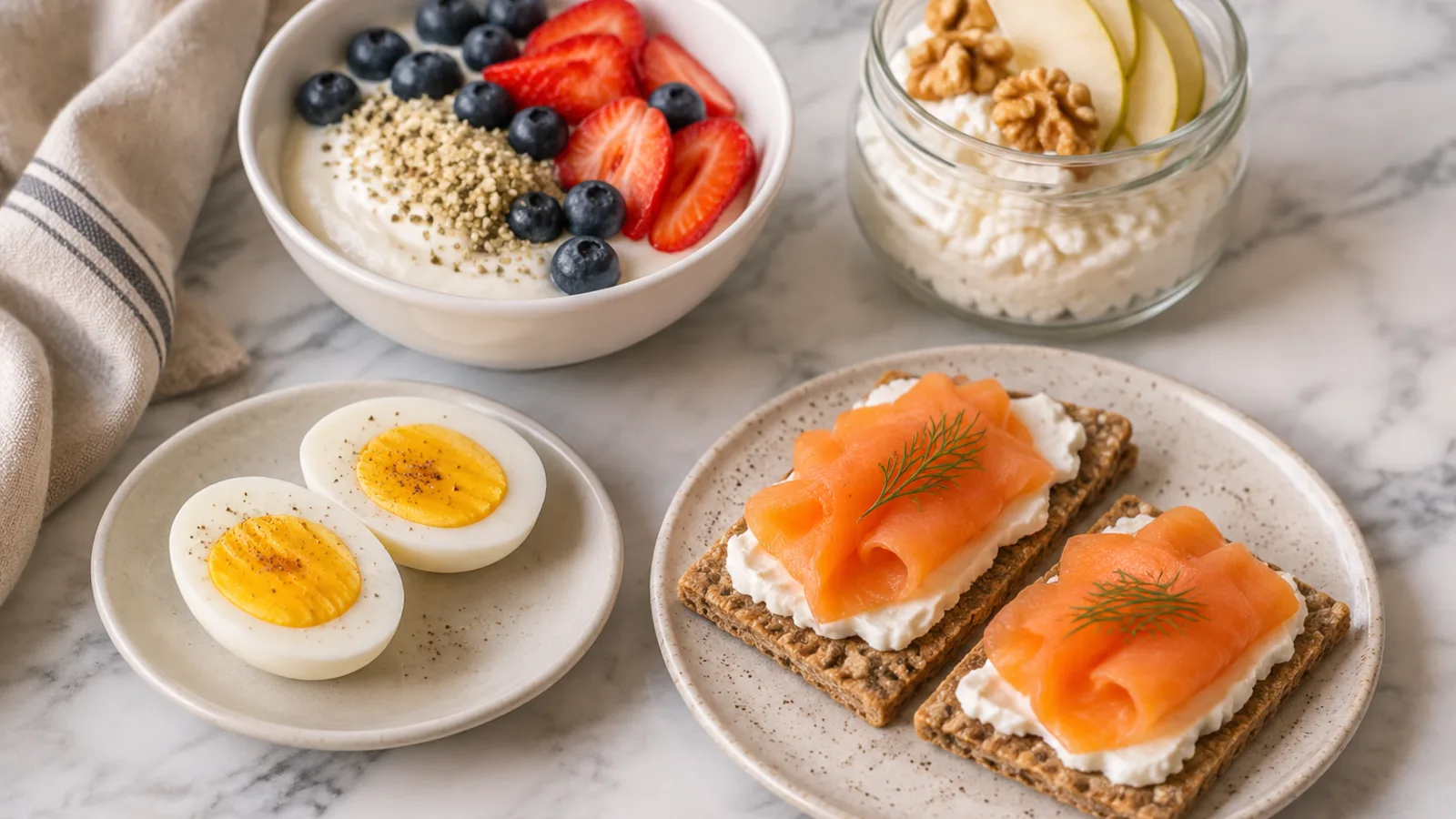
You know protein keeps you full until lunch, but you're not blending chalky shakes at 7am. Good news—whole foods do the job better, taste like actual breakfast, and most take less time than waiting for your coffee to brew. These high-protein breakfast ideas hit 20+ grams of protein before you leave the house, using ingredients you probably already have. No powder required.
Why Protein at Breakfast Actually Matters
Protein slows digestion and stabilizes blood sugar, which translates to fewer mid-morning cravings and more sustained energy. The target most nutrition research points to is 20-30 grams per meal—enough to keep you satisfied without that 10am snack-drawer raid.
Whole foods offer greater satiety, natural fiber, and essential micronutrients without the fillers or artificial sweeteners common in powders. Plus, scrambled eggs taste like breakfast. Vanilla protein sludge does not.
The High-Protein Staples to Keep Stocked
Your Core Protein Sources
Eggs deliver 6 grams of protein each and cook in minutes. A standard large egg is one of the most bioavailable protein sources available. Greek yogurt brings 15-20 grams per cup—check labels, since brands vary significantly. Fage Total and Chobani Plain are reliable choices. Cottage cheese hits 14 grams per half cup and works in both sweet and savory builds.
Smoked salmon, canned tuna, or sardines pack around 20 grams per 3-ounce serving. Look for wild-caught options when possible. Leftover cooked chicken or turkey from last night's dinner works just as well and saves time in the morning.
Nut butters add 7-8 grams per 2 tablespoons, but they work best as a supporting player rather than your main protein source. Almond butter, peanut butter, and cashew butter all fall in this range.
Smart Protein Boosters
Hemp hearts are the MVP here: 10 grams of protein per 3 tablespoons, with a mild nutty flavor that disappears into yogurt or oatmeal. They also provide omega-3 fatty acids and stay fresh in the fridge for months.
Nutritional yeast adds 8 grams per 2 tablespoons and brings a savory, almost cheesy flavor to scrambled eggs and avocado toast. Keep it in an airtight container in your pantry. Chia seeds contribute 5 grams per 2 tablespoons, though you're really adding them for omega-3s and fiber. Chickpeas—canned and rinsed—give you 7 grams per half cup and mash beautifully into a quick spread with lemon and tahini.
Quick High-Protein Breakfast Ideas for Busy Mornings
Greek Yogurt Builds (5 Minutes)
Start with one cup plain Greek yogurt. Add 3 tablespoons hemp hearts, a handful of fresh or frozen berries, and 2 tablespoons almond butter. Mix and eat. Total time: 3 minutes. Protein: 28 grams. The combination of creamy yogurt, crunchy hemp hearts, and rich nut butter keeps the texture interesting.
Or swap to half a cup of cottage cheese with one sliced pear, 2 tablespoons chopped walnuts, and a sprinkle of cinnamon. That's 22 grams of protein and tastes like dessert for breakfast.
Dairy-free? Use one cup coconut yogurt (the thick, full-fat kind from a can works best), add 3 tablespoons hemp hearts and 2 tablespoons almond butter, and you'll land around 18 grams—not quite as high, but still enough to carry you through the morning. Top with sliced banana for extra staying power.
Smoked Salmon Plates (5 Minutes)
Layer 3 ounces of smoked salmon with 2 tablespoons cream cheese, cucumber slices, thinly sliced red onion, capers, and everything bagel seasoning on 6-8 whole-grain crackers. You're at 24 grams of protein and it feels more like a weekend brunch than a Tuesday rush. Arrange it on a plate while your coffee brews and you're done.
For a vegetarian version, mash half a can of rinsed chickpeas (about half a cup) with the juice of half a lemon and 1 tablespoon tahini. Spread on two slices of whole-grain toast and top with one sliced hard-boiled egg. That's 21 grams of protein. Add sliced cucumber and a pinch of paprika for color and crunch.
Hard-Boiled Egg Combos (5 Minutes)
Boil a dozen eggs on Sunday night. Store them unpeeled in the refrigerator and they'll keep for a week. Each morning, peel and eat two eggs with half a sliced avocado, a handful of cherry tomatoes, and coarse sea salt. That's 14 grams of protein and healthy fats that digest slowly.
To make it more filling, add one slice of whole-grain toast spread with 2 tablespoons almond butter. Now you're at 20 grams of protein total. Pack this in a container if you're eating at your desk—just slice the eggs and tomatoes ahead of time and assemble when you're ready.
10-Minute Cooked Breakfasts
Scrambles and Skillets
Heat a nonstick skillet over medium heat. Crack three eggs into a bowl, whisk with a fork, and pour into the pan. While they cook, add a handful of fresh spinach and let it wilt into the eggs. Crumble 2 tablespoons of feta on top. Total time: 7 minutes. Protein: 22 grams. Toast a slice of whole-grain bread while you cook and you have a complete meal.
Another option: scramble two eggs with a quarter cup of rinsed black beans, 2 tablespoons salsa, and a quarter of a sliced avocado. Roll everything in a whole-wheat tortilla and wrap it in foil. You've got 25 grams of protein and a portable breakfast that stays warm for 20 minutes.
Vegetarians can stir 2 tablespoons of nutritional yeast into three scrambled eggs while they cook. The yeast melts in and adds a savory, almost parmesan-like flavor along with a bonus 8 grams of protein—that's 30 grams total. Add sautéed mushrooms or diced bell peppers for bulk without many extra calories.
Savory Oats
Cook half a cup of rolled oats in one cup of vegetable or chicken broth instead of water. This takes about 5 minutes on the stovetop. While the oats simmer, fry one egg in a separate small pan. Top the cooked oats with the fried egg, a drizzle of soy sauce, sliced scallions, and a sprinkle of sesame seeds. You'll get about 18 grams of protein, and it tastes nothing like the cinnamon-sugar version you're used to.
The trick that really works: stir one beaten egg into the oats during the last minute of cooking. Keep stirring so it doesn't clump. This adds 6 grams of protein without changing the texture—you won't even know it's there. Now you're at 24 grams if you skip the fried egg on top, or 30 grams if you add it.
Quick Frittata Muffins (Make-Ahead)
On Sunday, preheat your oven to 350°F and grease a 12-cup muffin tin. Whisk 8 eggs with half a cup of cottage cheese, salt, pepper, and whatever vegetables you have—diced bell peppers, chopped spinach, diced onions, halved cherry tomatoes. Pour the mixture into the muffin cups, filling each about three-quarters full. Bake for 20 minutes until set.
Let them cool, then store in an airtight container in the refrigerator. They'll keep for five days. Each morning, reheat two muffins in the microwave for about 60 seconds. Two muffins deliver roughly 20 grams of protein. Eat them plain or with a slice of whole-grain toast.
For dairy-free muffins, blend a quarter cup of silken tofu with the eggs before adding the vegetables. The tofu adds creaminess and a small protein boost while keeping the muffins moist.
15-Minute Hot Breakfasts
Protein-Packed Pancakes (No Powder)
In a blender, combine half a cup of cottage cheese, half a cup of old-fashioned oats, two eggs, half a ripe banana, a pinch of salt, and half a teaspoon of vanilla extract. Blend until smooth—about 30 seconds. Heat a nonstick skillet or griddle over medium heat and pour the batter to make 3-4 small pancakes. Cook for 2-3 minutes per side until golden. Total time: 12 minutes. Protein per serving: 22 grams.
Top with a quarter cup of plain Greek yogurt instead of syrup to push the protein even higher—now you're at 27 grams. Add fresh berries for sweetness. These pancakes freeze well, so make a double batch and reheat them in the toaster throughout the week.
Breakfast Tacos Done Right
Scramble two eggs while warming a quarter cup of refried beans in the microwave (60 seconds). Heat two corn tortillas directly over a gas flame or in a dry skillet until they're pliable and slightly charred. Fill each tortilla with half the eggs, half the beans, and a tablespoon of shredded cheese. Add salsa, cilantro, and a squeeze of lime. You're at 24 grams of protein in under 10 minutes.
To make it vegetarian with even more protein, replace one egg with a quarter cup of crumbled extra-firm tofu. Season the tofu with a pinch of turmeric for color and cumin for flavor while it cooks. Now you're at 26 grams of protein.
Tuna or Chicken Melts
Drain one 5-ounce can of tuna and mix it with 2 tablespoons plain Greek yogurt, 1 teaspoon Dijon mustard, a squeeze of lemon juice, salt, and black pepper. Spread the mixture on two slices of whole-grain bread, top each slice with a slice of cheese (cheddar or Swiss), and place under the broiler for 3 minutes until the cheese melts and bubbles. That's 28 grams of protein. Cut into triangles and eat immediately.
Use leftover rotisserie chicken instead of tuna if you want it to taste less like lunch and more like breakfast. Shred about 3 ounces of chicken and mix it the same way. Add sliced tomato and fresh spinach before broiling for extra nutrients.
On-the-Go Options That Travel
- Layered yogurt jar: Pack one cup Greek yogurt in a mason jar. In separate small containers or a divided lunch box, pack 3 tablespoons hemp hearts, a small handful of nuts, and fresh berries. Mix everything together when you get to your desk. 28 grams protein.
- Egg and cheese plate: Two hard-boiled eggs, one cheese stick (mozzarella or cheddar), and one apple with 2 tablespoons almond butter packed in a small container. Eat with a fork or your fingers. 20 grams protein. Stays fresh without refrigeration for 3-4 hours.
- Protein wrap: Spread 3 tablespoons hummus on a whole-wheat tortilla. Layer with 3 ounces sliced deli turkey, cucumber ribbons, and shredded carrots. Roll tightly and wrap in foil. 22 grams protein. Make it the night before and grab it in the morning.
- Cottage cheese and trail mix: One single-serve cup of cottage cheese (usually about 5 ounces, delivering 14 grams protein) paired with a small bag of trail mix made from almonds, walnuts, and dried cranberries. The combination gives you 20 grams protein and stays satisfying for hours.
- Salmon roll-up: Spread 2 tablespoons cream cheese on a whole-wheat tortilla. Add 2-3 ounces smoked salmon, thinly sliced cucumber, and fresh dill. Roll tightly and slice into pinwheels or eat it whole. 26 grams protein. Wrap in parchment paper for easy transport.
The Realistic Swaps That Actually Work
- Out of eggs? Use cottage cheese in smoothies (blend with frozen fruit and almond milk), spread on toast like ricotta, or stir into oatmeal while it cooks. Half a cup delivers 12-14 grams protein, the same as two eggs.
- Going dairy-free? Combine hemp hearts (10g per 3 tablespoons) with almond butter (7g per 2 tablespoons) and chickpeas (7g per half cup) in one meal to hit 24 grams total. Try mashed chickpeas on toast with almond butter drizzled on top and hemp hearts sprinkled over everything.
- Vegetarian? Two eggs plus a quarter cup black beans plus 2 tablespoons nutritional yeast gets you to 25 grams protein. Scramble the eggs with the beans and yeast for a one-pan meal that takes 8 minutes.
- Avoiding bread? Slice a medium sweet potato lengthwise into quarter-inch planks and toast them in your toaster or toaster oven until tender (about 10 minutes, or use the "bagel" setting twice). Top like regular toast with nut butter and banana, or avocado and a fried egg. Each sweet potato plank has 2 grams protein, so pair it with a high-protein topping.
- Need lower fat? Swap to egg whites (three whites equal one whole egg in protein), 99% fat-free turkey breast, and fat-free Greek yogurt. This cuts calories in half while keeping protein between 20-25 grams per meal. Add volume with vegetables like spinach, tomatoes, and bell peppers.
What Doesn't Work (and Why)
Nut butter alone on toast gives you only 8 grams of protein—not nearly enough to keep you full until lunch. You'll be hungry again by 10am. Pair it with an egg or Greek yogurt to make it a complete meal.
Fruit smoothies without a real protein source leave you hungry by mid-morning because they're mostly carbohydrates and digest quickly. Add Greek yogurt, cottage cheese, or silken tofu to make the smoothie stick.
Granola with regular yogurt typically delivers under 10 grams of protein, no matter how healthy it looks on Instagram. Regular yogurt has only 5-8 grams per cup compared to Greek yogurt's 15-20 grams. Switch your yogurt and you'll double your protein without changing anything else.
Avocado toast without an egg on top is full of healthy fats but minimal protein—usually only 4-6 grams from the bread. These breakfasts aren't bad, they're just incomplete if your goal is to stay full. Add one or two eggs on top and suddenly you have 16-18 grams of protein.
Frequently Asked Questions
How much protein do I actually need at breakfast?
Aim for 20-30 grams to stay full until lunch. This amount helps stabilize blood sugar and reduces cravings throughout the morning. If you work out before breakfast or first thing in the morning, lean toward 30 grams to support muscle recovery and prevent that post-workout crash.
Can I get enough protein without eggs or dairy?
Yes, but you'll need to combine sources intentionally. Hemp hearts (10 grams per 3 tablespoons) plus almond butter (7 grams per 2 tablespoons) plus chickpeas (7 grams per half cup) gets you to 24 grams in one meal. Tofu scrambles made with extra-firm tofu deliver about 20 grams per cup, and tempeh bacon adds another 15 grams per 3-ounce serving. Pair any two of these and you'll easily hit your target.
Is it better to spread protein throughout the day or load up at breakfast?
Both matter for different reasons. Some nutritional studies suggest that a protein-rich morning meal supports better satiety cues and helps curb impulse snacking later in the day. However, your total daily protein intake matters more than the timing. If you're strength training or very active, aim for 20-30 grams at each meal rather than saving it all for dinner.
What if I'm not hungry for a big breakfast?
Start with 15-20 grams and see how you feel by mid-morning. Some people do better with a smaller breakfast and larger lunch—there's no universal rule, and forcing yourself to eat when you're not hungry can backfire. Greek yogurt with berries and hemp hearts is an easy, lighter option that still hits 20 grams without feeling heavy. You can also try intermittent fasting if breakfast truly doesn't work for you, but make sure your first meal includes adequate protein.
Do these breakfasts work for weight loss?
High-protein breakfasts support weight loss by increasing satiety and helping preserve muscle mass during calorie restriction, but total daily calories still matter more than any single meal. These meals are filling, which often naturally reduces calorie intake throughout the day because you're not constantly snacking, but they're not magic. Pair them with balanced meals for the rest of the day, stay in a modest calorie deficit if weight loss is your goal, and be patient with the process.
The truth about high-protein breakfast ideas is that they don't require special products or elaborate prep. Stock your fridge with eggs, Greek yogurt, and a few key add-ins like hemp hearts and canned fish, and you can build a satisfying 20-gram breakfast in the time it takes to scroll through your phone. Save the powder for post-workout smoothies—your mornings deserve real food that actually tastes like breakfast.

Join the conversation
Sign in — Sign in to join the conversation.