
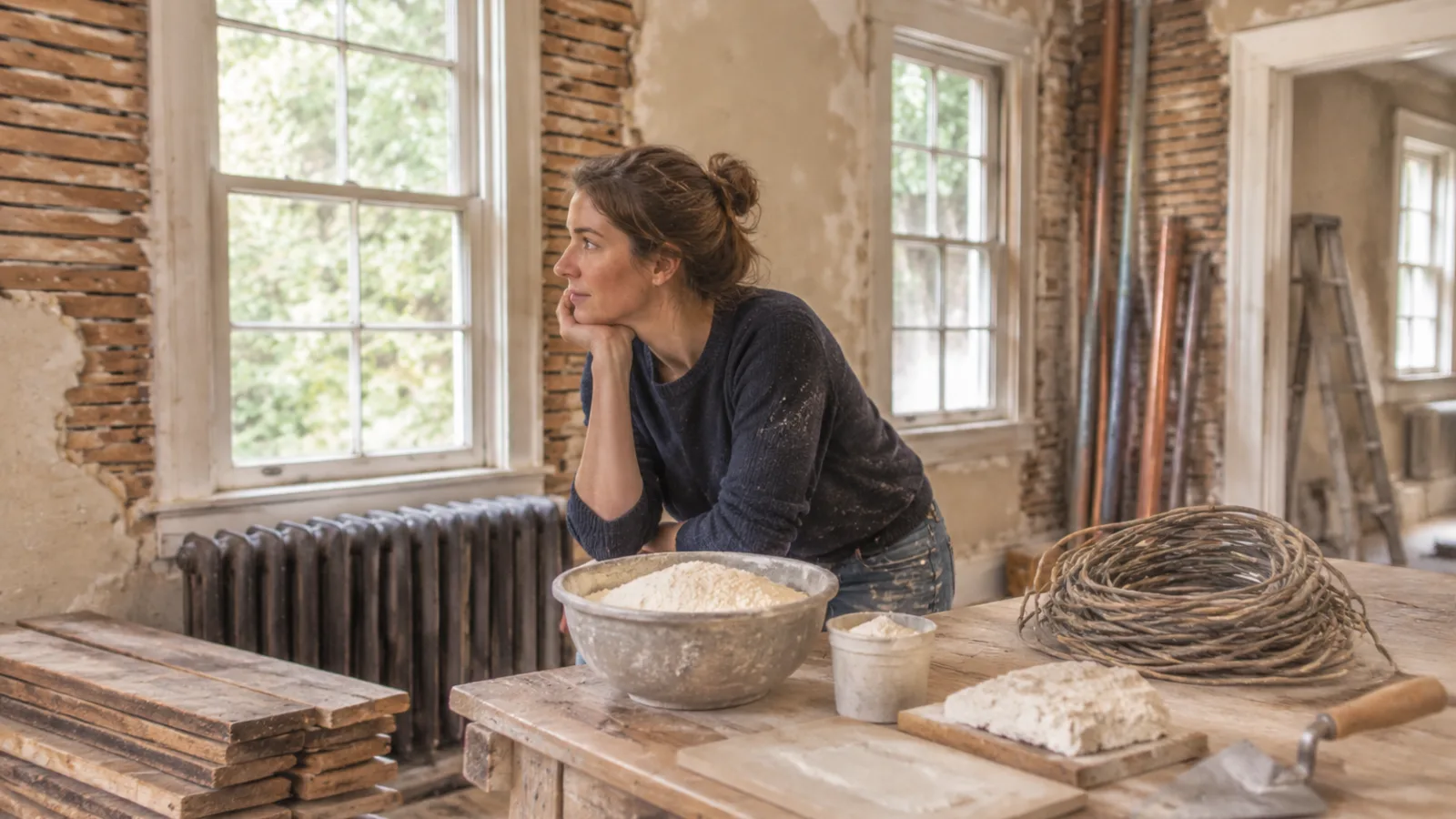
There is a moment in almost every period-house renovation when the charming old place stops feeling romantic and starts feeling expensive. A wall opens up, and suddenly the house reveals what it has been hiding for decades: outdated wiring, tired plumbing, hidden movement in the structure, or materials that should never be disturbed without testing. That is the reality of renovating a historic home. The good news is that these houses are not fragile by default. They just need a different order of operations, a more careful eye, and a budget that expects surprises.
This is not a guide about copying period style. It is about deciding what deserves to stay, what must be replaced for safety, and where older homes most often blow past the original estimate. If you plan the work in the right sequence, you can protect the character that made the house special without pouring money into the wrong things first.
Start with the age, structure, and status of the house
The building decade tells you what problems to expect
The age of a house is not just trivia. It is a rough map of how the building was put together and what is likely to fail first. Homes built before the early 20th century often have solid walls, timber floors, lime plaster, and older services that may have been patched more than once. Interwar houses often introduce cavity walls and early consumer wiring, while postwar homes may bring newer systems but also materials now known to be problematic, including asbestos in some products used through the late 20th century.
That does not mean every old home needs a major intervention. It means the age of the building helps you predict where to look, what to test, and where a cosmetic fix will not be enough.
Historic designation changes what you can alter
If the house is listed, protected, or in a heritage district, assume the exterior and any significant original features may be regulated. The exact rules vary by country and even by municipality, but the practical pattern is similar: the more visible or character-defining the feature, the more likely it needs approval before alteration. In many places, internal upgrades that do not change the historic character are easier to approve than changes to windows, facades, fireplaces, or decorative plaster.
For official guidance in the UK, Historic England is a useful starting point. In the US, the National Register of Historic Places explains how federal historic recognition works, though local rules often matter more for private owners.
Do not rely on a standard inspection alone
A general home inspection is helpful, but it is not enough for a house with age, heritage status, or visible signs of patchwork repair. Ask for a specialist surveyor or structural professional who understands older construction methods. You want someone who can look beyond fresh paint and tell you whether cracks are cosmetic, whether floors have sagged for a reason, and whether moisture problems are coming from a failed detail rather than simple condensation.
It is better to pay for that expertise before you buy or before the first phase of work begins. Once demolition starts, your negotiating power is gone.
Preserve the features that add character and value
Keep what is original, sound, and expensive to recreate
Not every old feature deserves to stay, but some are worth preserving because they define the house and would be costly to reproduce well. Original timber floors, sash or casement windows, decorative plasterwork, period fireplaces, encaustic tiles, and cast-iron radiators often belong in this category. These elements do more than look pretty. They give the house scale, texture, and a sense of continuity that buyers notice even if they cannot name it.
In many cases, restoration is the smarter choice than replacement. A tired timber floor can be repaired and refinished. A sash window may only need cord replacement, easing, and draught-proofing. Decorative plaster with minor cracking can often be repaired by a skilled plasterer rather than removed and remade.
Replace only when the feature can no longer do its job
The practical question is not whether an old feature looks imperfect. It is whether it still performs. If a window frame is rotten through, if a floor is structurally unsound, or if a fireplace or flue is unsafe, replacement may be the right move. But if the issue is surface wear, unevenness, or age-related character, removing it can destroy value instead of creating it.
When an original feature can still function safely, repair usually beats replacement. When it can no longer protect the house or the people in it, replacement becomes a safety decision, not a style decision.
Use the right specialist trades
Historic work is often slower because it requires specific skills. Lime plaster, traditional joinery, heritage glazing, and conservation-aware architecture are not the same as standard remodeling trades. If you need matching brickwork, timber repairs, or careful plaster restoration, find people who do that work regularly. Local heritage groups, conservation officers, and professional preservation bodies can be useful referral sources.
The main trade-off is time. Specialists can be booked out for months, but the wrong trade can turn a repair into a future problem.
Remove or replace the things that create risk
Electrical systems come first
Old wiring is one of the clearest reasons to act early. Knob-and-tube wiring in North American homes, older rubber or fabric-insulated cables, and outdated fuse systems are not just inconvenient. They can also be hard to insure, difficult to load safely, and poorly suited to modern appliances. Even if the lights still work, the system may not be able to handle the way you live now.
If the house has not been rewired in decades, ask a licensed electrician to assess the full system, not just the visible parts. A partial fix is sometimes enough for a short period, but a full rewire is often the cleaner long-term solution when you are already opening walls.
Plumbing is often older than it looks
Old plumbing may seem minor until pressure drops, water discolours, or a hidden leak begins damaging the structure around it. Lead supply pipes are still found in older homes in many regions, and corroded steel or failing early plastic fittings can create their own problems. If you have rusty water at the tap, low pressure, or a system that has clearly been patched repeatedly, plumbing should be near the top of the list.
The safety issue with lead is serious. The US Environmental Protection Agency states there is no safe level of lead exposure from drinking water. If your home may have lead service lines or internal pipework, confirm it and plan for replacement with a qualified professional.
Test before disturbing suspect materials
Asbestos and lead-based paint are not reasons to panic, but they are reasons to pause. Asbestos may be present in floor tiles, roof sheets, pipe insulation, textured coatings, and board products used in some homes built or renovated in the mid-to-late 20th century. Lead paint can be present in older layers even when a topcoat looks modern. The safest approach is simple: do not sand, cut, drill, or strip materials that might contain hazardous substances until they have been tested.
If testing confirms a hazard, hire licensed professionals to remove or encapsulate it. This is not the place for improvisation.
Watch for structural problems hiding behind cosmetic damage
Cracks around windows and doors, sloping floors, or doors that no longer close properly can be signs of movement rather than normal age. A patch of damp wallpaper may point to a leak, failed flashing, or a cold bridge in the wall. A beautiful ceiling medallion does not matter if the joists above it are failing. Always ask whether a symptom is just visual or whether it points to something deeper.
Make the house more efficient without erasing its character
Start with the least disruptive upgrades
Older homes are often difficult to heat because they were built before modern insulation and air-tightness standards. That does not mean you need to strip them back to the studs. Roof insulation, loft upgrades, and underfloor insulation are often the first places to start because they can improve comfort without changing the appearance of the house. Draught-proofing around doors and windows can also make a meaningful difference.
Solid-wall houses are a different challenge. Internal wall insulation can work, but it reduces room size and must be done carefully to avoid trapping moisture. External insulation may be technically effective, but it can change the facade and may not be acceptable on a historic property. This is where heritage rules and building physics need to be considered together, not separately.
Windows: repair, secondary glazing, or like-for-like replacement
Original timber windows are often more valuable than they first appear. If the frames are sound, repair is usually the best first option. If the goal is better thermal performance without altering the exterior, secondary glazing can be an excellent compromise. It is often reversible, works well with original windows, and may be easier to approve on protected buildings than replacement.
Like-for-like replacement can be appropriate when windows are beyond repair, but the profiles should match the originals as closely as possible. Thicker modern frames or visibly altered proportions can change the whole look of the facade.
Heating should suit the building, not fight it
Older homes often work best when the heating system is chosen with the existing layout in mind. Cast-iron radiators can be retained and updated. Heat pumps may be possible, but they often require careful sizing of emitters and better insulation than the house currently has. In many cases, the best plan is phased: improve the building fabric first, then upgrade the heating system in a way that supports the new performance level.
If you try to force a modern system onto a leaky, underinsulated house, you often end up paying more for less comfort.
Where costs spike when renovating a historic home
Hidden problems are common, not exceptional
The biggest budget shocks are usually not the things you can see before work starts. They are the discoveries made once floors are lifted or walls are opened: rotten joists, missing insulation, buried chimneys, unsafe wiring routes, old patch repairs, or previous alterations that were never done properly. In older homes, demolition is not just removal. It is diagnosis.
That is why contingency matters. For a standard renovation, a contingency is sensible. For an older or heritage property, a larger one is more realistic, especially if you have not had a thorough survey.
Special materials and skilled labour cost more
Matching old brick, sourcing period ironmongery, repairing ornate plaster, or hand-finishing a replacement detail takes longer and costs more than buying a standard product off the shelf. That does not mean you must spend lavishly everywhere. It means you should concentrate the higher-cost work where it will be seen and where it protects the building.
For example, a carefully restored front elevation may be worth the extra money, while a simpler, more economical finish may make sense in a secondary room or utility space. Not every room needs the same level of detailing.
Approvals can slow the programme
If permissions are required, expect delays. Heritage approvals, conservation review, and material sign-off can add weeks or months to a project. Build that time into the schedule rather than assuming work can begin as soon as the contractor is available. Starting without the right approval can create a more expensive problem than the work itself.
Budget for a contingency that matches the age of the house
The exact number depends on the condition of the building and the scope of work, but a larger contingency than you would use for a new-build or recent home is sensible. The more unknowns you have, the more important it becomes to phase the work and keep a reserve for structural or services surprises.
The right order for the work
Safety and weatherproofing come first
Before anything decorative, make the house safe and dry. Deal with the roof, gutters, structural issues, electrical hazards, plumbing leaks, and any materials that may be dangerous if disturbed. If the building cannot keep out water or support its own systems safely, cosmetic work is wasted money.
Then upgrade the services
Once the shell is sound, turn to electrics, plumbing, heating, and ventilation. This is the stage where the house becomes comfortable and functional for modern life. It is also the stage most likely to involve opening walls and floors, which is why it should happen before final finishes go in.
Then address thermal performance
After the building is secure and the services are sorted, improve insulation, draught-proofing, and glazing strategy. This order matters because energy upgrades are easier to design well once you know what the services and structure really need.
Leave decoration and fitted finishes for last
Paint, wallpaper, kitchens, built-in joinery, and decorative finishes should come after the messy work is complete. It is painful to wait, but far cheaper than finishing early and then damaging the work to get to something hidden behind it.
Frequently Asked Questions
Do I need permission to change windows in a historic home?
It depends on the house's legal status and local rules. In many protected properties, changing windows requires approval, especially if the new design would alter the exterior appearance. Repairing existing windows or using reversible secondary glazing is often easier to approve than full replacement.
What is the best insulation option for an older house with solid walls?
There is no single best option. Loft and roof insulation are usually the least disruptive starting points. For walls, internal insulation may work if designed carefully, while external insulation may not be appropriate for a heritage facade. A building professional with experience in older homes should help weigh moisture risk, room size, and appearance.
How can I tell whether old wiring is dangerous?
You usually cannot tell from appearance alone. Age, type of cable, condition of the fuse board, and signs such as heat damage or repeated faults all matter. If the system has not been updated in decades, have it inspected by a licensed electrician rather than assuming it is fine because it still powers the lights.
Will restoring original features really add value?
Often, yes. Buyers of period homes usually value authenticity, craftsmanship, and details that cannot be easily replicated. But value only holds when the feature is repaired properly and the rest of the house is safe, dry, and functional. A beautiful fireplace does not compensate for failing wiring or damp.
Why do renovation budgets on older homes get out of hand?
Because the hidden work is usually more extensive than expected. Old houses often need structural repairs, updated services, hazardous-material management, and specialist labour before cosmetic work can begin. The safest approach is to plan a larger contingency and phase the project so the most urgent issues are handled first.
Renovating an older house can be deeply rewarding when you respect what the building is telling you. Preserve the features that give it identity, replace the systems that put people at risk, and spend first on the parts that keep the structure sound. If you are renovating a historic home, the smartest budget is not the smallest one. It is the one that expects the hidden work, protects the character, and lets the house keep its best features for another generation.




Join the conversation
Sign in — Sign in to join the conversation.