
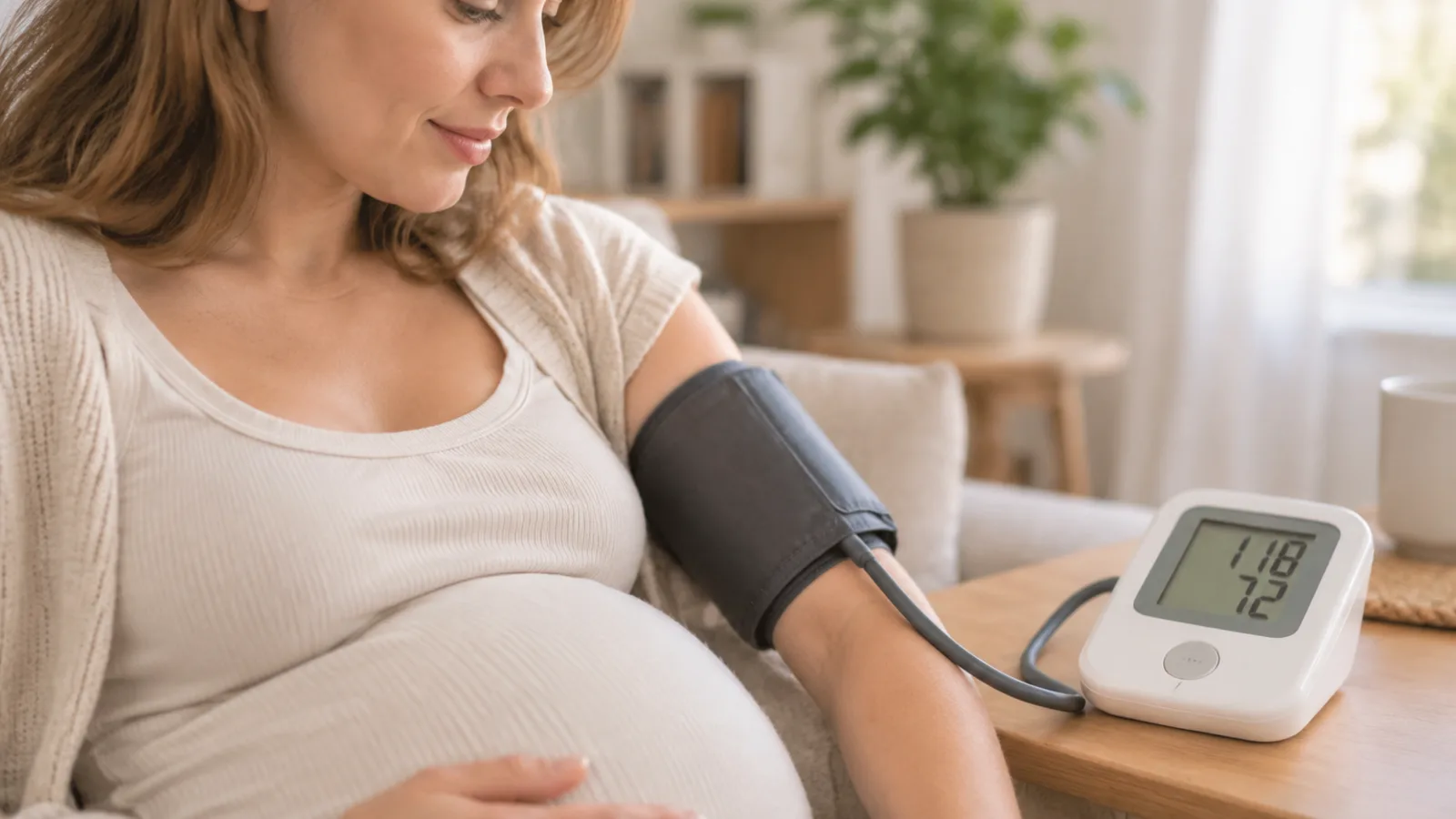
Your midwife rattles off "110 over 70" and moves on, but you're left wondering: is that good? Should you be doing something differently? Blood pressure checks happen at every antenatal appointment for good reason, but most women never learn how to read their own numbers or what changes actually matter. Understanding your pregnancy blood pressure readings means knowing what's normal, what's concerning, and when a call to your midwife can wait until tomorrow—or absolutely shouldn't.
What Blood Pressure Numbers Actually Mean
The two numbers your midwife records measure different things. The top number (systolic) shows the pressure in your arteries when your heart beats. The bottom number (diastolic) measures the pressure when your heart rests between beats. Both are recorded in millimeters of mercury, abbreviated as mmHg.
In pregnancy, healthcare providers pay particular attention to that bottom number. A rising diastolic reading can signal that your blood vessels are narrowing, which reduces blood flow to your placenta. That's why they're not just glancing at the numbers—they're watching for patterns across your appointments.
Normal Blood Pressure in Pregnancy
Most healthy pregnancies see readings between 110/70 and 120/80, though some variation either side is perfectly fine. Your blood pressure will likely shift as pregnancy progresses.
In the first trimester, many women notice a slight drop. That's your blood vessels relaxing in response to pregnancy hormones. If you were 118/76 before pregnancy and you're now 108/68 at 18 weeks, that's textbook.
The second trimester usually brings stable, lower readings. By the third trimester, blood pressure may creep back up slightly as your blood volume peaks, but it should still stay below 140/90.
When Pregnancy Blood Pressure Becomes High
The threshold that triggers closer monitoring is 140/90. This doesn't mean one reading at that level equals a crisis, but it does mean your care team will want to see you more frequently and rule out complications.
There's a difference between slightly elevated and genuinely high. A reading of 135/88 once might prompt your midwife to check again later the same visit. A reading of 148/95 gets more immediate attention. What matters most isn't a single number but whether you're showing a pattern—readings climbing over several appointments or staying consistently elevated.
High blood pressure matters because it can reduce blood flow to your placenta, affecting your baby's growth. It's also the most visible warning sign of preeclampsia, a serious condition that requires medical management.
What High Blood Pressure Feels Like (and Why It Often Feels Like Nothing)
Here's the frustrating part: most women with high blood pressure in pregnancy feel completely fine. You're not lightheaded. You're not dizzy. You have no idea anything's wrong until the cuff goes on at your appointment.
Occasionally, very high blood pressure comes with symptoms—a severe headache that doesn't respond to paracetamol, vision changes like blurred sight or flashing lights, pain below your ribs on the right side, or sudden significant swelling in your face and hands. But you cannot rely on feeling unwell. That's exactly why routine monitoring exists.
Home Monitoring: Should You, and How to Do It Right
Not every pregnant woman needs to monitor blood pressure at home. Your midwife might suggest it if you've had higher readings at appointments, if you had high blood pressure before pregnancy, or if there are other risk factors they're tracking.
If home monitoring is recommended, equipment matters. Use an upper-arm cuff, not a wrist monitor. Make sure it's validated for use in pregnancy—some monitors have been tested specifically for accuracy in pregnant women, and those are the ones to choose.
Taking an accurate reading requires consistency. Sit down and rest for at least five minutes first. Don't check your blood pressure right after climbing stairs, drinking coffee, or getting stressful news. Rest your arm on a table at heart level. Take the reading, write it down with the date, time, and which arm you used, then get on with your day.
How often should you check? If your midwife has asked you to monitor at home, once or twice daily is usually enough. Checking every hour will only increase your anxiety without giving useful information. Blood pressure naturally fluctuates throughout the day.
A simple log might look like this: "Monday 14th, 9:15 AM, left arm, 128/82. Monday 14th, 7:30 PM, left arm, 132/85." Bring this log to every appointment.
Common Home Monitoring Mistakes
Taking your blood pressure immediately after exercise, a cup of tea, or a stressful phone call will give you a falsely high reading. You need to be genuinely rested.
Using the wrong cuff size is surprisingly common. If the cuff is too small, it will squeeze harder and show readings that are higher than your actual blood pressure. Most monitors come with a standard cuff, but if your upper arm measures more than 33 cm around, you'll need a large cuff.
Checking too frequently creates its own problem. Obsessive monitoring doesn't improve outcomes—it just feeds anxiety, which then raises your blood pressure.
Finally, taking readings at home and then forgetting to bring your written log to appointments means your midwife only has half the picture. Those home numbers are valuable data, but only if they're shared.
Warning Signs That Mean Call Now
Some situations require same-day contact with your midwife or hospital:
- Blood pressure 140/90 or higher on two separate readings taken a few hours apart
- Severe headache that doesn't improve with paracetamol
- Vision problems: blurred vision, flashing lights, or temporary loss of vision
- Sharp pain below your ribs on the right side
- Sudden significant swelling—your face puffs up in a matter of hours, your hands won't close properly, or you can't get your rings off when yesterday was fine
- Vomiting in the second half of pregnancy that's not a stomach bug
There's a difference between "call your midwife today during working hours" and "go to hospital now." Severe headache with vision changes, blood pressure readings above 160/110, or unrelenting upper abdominal pain all fall into the latter category.
What Happens If You Do Need to Call
When you call, you'll likely be asked to come in for a check. This usually involves another blood pressure reading, a urine test to check for protein, and possibly blood tests to assess liver and kidney function.
One high reading doesn't mean automatic drama. Often, you'll be monitored for a few hours, and if everything settles, you'll go home with a plan for closer follow-up. What matters is getting checked so that the right decisions can be made with full information.
What You Can (and Can't) Control
If your blood pressure is creeping up, there are practical steps that support your overall health, though they're not a substitute for medical monitoring or treatment.
Diet helps, particularly reducing heavily processed foods and maintaining adequate protein. Staying well hydrated matters more than most people realise. The balance between potassium and sodium in your diet plays a role in blood pressure regulation, which is why eating more whole foods tends to help. Focus on potassium-rich options like leafy greens, bananas, beans, and sweet potatoes, while cutting back on processed foods that are high in sodium. But this isn't a cure, and it's not the full picture—it's one piece of a larger management plan.
Gentle activity like walking, swimming, or prenatal yoga supports healthy circulation. Rest genuinely means rest—lying down, especially on your left side, which improves blood flow to your placenta.
What doesn't work: stressing about your blood pressure (which ironically raises it), making extreme diet changes without medical guidance, or taking supplements you've read about online without discussing them with your midwife first.
If you've been told you have high blood pressure, these lifestyle measures support your medical care. They don't replace it. Follow your care team's advice about monitoring frequency, medication if it's prescribed, and when to come in for checks.
Frequently Asked Questions
Can blood pressure be too low in pregnancy?
Readings below 90/60 can occasionally cause dizziness or lightheadedness, but low blood pressure is rarely dangerous during pregnancy. If you feel faint when you stand up or you're experiencing dizziness, mention it at your next appointment. The usual advice involves staying well hydrated, eating regularly, and standing up slowly rather than jumping out of bed or off the sofa.
I had high blood pressure before pregnancy. Does that change what's normal for me?
Yes, significantly. If you started pregnancy with high blood pressure, your care team will monitor you more closely throughout. They may use different thresholds for intervention, and the goal is often keeping your blood pressure stable rather than hitting the standard "normal" range. Your baseline matters, and your monitoring plan will be tailored accordingly. Make sure your midwife knows your full medical history from the start.
Does high blood pressure always mean preeclampsia?
No. You can have elevated blood pressure without preeclampsia, which is a specific condition that involves high blood pressure plus protein in your urine and often other symptoms affecting your liver, kidneys, or blood clotting. But because high blood pressure is one of the major warning signs of preeclampsia, it's monitored carefully. When your midwife finds elevated blood pressure, they're checking for the full picture, not assuming the worst.
My blood pressure is fine at appointments but high at home, or vice versa. Which is right?
Both readings tell part of the story. "White coat syndrome"—higher readings at appointments because you're nervous or rushed—is real. So is "masked hypertension," where blood pressure is higher at home than in the clinic. This is why home readings, when done correctly, are so valuable. Share your home log with your midwife. The combination of home and clinic readings builds a complete picture of what's happening.
Will I need medication if my blood pressure is high?
Not necessarily. Some women manage with increased monitoring and lifestyle adjustments. Medication typically becomes necessary if blood pressure stays consistently at or above 140/90, if it's climbing, or if there are signs of preeclampsia. Your healthcare provider will prescribe medications that have been studied in pregnancy and will monitor you closely to ensure the benefits outweigh any risks. If medication is recommended, it's because the risk of uncontrolled high blood pressure to you and your baby is the greater concern.
Understanding what those blood pressure numbers mean gives you one more tool for navigating pregnancy with confidence rather than anxiety. Normal ranges are genuinely wide, one elevated reading rarely means disaster, and knowing when to pick up the phone means you're looking after yourself and your baby in exactly the right way. If something feels off or you're unsure whether your numbers are concerning, that's what your midwife is there for. When in doubt, call.





Join the conversation
Sign in — Sign in to join the conversation.