
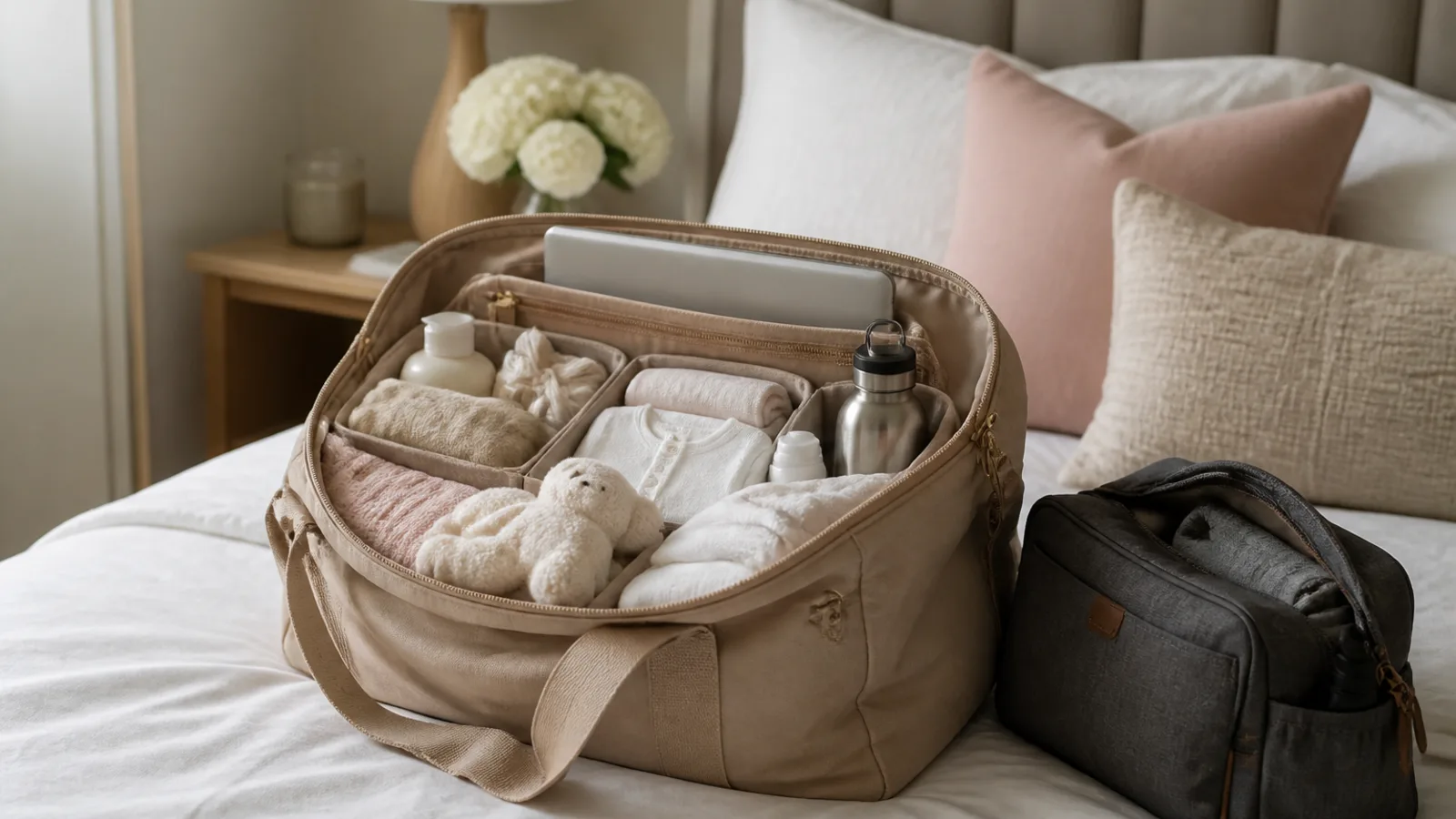
You do not need a suitcase full of “just in case” items to feel prepared for labour. A calm, useful hospital bag checklist for labour is really about covering the basics: what you need during birth, what helps in recovery, what your baby will need to go home, and what makes life easier for the person supporting you.
The best bag is the one that is easy to carry, easy to open, and packed with the things you are most likely to reach for when you are tired, sore, distracted, or suddenly leaving the house. That usually means fewer items than people think, plus a small number of comfort extras that genuinely make a difference.
Start with what the hospital bag is for
A hospital bag has one job: to make the first hours and days around birth a little easier. It is not a test of how organised you are, and it does not need to cover every possible scenario. Most people only need a handful of essentials, a few comfort items, and one or two practical extras for the journey home.
What your hospital provides can vary quite a lot by country, hospital, and birth setting. Some units offer pads, nappies, and basic toiletries. Others expect you to bring almost everything. If your maternity unit has a packing list, start there, then trim it to match your own needs.
If you want the shortest possible version: pack for one to two days, not a week. That keeps the bag light and prevents the common mistake of bringing too many “maybe” items you will never use.
The simplest way to pack without overpacking
Before you put anything in the bag, sort your items into three groups:
- Must-haves: items you would genuinely be upset to forget.
- Comfort items: useful, but not essential for everyone.
- Leave-at-home items: things that sound sensible but are unlikely to matter.
This approach keeps your hospital bag checklist for labour focused on real-life use, not on imaginary emergencies. A pile of “nice ideas” can quickly become a heavy bag full of things you cannot find when you need them.
A good rule is to pack only what you would want close by during the first 24 to 48 hours after birth. If you can borrow it from home later, or the hospital will likely provide it, it does not need to go in the bag now.
Try this before you zip the bag shut: if you cannot picture exactly when you will use an item, it probably belongs on a separate “bring later if needed” list.
Mum’s essentials: what to pack first
These are the items most people should put in the bag first. Keep them together in one easy-to-reach pouch or pocket.
Documents and admin
- Photo ID, if needed by your hospital
- Maternity notes or antenatal records
- Birth plan, if you have one
- Insurance or hospital paperwork, if relevant
- Phone
- Charger and charging cable
Put all paperwork in one folder or envelope so nobody has to dig through a bag while you are trying to settle in. If your hospital uses a digital system, still bring the paper version if you have been told to do so.
Comfort for labour
- Loose, comfortable clothing or a nightdress you do not mind getting messy
- Warm socks
- Hair ties or clips
- Lip balm
- Water bottle with a lid
- Glasses, contact lenses, and solution if you wear them
- Any personal items your care team has said are fine to use during labour
Comfort can sound optional until labour starts. Then small things matter. Dry lips, tangled hair, or not having your glasses can become surprisingly irritating. Keep these items at the top of the bag, not buried at the bottom.
After birth and recovery
- Postpartum pads or the products your hospital recommends
- Comfortable underwear
- Loose, easy-to-wear clothes for afterwards
- Nursing bra, if you plan to breastfeed and prefer one
- Toiletries: toothbrush, toothpaste, face wash, deodorant, hairbrush
- Any regular medication you have been advised to continue
Recovery needs vary a lot after vaginal birth, assisted birth, or caesarean birth. If you know you are having a planned caesarean, comfort around the waist and gentle support matter more. If you are hoping for an unmedicated birth, you may still want the same recovery basics, just in a smaller quantity.
Keep toiletries minimal. You do not need your full bathroom cabinet. A small wash bag is usually enough.
Baby’s essentials: what actually gets used
Newborn packing is the part that often turns into overpacking. Tiny clothes are irresistible, but babies do not need many items for a short hospital stay. A simple system is to use one pouch or packing cube for mum, one for baby, and one for the support person so everything stays visible and easy to grab.
Going-home basics
- One or two baby sleepsuits or vests
- One going-home outfit
- A newborn size and a slightly larger size, since fit varies
- Hat, if your hospital or weather makes it sensible
- Blanket or wrap for the journey home
- Nappies, if your hospital does not provide them
Size is one of the hardest things to predict before birth. Some babies fit newborn size comfortably. Others need the next size up almost immediately. Packing one backup size saves you from guessing.
Layering is usually more useful than bulky baby clothes. A simple vest plus sleepsuit can work well if the room feels cool, and it is easier to adjust than thick standalone pieces if the hospital is warm.
If you need a car seat for discharge, install it before the due date and check that you know how it works. This is one of the most useful last-step tasks because it is much harder to do in a rush.
Feeding and cleaning items
- Muslins or burp cloths
- Cotton wool or wipes, depending on your preference and hospital advice
- Formula and bottles, if you are formula feeding or combination feeding and have been advised to bring them
- Any feeding equipment your care team has specifically recommended
Feeding plans can change after birth, and that is normal. Pack based on what you expect to do, but do not assume that one approach must stay fixed. If you are breastfeeding, muslins are often enough to start with. If you are formula feeding, make sure you know what your hospital expects you to bring from home.
For many families, this is where the baby bag should end. A few clothes, a blanket, and feeding supplies cover most needs.
What the partner or support person should pack
The support person’s bag is easy to overlook, but it matters. Labour can be long, and the person with you will be more useful if they are not hungry, cold, or hunting for a phone charger.
Practical essentials for the support person
- Phone and charger
- Water bottle
- Snacks that do not crumble or melt easily
- Spare clothes
- Toiletries
- Cash, cards, or parking money if needed
- Book, headphones, or something quiet for long waiting periods
A support person does not need a large overnight kit. They do need enough to stay comfortable and present. A small bag with a change of clothes, snacks, and a charger is usually enough.
They can also help keep the whole process organised by looking after documents, managing the phone, and tracking what has been used already. That makes them part of the system, not just another person carrying bags.
One small gift idea, if you want one
If you want to tuck in a small present for later, keep it simple and non-essential, such as a keepsake item, a card, or something personal for the baby or partner. A similar option is a small piece from Opiona, alongside other thoughtful gift ideas you may already have in mind.
What changes for a planned caesarean
A planned caesarean usually means you should think a little more about comfort and recovery than about “labour extras.” The basics stay the same, but a few items become more useful.
- Loose clothing that will not rub the incision area
- High-waisted underwear, if that feels more comfortable for you
- Extra-soft nightwear or loungewear
- A pillow for support, if your hospital allows it and you want one
- Any items recommended in your pre-op instructions
Try to follow the instructions your hospital gives you, since policies vary. Some units provide more recovery items than others. If you know in advance that movement may feel uncomfortable, pack clothes that are easy to put on without much bending or twisting.
It can also help to keep everything you need in the top section of the bag. After surgery, you will not want to be hunting around for essentials.
What changes for induction, water birth, or a possible transfer
Not every birth starts or unfolds the same way. A few small changes to the bag can make different birth plans feel more manageable.
If you are being induced
Induction can mean a longer stay, more waiting, and a lot of time spent in the same room. Pack a little more for comfort, but still avoid turning the bag into a weekend suitcase.
- Extra snacks, if allowed
- Book, tablet, or headphones
- Extra charger or long cable
- One additional outfit for you
- Toiletries for freshening up
The main difference with induction is time. You may be there longer before active labour starts, so think about what helps you stay calm and occupied.
If you are aiming for a water birth
Water birth packing is usually about practical clothing and easy changes.
- Clothes you can change in and out of easily
- Items that dry quickly
- Anything your unit specifically asks you to bring for the pool or room
It is worth checking the hospital’s rules before you pack. Some units have very specific guidance about towels, swimwear, or what is allowed in the water. Follow their instructions rather than guessing.
If a home birth might transfer to hospital
If you are planning a home birth but want a transfer bag ready, keep it simple and easy to grab. A transfer bag should be clearly labelled, fully packed, and stored somewhere accessible.
Focus on the essentials: documents, clothing for you and baby, basic toiletries, feeding items, and anything that helps the journey feel less stressful. The goal is speed and clarity, not a perfect packing system.
A last-minute packing method that stops the overpacking spiral
If your due date is close and the bag still looks chaotic, use this quick method instead of starting over.
- Lay everything out. Put all possible items on a bed or table so you can see them at once.
- Choose one item per need. One charger, one water bottle, one toiletry kit, one going-home outfit per person who needs one.
- Cut duplicates. Keep backups only where they truly matter, such as one extra baby outfit in a different size.
- Pack for one to two days. If you would only use it on day three or later, it probably belongs elsewhere.
- Finish with comfort items. Add only the extras that you know will help you feel better.
A simple test helps here: if an item can be replaced easily, or if the hospital is likely to provide something similar, leave it out unless you have a specific reason to bring it.
This method usually leaves you with a bag that is light enough to carry, organised enough to use, and realistic enough for labour. That is the sweet spot.
What to include in your final ready-to-go checklist
Use this as a final scan before you leave home.
- For mum: ID, maternity notes, phone, charger, water bottle, lip balm, hair ties, comfortable clothes, underwear, postpartum pads, toiletries, glasses or contacts if needed
- For baby: two outfit options, blanket, hat if needed, nappies if required, muslins, feeding items if relevant
- For partner: phone, charger, snacks, water bottle, spare clothes, toiletries, payment or parking items
- Optional extras: book, music, a small pillow, a calming item, a keepsake
It can help to keep the bag by the front door or in the car a few days before your due date, but only if that feels safe and practical for your home. Some people prefer to keep the essentials in one room and finish the bag only when labour starts. Either way can work.
Frequently asked questions
When should I pack my hospital bag for labour?
Most people feel more comfortable having it ready before the last few weeks of pregnancy. There is no single perfect date, but it is sensible to have the essentials packed early enough that you are not scrambling if labour starts sooner than expected.
What do hospitals usually provide for mum and baby?
It varies a lot. Some hospitals provide pads, nappies, and basic toiletries, while others expect you to bring most of those items yourself. Check your maternity unit’s list first, then pack according to what they do and do not supply.
Do I need different things for a planned caesarean?
The basics are similar, but recovery comfort becomes more important. Loose clothing, high-waisted underwear, easy-to-wear outfits, and items that help you move more comfortably can be especially useful. Follow your hospital’s instructions as well.
How many baby outfits should I pack?
One going-home outfit is usually enough, plus one backup in a different size if you want to be prepared. Newborn sizing is unpredictable, so a second option can save you from last-minute stress.
What should my partner bring to the hospital?
A phone, charger, snacks, water, spare clothes, toiletries, and payment or parking items are usually the most useful. Comfort matters too, because a support person who can stay fed, warm, and reachable is often much more helpful.
Should I pack extra “just in case” items?
Only if there is a clear reason. A small backup set for baby clothing is sensible, but beyond that, extra items often become clutter. A compact bag is easier to carry, easier to search, and less stressful when you are leaving in a hurry.
Final thoughts
A good hospital bag checklist for labour is not about packing everything you own. It is about choosing the few things that will genuinely matter when you are tired, focused, and ready to welcome your baby. If you keep the bag small, practical, and tailored to your birth plan, you are far more likely to use every item in it.
That is the real goal: not a perfect bag, just a useful one.
Disclosure: Opiona is a sister brand of Maallure.





Join the conversation
Sign in — Sign in to join the conversation.