
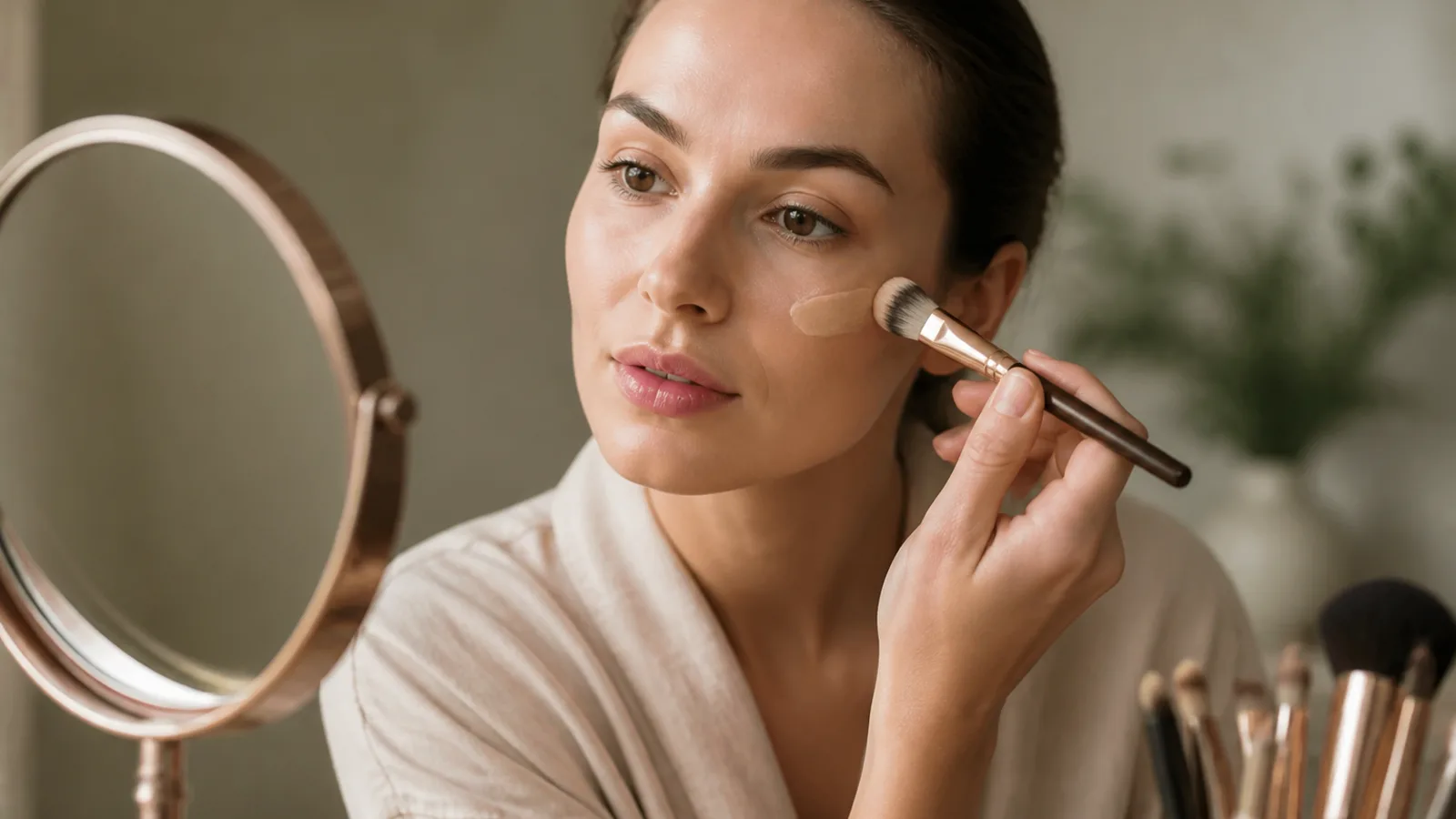
If you’ve ever looked in the mirror halfway through the day and wondered why your base suddenly seems dry, thick, or textured, you’re not alone. Learning how to stop foundation looking cakey usually starts with one simple shift: stop treating every cakey finish as the same problem. Sometimes the issue is dry skin. Sometimes it’s too much powder. Sometimes the formula is wrong for your skin type, or your skincare is fighting your makeup before it even sets.
The good news is that cakiness is usually fixable. You do not need a completely new makeup routine. You just need to identify what your foundation is reacting to, then adjust the step that’s causing the problem. Think of this as a troubleshooting guide, not a set of rules you have to follow perfectly every day.
Why foundation looks cakey in the first place
Cakey foundation usually means the product is sitting on top of the skin instead of blending into it. That can happen for a few different reasons: the skin is too dry or flaky, the base is too heavy, the formula is not suited to your skin type, or the layers underneath are not playing nicely together.
Sometimes the problem is not the foundation itself. It’s the combination of moisturizer, primer, concealer, powder, and setting spray all layered too quickly or too heavily. When that happens, the base can separate, cling to texture, or start looking chalky before lunch.
The fastest way to fix it is to figure out what the finish is telling you.
If it looks patchy or clingy
This usually points to dry skin, flaky areas, or uneven prep. Foundation tends to cling to the driest patches first, especially around the nose, mouth, and cheeks.
If this is your issue, the answer is usually less about more coverage and more about smoothing and hydrating the skin properly before makeup goes on.
If it looks thick or heavy
This is often a sign of too much product. It can also happen when you try to build full coverage all over the face instead of just where you actually need it.
A heavy finish does not always mean you used a lot of foundation. Sometimes a small amount can look thick if it’s layered over a rich moisturizer, a sticky primer, and concealer that was already applied too generously.
If it looks flat and powdery
This usually means there is too much powder, or the foundation finish is too matte for your skin. A very matte base can make skin look older, drier, or more textured than it really is.
If your makeup starts off smooth but ends up looking dusty, the fix is often to reduce powder and choose a more flexible formula.
If it separates or slides
That usually means the skin prep underneath is too slippery, too rich, or not fully settled. It can also happen on oily skin when a foundation is not built to handle shine.
Separation is frustrating because it can look like your makeup is failing even when you applied it carefully. Often, though, the problem is simply that the layers below it were not compatible.
Step 1: Fix skin prep before you reach for more foundation
Skin prep matters, but not in the “add everything” way. The goal is to create a smooth, comfortable surface that lets foundation sit well. That means balancing moisture, texture, and absorption time.
For dry skin
If your skin is dry, flaky, or tight, foundation will often look better after gentle prep. Some people find that a mild exfoliation routine a couple of times a week helps soften rough patches, but it is not something everyone needs. Start with a mild cleanser, then use a hydrating moisturizer that actually leaves the skin comfortable, not coated.
The key is to let skincare sink in before makeup. If your base goes on immediately over rich cream, it may lift, pill, or move around instead of blending smoothly.
Practical example: If foundation clings around your nose and mouth every morning, try applying moisturizer first, waiting several minutes, and then using a thinner layer of foundation only on the areas that need it.
For oily skin
Oily skin still needs hydration. The difference is that heavy creams can be too much if they leave a slick surface under makeup. A lightweight moisturizer or gel cream is often enough.
If you use primer, keep it targeted. You do not usually need to coat the whole face. Too much slip can make foundation break apart faster, especially around the T-zone.
Practical example: If your foundation separates by mid-morning, check whether your moisturizer is too rich or whether you are layering it with a primer and a luminous base that all aim to create glow at once.
For combination skin
Combination skin often needs a split strategy. Dry cheeks may need more hydration, while the forehead, nose, and chin may do better with a lighter touch.
That does not mean you need two completely different routines. It can be as simple as applying a richer moisturizer to dry areas and a lighter layer everywhere else.
Practical example: If your cheeks look flaky but your nose gets shiny by noon, prep each area differently instead of using the same heavy cream across the whole face.
For mature skin
Mature skin usually looks best with moisture, flexibility, and less product overall. Foundation can emphasize texture, fine lines, or dry areas if the prep is too light or the formula is too matte.
At the same time, too much skincare can backfire. Thick layers of balm or rich cream may make makeup slide. The sweet spot is a well-hydrated base with enough time to absorb.
Practical example: If foundation settles into lines around the mouth or under the eyes, try less product, a more hydrating formula, and a shorter, lighter routine before makeup.
Step 2: Use less foundation than you think
One of the easiest ways to fix cakiness is also the hardest to accept: use less product. Foundation coverage is often better when you start with a thin layer and build only where necessary.
Heavy application can make skin texture more visible, especially if you are trying to cover redness, under-eye shadows, or blemishes all at once. Spot-correcting those areas first often gives a cleaner result.
Practical tip: Start with a small amount, blend it out, then step back and check what actually still needs coverage. If you need more, add it only to specific areas.
Another helpful swap: Instead of layering a second full face of foundation, use concealer on the places that still need work, such as around the nose or on a blemish.
More product rarely means better coverage. It usually means more texture.
Step 3: Choose the right formula for your skin type
Even the best application cannot fully fix a formula that does not suit your skin. A foundation that looks smooth on one person can look dry, greasy, or heavy on another.
Dry skin
If your skin is dry, look for foundation with a more hydrating, luminous, or natural finish. These formulas usually sit more comfortably and are less likely to grab onto flakes.
Very matte or long-wear formulas can still work for some people, but they often need more careful prep and lighter application. If your skin is already dehydrated, a flat matte base can make it look older or more textured than it is.
Oily skin
For oily skin, long-wear formulas can help, but they should not feel chalky. The goal is balance: enough control to reduce shine, but not so much dryness that the foundation breaks up in patches.
If a matte formula looks powdery by lunchtime, it may be too drying for you, even if it promises oil control.
Combination skin
Combination skin usually does well with a flexible, natural-finish foundation. A product that is too matte can cling to dry areas, while a very dewy formula may move around on the T-zone.
Sometimes the best solution is not a different formula for each feature, but a single formula used differently: thinner application on oily areas and a slightly more generous, well-blended layer on drier areas.
Mature skin
Mature skin often benefits from lighter, more flexible coverage rather than thick full-coverage foundation. A skin tint or light-medium foundation can look fresher than a heavier matte base, especially in daylight.
That does not mean mature skin cannot wear full coverage. It just means the finish matters a lot. A softer, more natural base is often more flattering than a product that emphasizes every line and dry patch.
Honest trade-off: A lighter formula may not cover everything on its own, but it often looks more polished and is easier to wear in real life.
Step 4: Powder strategically, not everywhere
Powder is useful, but too much of it is one of the fastest ways to make foundation look cakey. This is especially true if you already used a matte base or have dry skin.
The best approach is targeted powdering. Think of powder as a tool for specific zones, not a finishing blanket for the whole face.
Where powder helps
Powder is most helpful in areas that get oily or crease easily, such as the sides of the nose, the center of the forehead, or the under-eye area if your concealer tends to move.
A small amount can lock makeup in place without changing the texture too much.
Where powder can cause cake
Avoid loading powder onto dry cheeks, flaky spots, or areas that already look textured. That often makes the surface look more obvious instead of smoother.
If you feel like you need powder everywhere, try blotting first. Oil can make makeup look heavy, but so can too much dry product.
How to apply it
Use the lightest hand possible. Press powder in where needed instead of sweeping it across the whole face. A small fluffy brush or a puff can both work, depending on the finish you want.
Practical example: If your T-zone gets shiny but your cheeks are dry, powder only the center of the face and leave the outer areas alone.
Step 5: Check your tools and technique
Your brush or sponge can change how foundation looks almost as much as the formula itself. A tool that deposits too much product can make your base look thicker than it is.
Sponge, brush, or fingers?
A damp sponge can help sheer out foundation and soften edges, which is useful if you accidentally applied too much. It can also press makeup into the skin in a more natural way.
Brushes can give a more polished finish, but they may also build coverage quickly. If you use a dense brush with a heavy hand, texture can show more easily.
Fingers can work well with thinner or creamier formulas because the warmth helps them melt in. This can be especially useful for skin tints and light coverage bases.
Blending tips that help
- Blend in thin layers rather than trying to perfect everything at once.
- Use tapping or pressing motions where possible.
- Avoid dragging foundation across dry patches.
- Pause and check the finish before adding more product.
Practical example: If your foundation looks smooth at first but then turns thick, you may be buffing too much product into the skin instead of pressing it in lightly.
Step 6: Troubleshoot by skin type
Sometimes the clearest way to solve the problem is to look at the whole routine for your skin type and simplify it.
Dry skin routine
- Cleanse gently.
- Apply a hydrating moisturizer.
- Wait a few minutes so the skin is no longer slippery.
- Use a hydrating or natural-finish foundation in a thin layer.
- Conceal only where needed.
- Use very little powder, if any.
This routine usually works best when the skin is comfortable before makeup starts. If your face feels tight before foundation, cakiness is more likely later.
Oily skin routine
- Cleanse and use a lightweight moisturizer.
- Let it settle fully.
- Use a long-wear foundation that suits your finish preference.
- Apply thin layers and build slowly.
- Powder only the areas that get shiny or crease.
If you are oily but dehydrated, do not assume you need to strip the skin. Too much dryness can make oil production and texture issues look worse.
Combination skin routine
- Hydrate the whole face lightly.
- Add a little extra moisture to dry zones if needed.
- Use a flexible foundation.
- Apply less product on the T-zone and more only where the skin is drier.
- Set selectively instead of all over.
Combination skin often looks best when you stop treating it like one uniform surface.
Mature skin routine
- Use a gentle cleanse and a comfortable moisturizer.
- Avoid over-exfoliating before makeup.
- Choose a lighter, flexible foundation or skin tint.
- Use a thin layer and build only where you want more coverage.
- Keep powder minimal and focused.
Mature skin often benefits from a fresher finish rather than maximum coverage. If a foundation keeps settling into lines, it may simply be the wrong texture for your face right now.
When a lighter formula is the better choice
Sometimes the solution is not to keep troubleshooting the same heavy base. Sometimes the better answer is to switch to a lighter formula altogether.
If your foundation always looks cakey no matter how carefully you apply it, a skin tint, tinted moisturizer, or light-coverage foundation may serve you better. These products are designed to even out the skin without masking it completely.
That does mean you may need to use concealer for spots, redness, or under-eye darkness. But the trade-off is often worth it: the skin looks more like skin, and the makeup is easier to wear all day.
Best rule of thumb: if your base looks better in the mirror before you add the final “coverage” step, that final step may be the one causing the problem.
Quick troubleshooting checklist
If you want a fast reset, ask yourself these questions:
- Is my skin dry, oily, combination, or dehydrated?
- Am I using too much foundation or too much powder?
- Is my moisturizer or primer too rich for my skin right now?
- Am I trying to cover everything with one heavy layer?
- Does this formula suit my skin type and finish preference?
- Am I applying makeup before skincare has settled?
- Would a lighter base work better than a full-coverage foundation?
If you answer yes to more than one of those, the cakiness probably has more than one cause. That is normal. Most makeup problems do.
FAQ
Why does my foundation look cakey even when I moisturize?
Moisturizing helps, but it is not the whole story. Foundation can still look cakey if you use too much product, choose a formula that is too matte, apply powder too heavily, or layer makeup over skincare that has not settled properly.
How do I stop foundation looking cakey on dry skin?
Use a gentle skin prep routine, apply moisturizer and let it absorb, choose a hydrating or natural-finish foundation, and keep powder to a minimum. It also helps to use less foundation and build only where needed.
Can powder make foundation look cakey?
Yes. Powder can make foundation look dry or dusty if you use too much or apply it to already textured areas. It is usually better to powder only the places that really need it.
What foundation finish is best for mature skin?
Many people with mature skin prefer light to medium coverage with a natural or satin finish. Very matte formulas can emphasize fine lines and texture, while a more flexible finish often looks fresher.
Should I use a skin tint instead of foundation if my makeup always looks heavy?
Possibly. If foundation routinely looks thick, textured, or overdone, a skin tint or tinted moisturizer may be a better fit. You can still add concealer where needed, but the overall finish may look softer and more natural.
If you want to stop foundation looking cakey, the goal is not perfection. It is finding the right balance between skin prep, formula, coverage, and finish. Once you know what is actually causing the problem, the fix is usually much simpler than it seems.






Join the conversation
Sign in — Sign in to join the conversation.