
If you have spent any time on pregnancy social media, you have probably seen the posts: throw out every plastic container, replace your entire kitchen before the second trimester, audit every ingredient in your bathroom cabinet. The anxiety is understandable. Headlines about “forever chemicals” and their potential effects on developing babies are genuinely unsettling, and the sheer volume of advice makes it feel as though everything in your home is quietly working against you.
The science points to a narrower set of concerns than the internet suggests. There are specific chemicals to avoid during pregnancy that have enough evidence behind them to warrant real action, and the meaningful swaps are fewer, more affordable, and more practical than any viral clean-living checklist implies. This article identifies them precisely — and is equally clear about what you can let go.
What PFAS are and why pregnancy is a different conversation
PFAS — per- and polyfluoroalkyl substances — are a large family of synthetic chemicals used since the mid-twentieth century in non-stick coatings, food packaging, firefighting foam, and water-resistant fabrics. They are called “forever chemicals” because they break down extremely slowly in the human body and in the environment, not because a single exposure causes immediate and certain harm.
What makes them worth attention during pregnancy is the combination of two factors. Certain PFAS compounds can cross the placenta, which means a mother’s body burden can reach the developing fetus. And fetal development involves rapid, tightly sequenced biological processes — organ formation, hormone signalling, immune system programming — that are more sensitive to disruption than those of a fully developed adult.
The research on PFAS and pregnancy outcomes is active and still evolving. Different health agencies have reached different conclusions about acceptable exposure levels, and the regulatory picture continues to shift as new data arrives. If you have specific concerns about your exposure history or your local environment, the right next step is a conversation with your midwife, obstetrician, or family doctor rather than acting on a headline.
What follows is not an exhaustive chemistry survey. It is the focused list of exposure sources where the evidence for action is strongest and where the practical swap is realistic for most households.
The three places that actually warrant a change
Quick guide: where to focus your effort
- Act on these: worn or visibly scratched non-stick pans; tap water in areas with elevated PFAS; hot and greasy food in disposable packaging; microwaving food in plastic containers.
- Lower priority — let these go for now: cold food stored in undamaged plastic; an occasional takeaway meal; replacing every cosmetic product at once.
Non-stick cookware
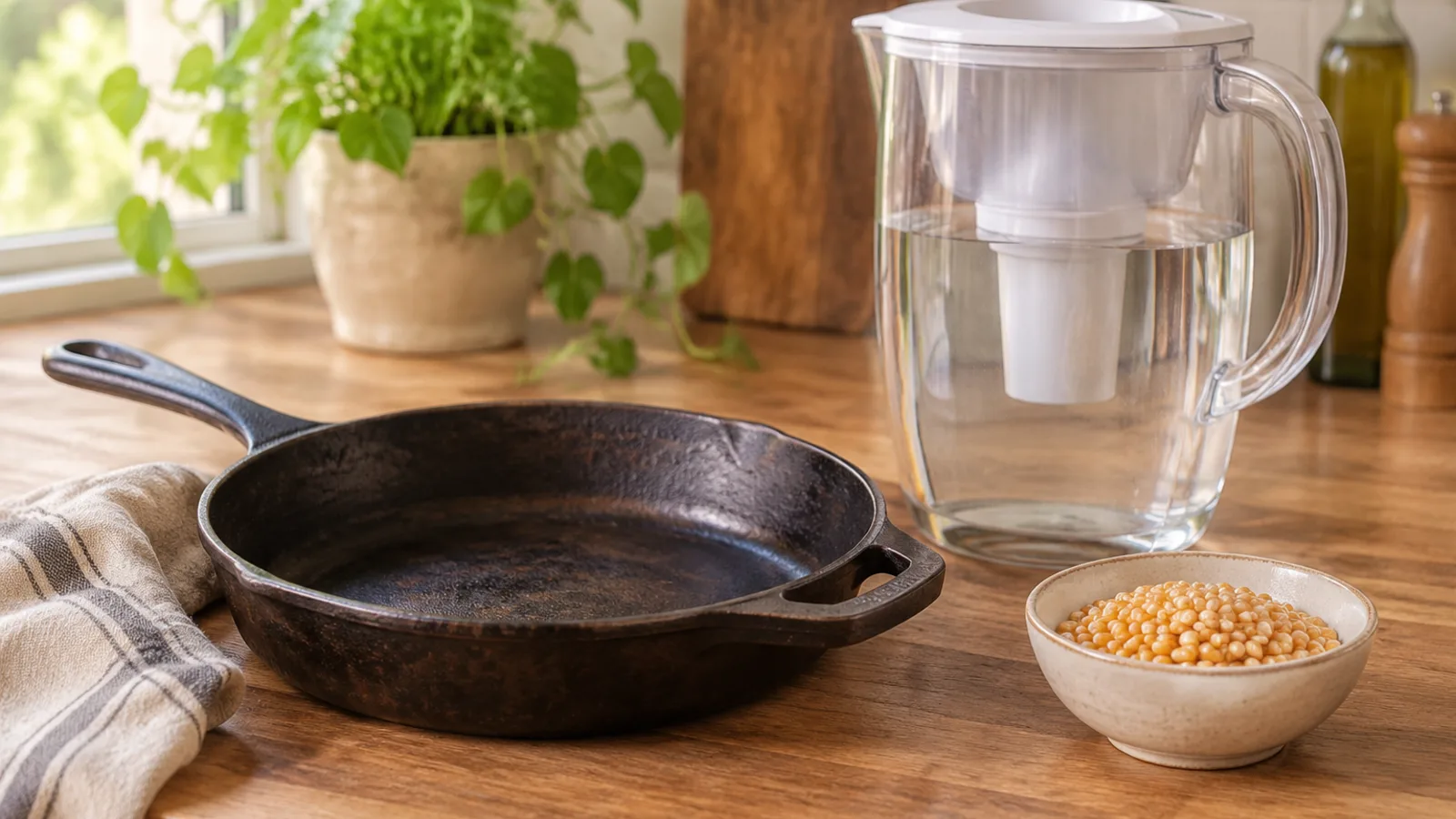
Most conventional non-stick pans are coated with PTFE, the compound commonly known by the brand name Teflon, and the manufacturing process for older coatings historically involved PFAS compounds including PFOA. The concern today centres on what happens when these coatings break down. When a non-stick surface is overheated — pushed beyond the temperatures reached in ordinary medium-heat cooking — the coating can begin to degrade and release volatile breakdown products. Physical damage, such as deep scratches from metal utensils, accelerates surface wear and can cause particles to flake into food.
These are distinct mechanisms and both are worth addressing. Keeping cooking temperatures moderate and replacing pans that are visibly worn, peeling, or deeply scratched addresses both. An intact pan used at medium heat is a meaningfully different situation from a flaking one pushed to high heat every day.
When replacing, the most reliable and affordable options are:
- Cast iron — extremely durable, well suited to high-heat cooking, and available at a range of price points. It requires basic seasoning maintenance but lasts for decades.
- Uncoated stainless steel — the standard in professional kitchens. It handles nearly every cooking task, and a single quality pan will outlast several non-stick ones.
- Certified ceramic-coated — a genuine non-stick alternative if you prefer that surface. Look for third-party testing certification rather than manufacturer claims alone. Critically, the label “PFOA-free” does not mean PFAS-free — it refers to one specific compound within a large chemical family, and the distinction matters when you are choosing a replacement.
A focused approach: replace the one or two pans you use for most of your daily cooking — typically a large frying pan and a medium saucepan — and you have covered the majority of your household cookware exposure without renovating the kitchen.
Drinking water
PFAS contamination in tap water is a documented issue in areas near industrial sites, military bases, and certain agricultural zones. It is not universal, and levels vary significantly by location. Checking your local situation is worth the ten minutes it takes.
In the United States, water utilities are required to publish annual consumer confidence reports; the EPA’s consumer confidence report database is the starting point. In the UK, the Drinking Water Inspectorate publishes regional quality data. In Canada, provincial utilities publish local testing data in line with Health Canada guidelines. In Australia, state health departments release annual drinking water quality reports. Searching your city or region plus “drinking water quality report” will usually surface the right document.
If your area shows elevated PFAS levels, or if you want a precautionary step, a certified water filter is the practical choice. The certifications matter here, and the details are specific:
- NSF/ANSI 58 covers reverse osmosis systems, which are effective for PFAS reduction.
- NSF/ANSI 53 covers many contaminants, but a generic NSF 53 label does not automatically mean the filter removes PFAS. Look specifically for the words “PFOA and PFOS reduction” on the product’s performance data sheet or certification listing — not just the standard number on the box.
- NSF Protocol P473 was developed specifically to certify products for PFOA and PFOS reduction in drinking water, and is a useful indicator to look for on pitcher-style and under-sink filters.
Routine bottled water is not a good substitute. It carries its own quality inconsistencies, plastic packaging introduces separate concerns, and the cost over the course of a pregnancy is substantially higher than a certified filter cartridge.
Food packaging, especially hot and greasy takeaway
Grease-resistant wrappers, fast-food containers, microwave popcorn bags, and some takeaway boxes have historically used PFAS-based coatings to prevent leakage. Heat and grease both accelerate the transfer of these compounds from packaging to food, which is why hot, oily items are the main concern rather than a dry sandwich or a cardboard cereal box.
The practical response is not to eliminate takeaway, which is neither realistic nor necessary. It is to reduce the frequency of hot, greasy food in disposable packaging where that is easy, and to transfer food to a plate or bowl rather than eating directly from the wrapper when you do.
The regulatory landscape is shifting in ways that are worth knowing about. The UK and several EU member states have enacted or are actively enacting stricter restrictions on PFAS in food contact materials compared to other markets, which may give readers in those regions somewhat less to worry about from domestic restaurants and packaged food retailers. In the US and Canada, a number of large chains and major packaging manufacturers have made public commitments to phase out PFAS packaging, with timelines and coverage varying by brand and product line.
One of the simplest swaps in this category: pre-bagged microwave popcorn is a classic combination of high heat, grease, and treated packaging. Loose kernels popped in a covered pot, or in a silicone microwave bowl, cost less per serving and remove the packaging concern entirely.
Other chemicals to avoid during pregnancy: BPA and phthalates
Two other chemical families appear on most pregnancy safety lists: BPA (bisphenol A) and phthalates. The concern with both is well-founded — they are known endocrine disruptors, meaning they can interfere with hormone signalling during a period of fetal development when that signalling is particularly sensitive.
The practical steps overlap considerably with the PFAS changes above. The two highest-impact habits are: stop heating food in plastic containers, since heat accelerates chemical migration whether in a microwave or a dishwasher; and use glass or stainless steel for hot food and drinks. For personal care products, choosing fragrance-free or simply formulated options reduces phthalate exposure, which tends to be higher in heavily fragranced products.
Dose and route matter here. Briefly handling a printed till receipt is a small and infrequent exposure. Regularly consuming food from BPA-lined cans, or drinking hot liquids from degrading plastic, represents a meaningfully higher ongoing one. The goal is reducing the most significant sources, not eliminating every trace of these compounds from a modern household.
The practical upside: the same handful of changes — better cookware, filtered water where needed, less hot food in disposable packaging, and no microwaving in plastic — addresses the majority of meaningful reduction across PFAS, BPA, and phthalate categories together. These are not separate problems requiring separate plans.
What you do not need to do
Clarity about what is not necessary is as useful as the action list:
- You do not need to replace every plastic item in your home at once. Prioritise what contacts hot food and drink; everything else can wait.
- You do not need to buy an entirely new kitchen. One or two replacement pans and a certified water filter address the main exposure routes.
- You do not need expensive “detox” or “clean pregnancy” supplement programmes. None have clinical evidence for PFAS clearance, and several ingredients common in detox products have not been tested for safety during pregnancy.
- You do not need to feel distressed about a single meal that arrived in a disposable container. The concern is with sustained, repeated exposure over time — not an isolated incident.
If you have been using non-stick pans throughout early pregnancy before learning any of this, you are in the same position as most pregnant women. It is not a reason for acute worry. Mention it at your next prenatal appointment if it would help you feel settled — your provider can put your individual circumstances in context far more accurately than any general article can.
Keeping the whole picture
The swaps described here are worth making. They are targeted, affordable, and grounded in enough evidence to justify the modest effort involved. But they sit alongside the established foundations of a healthy pregnancy — not above them. Adequate folate and iron, regular prenatal care, managing stress, protecting sleep, and staying physically active all have a substantially stronger and broader evidence base than anything in the PFAS literature to date.
Being thoughtful about the specific chemicals to avoid during pregnancy is a sensible, manageable part of looking after yourself and your developing baby. It is not the single variable that determines outcomes, and treating it as such leads precisely to the relentless anxiety the clean-living industry cultivates. Make the few changes the evidence supports, let the rest go, and put your attention on the things that matter most.
If your situation involves specific occupational exposure, local water contamination at elevated levels, or other individual risk factors, a conversation with your midwife, obstetrician, or family doctor is the right next step. General guidance has real limits; your provider does not.
Frequently asked questions
Is my non-stick frying pan dangerous to use while I am pregnant?
Not automatically. The main concerns are overheating the pan beyond normal medium-heat cooking temperatures, and using pans with scratched or visibly flaking surfaces. If your pan is in good condition and you keep the heat moderate, the risk is considerably lower. If it is worn or damaged, replacing it with cast iron, stainless steel, or third-party certified ceramic-coated cookware is a practical and affordable step.
Do I need to filter my tap water during pregnancy?
It depends on where you live. PFAS levels in tap water vary significantly by location. Check your local water quality report first. If levels are elevated, or if you want a precautionary measure, look for a filter certified under NSF/ANSI 58 (reverse osmosis), NSF Protocol P473, or specifically for PFOA and PFOS reduction under NSF/ANSI 53. A standard NSF 53 label without that specific PFAS claim does not confirm removal.
What does “PFAS-free” on a product actually mean — is the label trustworthy?
It depends on who is making the claim. “PFOA-free” only means one specific compound in the PFAS family has been removed — it does not guarantee the product is free of all PFAS. Look for certification from a recognised testing body rather than a brand’s own marketing language. “PFAS-free” backed by third-party testing is meaningful; a vague “eco-friendly” or “PFOA-free” label without supporting certification is less so.
Should I also be worried about BPA and phthalates, or is PFAS the main concern?
Both are worth attention, and the practical steps overlap significantly. BPA and phthalates are endocrine disruptors, and the most meaningful reduction comes from the same habits: avoid heating food in plastic, use glass or stainless steel for hot food and drinks, and choose fragrance-free personal care products where possible. You do not need a separate action plan for each chemical family — the core changes address them together.
I used non-stick pans for the first trimester before I knew about this. Is there anything I can do now?
The concern with PFAS is about ongoing, repeated exposure over time — not a few weeks of cooking on an intact pan in good condition. Switching to safer cookware now and making the other changes described here is exactly the right response going forward. If you want individualised reassurance, raise it at your next prenatal appointment; your provider can put your specific situation in context without the alarm that online sources tend to amplify.

Join the conversation
Sign in — Sign in to join the conversation.