
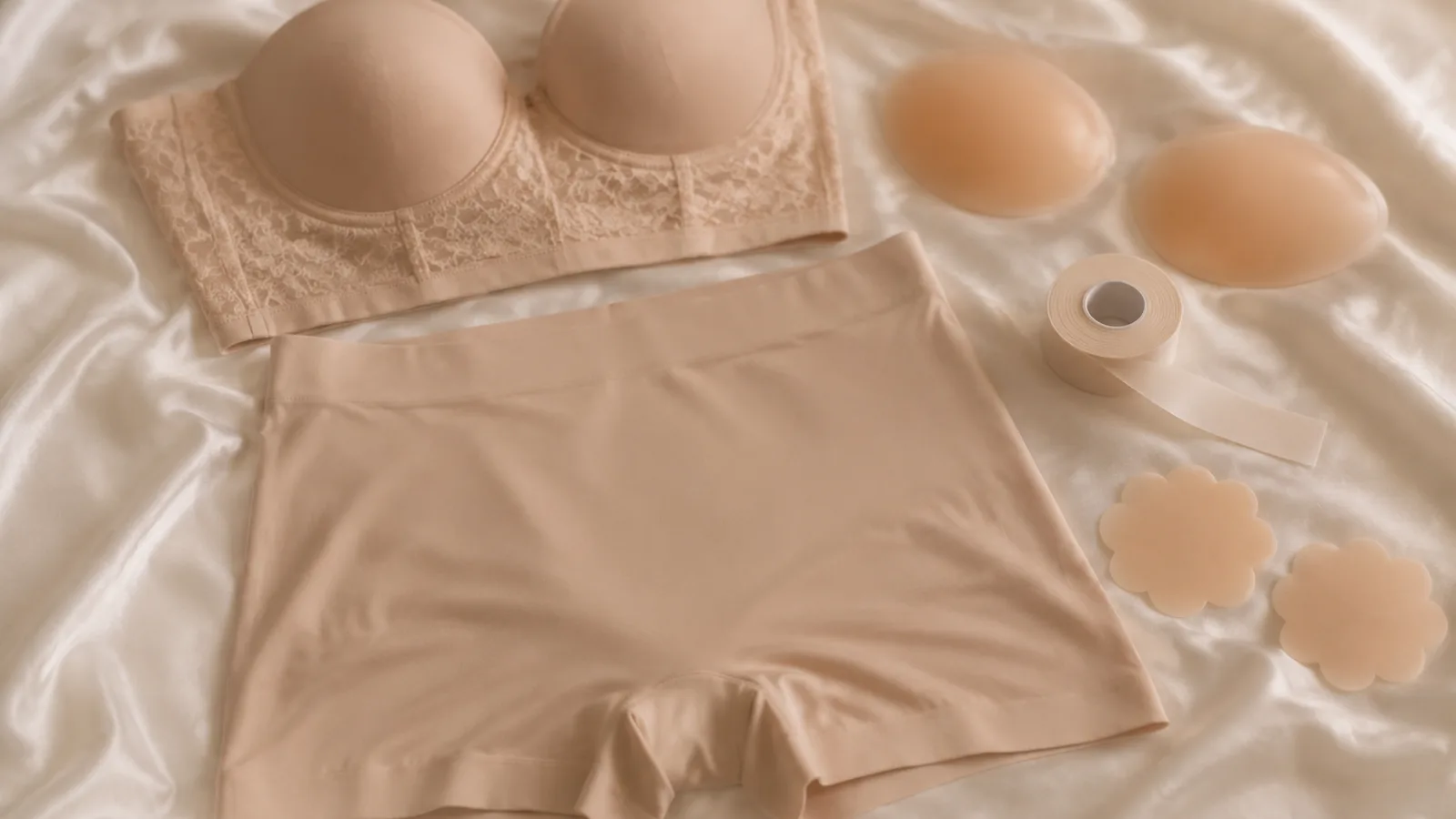
The wrong bra shows in photos. Shapewear that rolls down needs constant adjustment during toasts. A slip that's too short makes a silk dress cling. You can't fix any of this on the wedding day—but you can at your fitting, if you bring the right undergarments. Here's what to wear under a wedding dress based on your neckline, back style, and fabric, plus what to pack in your fitting bag so alterations account for what you'll really be wearing.
What to Bring to Your First Fitting
Show up to your first fitting with the bra you think you'll wear, even if you're not sure it's the right one. Your alterations will be done over whatever undergarments you have on, so wearing a regular bra now and switching to a strapless later means the dress won't fit the same way.
Bring nude seamless underwear in your current size, not the size you hope to be. Bring shoes at the correct heel height—a two-inch difference changes where the hem falls and how the bodice sits.
If you're planning to wear shapewear, wear it to the fitting. The dress will be taken in or let out accordingly. Adding shapewear on the wedding day when you didn't wear it during alterations creates pulling, gaping, or a too-tight fit you can't fix in time.
Strapless and Sweetheart Necklines
Longline Strapless Bras
Longline strapless bras work best under structured bodices with boning, especially for A-C cups. The extended band distributes support across your ribcage instead of relying on a single elastic strip that digs in or slides down.
Look for silicone grip strips along the top edge and inside the band—not just elastic. Elastic alone won't hold through six hours of dancing.
Where they fail: soft, unstructured fabrics and D+ cups without enough built-in dress support. A longline bra under a drapey silk bodice creates visible lines and bulk. For larger busts, the bra does most of the work, and if the dress isn't structured enough to help, you'll spend the day pulling it up.
Stick-On Cups and Lift Tape
Stick-on cups and lift tape give you an invisible solution under strapless gowns—but less support than a real bra. They're best for small to medium busts and dresses that already have built-in structure or boning.
Apply stick-on bras the morning of, not the night before. Clean your skin thoroughly—no lotion, powder, or oil—and make sure your skin is completely dry after showering before applying any adhesive. Let the adhesive set for a few minutes before putting the dress on. Use fashion tape along the edges as reinforcement.
The trade-off is honest: you get a seamless look, but you won't have the same lift or security you'd get from a longline bra with an underwire.
Busty Bride Options
If you're a D cup or larger, a corset-style longline bra with a wide band and full underwire gives the most support under a strapless dress. Brands that specialize in larger cup sizes offer strapless bras that actually stay up.
Alternatively, have cups sewn into the dress during alterations. A skilled seamstress can add structured cups and extra boning to the bodice so the dress itself becomes the bra. This works especially well for ballgowns and dresses with thick, structured fabrics.
The decision: if your dress already has strong internal structure, built-in cups may be all you need. If the bodice is soft or lightweight, you'll likely still need a separate bra for real support.
Backless and Low-Back Dresses
Sticky Bras and Backless Solutions
U-plunge and backless stick-on bras are designed for dresses with low or open backs. They offer moderate support for A-C cups but rely entirely on adhesive—there's no band for backup.
For larger busts, lift tape is a more realistic option than stick-on bras alone. Apply the tape from the underside of your breast up toward your collarbone, using multiple strips for support. This technique works, but it takes practice, so do a trial run weeks before the wedding.
Some brides with smaller busts and structured dresses skip the bra entirely, using only silicone nipple covers for modesty. This works when the dress has enough internal boning or structure to keep everything in place on its own.
Low-Back Converters and Extenders
Low-back converters attach to a regular strapless bra and drop the band to mid- or low-back level. They work for dresses with backs that end around your bra line or slightly below—not true backless styles.
Check your dress before buying one. If the back is open or drops below your shoulder blades, a converter won't be low enough to hide.
Sheer Bodices, Illusion Necklines, and Lace Appliqués
Sheer bodices require a strapless bra in your exact skin tone—not the generic "nude" that's three shades off. What looks invisible on the hanger will show up in photos if it doesn't match your skin.
Alternatively, have cups sewn into the dress. A seamstress can add nude or ivory cups that blend with the dress fabric and sit invisibly under sheer lace or tulle.
For very sheer fabrics with minimal coverage, silicone nipple covers alone may be enough, especially if you don't need much support. They're thin, invisible, and won't create lines under delicate lace.
Sleeves, High Necklines, and Long-Sleeve Gowns
Don't assume that covered shoulders mean you can wear a regular bra. Many sleeved dresses still have low or open backs, and even high necklines often pair with illusion panels or lace that will show a bra band underneath.
Most sleeved gowns still require a strapless bra. Check that the band doesn't show through sheer lace sleeves or lightweight crepe—what's hidden from the front may be visible from the side or back.
The myth: "It's covered, so anything works." Test this by putting the dress on over your everyday bra. If you see lines, bumps, or the band peeking out anywhere, you need a different solution.
Shapewear for Wedding Dresses: What It Does and Doesn't Do
When Shapewear Makes Sense
Shapewear smooths lines under fitted fabrics like crepe, satin, and jersey. It's most useful for form-fitting silhouettes—mermaid, trumpet, or sheath gowns—where any line from underwear will show in photos.
It also smooths the area around a corset-back or zipper closure, preventing bulges or pulling where the dress cinches.
When to Skip It
Ballgowns and A-line dresses have enough volume in the skirt that shapewear won't be visible or necessary. Save the discomfort.
Consider the trade-off for very long days. Shapewear that feels fine for an hour can become unbearable after six. If you're prioritizing comfort over a completely smooth silhouette, it's okay to skip it.
If you didn't wear shapewear to your fittings, don't add it on the wedding day. The dress was altered to fit your body without it, and adding compression will change how everything sits.
Specific Styles
High-waisted shaping shorts work well under most gowns—they smooth your hip and thigh area without the bulk of a full bodysuit. Look for styles with silicone bands at the leg openings so they stay put instead of riding up.
Bodysuits offer more coverage and eliminate the possibility of a visible line at your waist, but they're harder to use the bathroom in. Before the wedding day, test your bathroom break routine at home while wearing your shapewear and dress to make sure you can manage it comfortably.
Avoid thigh shapers that end mid-thigh under a long dress. They will roll up. If you need thigh coverage, go for a style that ends just above the knee with a strong silicone grip band.
Slips and Liners
When You Need a Slip
Lightweight or sheer fabrics—chiffon, organza, tulle overlays—usually need a slip for opacity and to prevent the skirt from clinging to your legs.
Silk, satin, and bias-cut gowns can cling with static or show every line underneath. A slip creates a smooth barrier and prevents the dress from sticking to your body when you walk.
Built-In vs. Separate Slips
Most wedding gowns come with built-in linings, so check before buying a separate slip. You may not need one.
Add an extra layer only if the skirt is sheer, if the lining feels scratchy against your skin, or if you want more coverage. A separate slip can also reduce static in very dry weather.
Underwear
Seamless nude underwear in a size that doesn't dig in is the safest choice. Avoid anything with lace edges, thick elastic, or visible panty lines.
Thong or brief depends on your dress silhouette and whether you're wearing shapewear. If your shapewear already has built-in underwear, you don't need a separate pair.
Never wear white or colored underwear under an ivory, champagne, or blush gown. It will show through. Stick to true nude that matches your skin tone.
Bra Alternatives and Dress Alterations
Having cups sewn into the dress during alterations is often the best option for backless, strapless, or sheer gowns. A seamstress can add structured cups, boning, and internal support so the dress itself holds you in place.
This typically adds a modest fee to your alterations bill depending on the complexity, and it needs to be done during your alteration timeline—not the week before the wedding.
Bust pads and push-up inserts can be added for extra lift or to even out asymmetry. When done well, these built-in solutions replace the need for a separate bra entirely, giving you a cleaner line and more comfort.
The Week-Before Checklist
One week before the wedding, try on the full outfit at home—dress, undergarments, shoes. Walk around, sit down, bend over, and raise your arms. If anything shifts, shows, or digs in, you still have time to fix it.
Have a backup plan ready. Pack extra fashion tape, a spare set of stick-on cups, and safety pins in your day-of bag. Bring the longline bra even if you're planning to use stick-on cups, just in case the adhesive fails.
Test your backup options now, not the morning of.
Frequently Asked Questions
Can I wear a regular bra under a wedding dress?
Only if the dress has thick straps, sleeves, or a high neckline that completely hides the bra. Even then, check that the band doesn't show through sheer lace or a low back. Most wedding dresses require a strapless, backless, or built-in solution instead.
Do I really need shapewear under a ballgown?
No. Ballgowns and full A-line skirts have enough volume that shapewear won't be visible or make a difference in photos. Save shapewear for fitted silhouettes like mermaid, trumpet, or sheath gowns where smooth lines matter.
What if stick-on bras don't stay on my skin?
Clean your skin the night before—no lotion, oils, or powder. Apply the stick-on bra the morning of and press firmly for 30 seconds on each side. Use fashion tape along the edges as reinforcement. If stick-on bras have failed you before, ask your seamstress about having cups sewn into the dress instead.
Should I buy shapewear in a smaller size for more smoothing?
No. Shapewear that's too tight rolls down, digs in, and creates bulges instead of smoothing them. Buy your true size. If you're between sizes, go up.
When should I buy my wedding undergarments?
Bring something to your first fitting, even if it's not your final choice. Buy your actual wedding-day undergarments two to three months before the wedding—after major alterations are done but in time for your final fitting. Your dress will be altered to fit over whatever you're wearing, so the timing matters.
Getting what to wear under a wedding dress right means your photos look seamless, the fit is exactly what you saw in the mirror at your final fitting, and you're not adjusting anything during the ceremony. Bring the right undergarments to your fittings, test the full outfit a week before, and pack backups. The dress will do its job if the foundation does yours.


Join the conversation
Sign in — Sign in to join the conversation.