
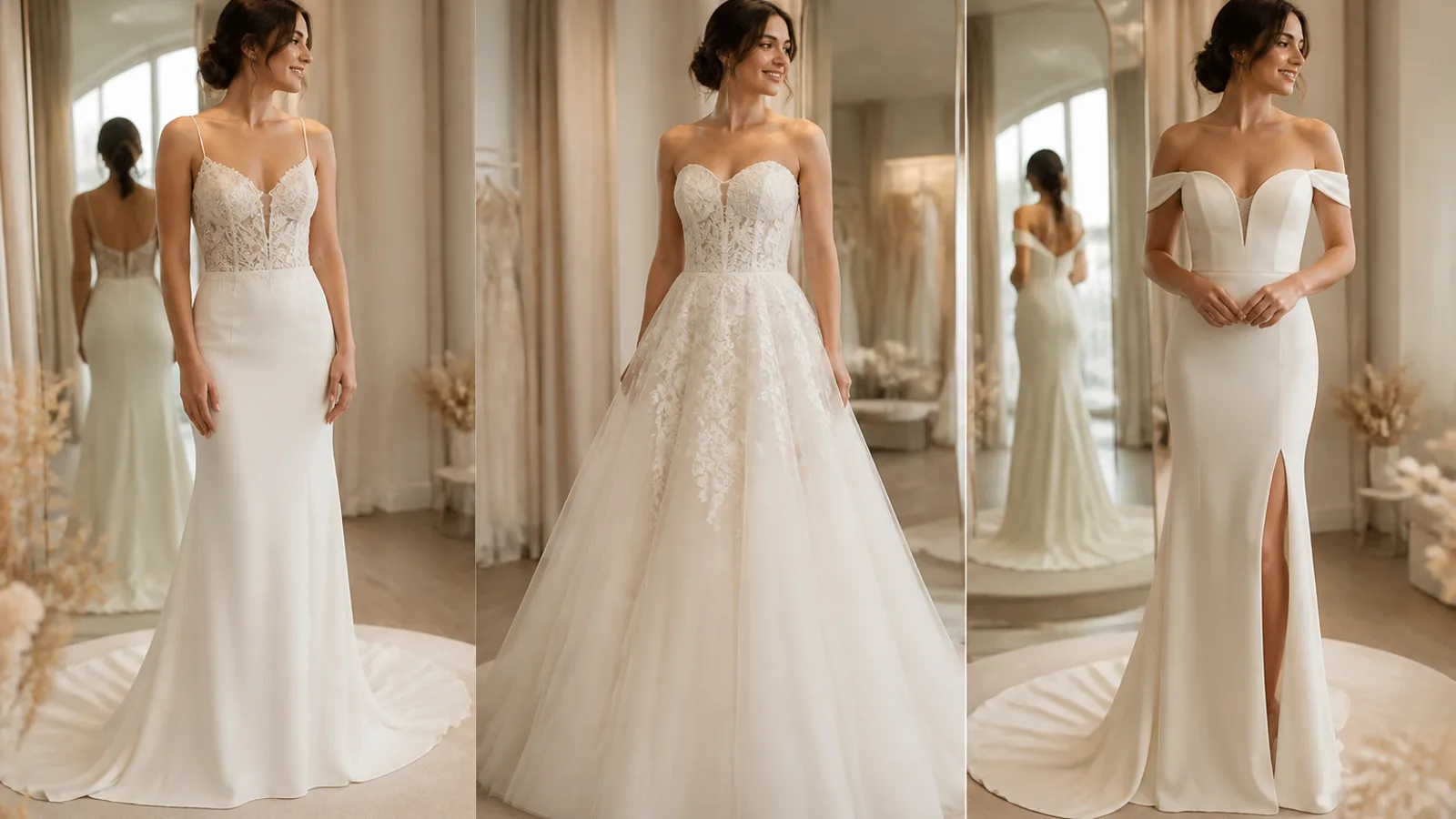
Choosing from the many wedding dress silhouettes can feel surprisingly emotional. But the best shape is not about rules, rankings or hiding anything. It is about how you want to feel on the day: supported, comfortable, able to move, and confident in your setting.
A beach ceremony, a winter ballroom, a registry office wedding and a garden reception all ask different things of a dress. That is why the right silhouette is less about body-shape advice and more about how the dress works in real life. If you are comparing wedding dress silhouettes, the most useful question is simple: which shape suits your venue, your season, your movement and your version of the day?
What a wedding dress silhouette actually means
A silhouette is the overall shape a dress creates from bodice to hem. It is the line you see when the dress is on your body, walking down the aisle, or moving across a dance floor. The same fabric can look completely different depending on whether it is cut as an A-line, a sheath or a ball gown.
That matters because silhouette affects more than appearance. It changes how easy the dress is to walk in, whether it works on stairs or grass, how warm it feels, how much support it gives, and how much tailoring it may need. In other words, wedding dress silhouettes are a practical choice as well as a style one.
It also helps to remember that alterations can change a dress quite a bit, but they cannot turn every shape into every other shape. A skilled seamstress can refine fit, shorten a hem, adjust a neckline, add structure or create a bustle. She cannot, for example, make a mermaid behave exactly like a ball gown without changing the dress dramatically.
How to choose a silhouette before you try anything on
Start with your venue and the way the day will flow
The setting is one of the most useful starting points. A grand hotel, church or city ballroom can handle more volume and drama. A beach, garden, barn or rooftop may call for something lighter and easier to move in.
Think beyond the ceremony itself. Will you be climbing stairs? Crossing gravel? Walking a long aisle? Dancing all night? Carrying a train through a narrow doorway? Those details matter more than any style rule.
A full skirt can be magical in a formal indoor venue, but if your ceremony is on uneven ground, it may become something you spend the day managing rather than enjoying. A sleek silhouette can feel elegant and effortless, but if the dress is too close-fitting, it may be less comfortable for a long reception.
Think about movement, not just the mirror
When brides talk about comfort, they often mean different things. For some, comfort is being able to breathe easily. For others, it is feeling secure through the bust, or being able to sit down without fussing with layers. You may want to lift a child, hug guests, crouch for photos, or dance without thinking about your hem.
A good first try-on should include moving around in the fitting room. Sit. Raise your arms. Turn side to side. Take a few steps. If the dress only looks good when you are perfectly still, that is useful information.
Consider the season and the fabric together
Shape and fabric work as a pair. A heavy satin ball gown in August can feel very different from the same silhouette in tulle. A crepe sheath in cool weather may be ideal, while in a hot climate it can cling more than expected.
As a general guide, lighter fabrics such as chiffon, georgette and soft tulle tend to feel airier and more forgiving in warm weather. Structured fabrics such as mikado, duchesse satin and some brocades can create a more dramatic shape, but may feel warmer and heavier. Lace can add texture and romance, but the underlayers matter just as much as the outer look.
If you are getting married in a hot climate, ask about lining, breathability and weight. If your wedding is in cooler weather, consider whether you want sleeves, a more structured bodice or a dress that can handle outdoor temperatures without leaving you chilled. Wind matters too: very light layers can move beautifully, but they can also need more attention in breezy conditions.
If you are unsure how a fabric will behave, it can help to compare dresses in person or read a fabric guide from a trusted bridal source such as The Knot or a reputable bridal boutique’s care notes.
Match the silhouette to the mood of the day
Some brides want a romantic, floaty feel. Others want something polished and sculptural. Some want classic elegance; others want something modern and minimal. Your dress silhouette should support that mood.
A ballroom wedding may invite more structure. A city wedding may suit something sharper and cleaner. A relaxed garden celebration may feel right in a softer, lighter shape. There is no single “most flattering” silhouette for everyone, because the feeling you want to create is part of the fit.
The main wedding dress silhouettes explained
A-line
The A-line is fitted through the bodice and gently widens from the waist or upper waist, creating a shape that resembles the letter A. It is one of the most versatile wedding dress silhouettes because it balances structure and ease.
Why brides often love it: it tends to move well, suits many venues and can look as formal or as relaxed as the fabric allows. In tulle, it feels softer and more romantic. In satin or mikado, it can look crisp and elegant. In lace, it may feel traditional with a modern twist.
An A-line is often a smart first appointment choice because it gives you a clear reference point. If you like the general shape but want more drama, you can move toward a fuller skirt. If you like the comfort but want a cleaner line, you can try a slimmer version.
Alteration-wise, this is usually one of the more flexible silhouettes. The bodice can often be refined quite well, and the hem and straps are typically straightforward to adjust. That said, the exact ease depends on how the dress is built.
Ball gown
A ball gown has a fitted bodice and a full skirt that creates a dramatic, formal shape. This is the silhouette many people picture when they imagine a classic fairy-tale wedding dress.
It is especially effective in formal settings such as churches, grand hotels and traditional ballrooms. The volume creates a strong visual impact, and for some brides, that sense of occasion is exactly the point.
The trade-off is practicality. A ball gown can be heavier, warmer and less nimble than slimmer silhouettes. It may take more effort to move through crowded spaces or across uneven ground. If your wedding includes a lot of walking, dancing or outdoor terrain, try it on in conditions that resemble the real day as closely as possible.
Fabric makes a big difference here. Tulle can make the volume feel lighter and more playful. Satin or mikado may give the dress a more polished, architectural look, but can also add weight. In very warm weather, a structured ball gown may feel glamorous but less breathable than a lighter A-line or sheath.
Ball gowns are often alteration-friendly at the bodice and hem, but the overall volume is part of the silhouette itself. A seamstress can refine how it sits, but she cannot easily turn it into something sleeker without changing the design.
Sheath
A sheath dress follows the body’s natural line with little flare. It is sleek, unfussy and often chosen by brides who want a modern or understated look.
This shape can be a lovely choice for city weddings, registry office ceremonies, intimate gatherings and destination weddings. It is often easier to pack and can feel less cumbersome than fuller gowns. If you want to move freely and keep the focus on clean lines, a sheath is worth trying early.
The main thing to know is that sheath dresses can be precise in fit. Because the shape is close to the body, the quality of the cut and the tailoring matter a lot. The wrong undergarments or a poor fit can show quickly. On the other hand, when the fit is right, the result can be elegant and effortless.
Crepe is a common choice for this silhouette because it drapes beautifully. Silk and chiffon can also work well, depending on the finish you want.
Sheath dresses can be altered, but they require careful tailoring. Small changes can make a noticeable difference, especially through the bust, waist and length.
Mermaid
A mermaid dress is close-fitting through the bodice, waist, hips and thighs before flaring out below the knee. It creates a striking, sculpted shape.
This silhouette is often chosen for glamour. It can feel dramatic, polished and confident. It also tends to look especially strong in structured fabrics that hold their line.
The downside is mobility. Sitting, climbing stairs, getting into a car and even dancing can be more restrictive in a mermaid dress. That does not mean you should avoid it, but it does mean you should test it carefully. Try walking, sitting and turning in the fitting room. If you want to move easily all evening, be honest with yourself about whether the trade-off is worth it.
Alteration-wise, mermaid dresses are fit-sensitive. The proportions need to be right, and changes in one area can affect the whole line of the gown. This is a silhouette where a skilled fitter really matters.
Trumpet
A trumpet dress is similar to a mermaid, but the flare begins higher and the overall shape is usually a little easier to move in. It still follows the body closely, but it tends to give more freedom through the skirt.
If you want shape and drama without the more exacting restriction of a true mermaid, trumpet can be a very good middle ground. It is often a strong option for brides who like a fitted look but still want to walk and dance comfortably.
In fabrics such as crepe, satin and lace, a trumpet can look modern, polished and elegant. The precise feel depends on how structured the dress is through the bodice and hips.
Alterations can usually fine-tune a trumpet dress well, especially if the seamstress is experienced with fitted silhouettes. The key is to preserve the flare line while making the bodice feel secure.
Empire
An empire silhouette is fitted just under the bust, with the skirt falling from there. It creates a softer, often more fluid line than a dress that cinches at the natural waist.
This shape can be lovely if you want ease and softness. It often feels light, comfortable and graceful, especially in fabrics that drape well. It is also a silhouette that can work beautifully for many different reasons and bodies, not only one type of bride.
Empire dresses can be especially appealing in chiffon, georgette or soft silk. They often move well and can feel forgiving without looking oversized. That makes them useful for outdoor weddings, warm-weather ceremonies or any day where ease matters.
From an alteration perspective, the upper bodice is the key area. Once that fit is right, the rest of the dress may need less complex shaping than a fully fitted gown. The exact ease will still depend on the design.
Jumpsuit
A bridal jumpsuit is a fashion-forward alternative to a dress, with trousers replacing the skirt. It can feel modern, clean and completely appropriate for a wedding.
It is a strong option for civil ceremonies, courthouse weddings, city weddings and receptions where movement matters. If you want to sit, walk, dance and travel with ease, a jumpsuit can be a practical choice. It can also be a beautiful option for brides who simply know they feel more themselves in trousers.
The challenge is fit. A jumpsuit has to work through the bust, waist, seat, crotch and inseam all at once. It should be tried on standing and sitting, because a beautiful standing fit can become uncomfortable once you move.
Fabric changes the mood completely. Crepe can look crisp and elegant. Satin can feel dressy and sleek. Tailored suiting fabric can make the look more fashion-led.
Because the fit is so exact, alterations are often essential. A good tailor can make a major difference here, but the garment needs to be the right base to begin with.
Two-piece
A two-piece wedding look pairs a separate top and skirt, or coordinates a bridal set. It can feel contemporary, flexible and personal.
This option is particularly appealing if you want the freedom to mix sizes, shapes or textures. It can work for brides whose proportions are hard to fit in a single dress, and it can also be a way to create a less traditional look without losing softness or romance.
A two-piece may feel lighter than a one-piece gown, and it can be easier to move in depending on the cut. It also allows more styling freedom: a structured crop top with a full skirt, a lace blouse with a sleek skirt, or a minimal top with a dramatic bottom.
Alteration-wise, it is flexible in theory, but the waist placement and proportions need careful attention. The top and skirt must meet at exactly the right point, especially when you sit and move.
What to try at your first appointment
Your first appointment is not about finding the perfect dress in one go. It is about learning what feels good, what you dislike, and what surprises you.
- Try a small range of silhouettes rather than every option in the boutique.
- Include one shape that feels familiar and one you would not usually choose.
- Ask to compare different fabrics in a similar cut if possible.
- Wear or bring the underwear and shoes you are likely to use.
- Move around in every dress: sit, walk, turn and raise your arms.
- Take a photo from the front, back and side so you can remember how it felt, not just how it looked.
It can help to think in terms of three questions: Can I breathe? Can I move? Does this feel like my day?
If a dress is beautiful but you cannot comfortably sit down, that is important. If a dress is easy to wear but does not suit the tone of your wedding, that matters too. The goal is not perfection on a hanger. It is a dress that works in motion.
Questions to ask the boutique or stylist
The right questions can save you time and help you understand how a dress will actually behave after alterations.
- How does this silhouette usually move once it has been altered?
- What kind of bustle would work with this train or skirt?
- How structured is the bodice, and can that be adjusted?
- Is the fabric forgiving, heavy, sheer or likely to wrinkle?
- How much can this dress realistically be altered at the bust, waist, hips and hem?
- If I want to dance comfortably, what should I know about this shape?
If you are between sizes or worried about proportion, ask how the boutique handles grading and fit. If you are considering a slimmer silhouette, ask whether the dress has stretch or give. If you are planning an outdoor ceremony, ask whether the hem, train or fabric is likely to be practical on grass, sand or uneven ground.
Do not be afraid to ask direct questions. A good boutique will expect them.
How alteration-friendly each silhouette typically is
Some silhouettes are easier to tailor than others, but nearly every dress benefits from some alteration. The important thing is understanding what can and cannot be changed.
- A-line: usually one of the most alteration-friendly shapes, especially through the bodice and hem.
- Ball gown: often easy to adjust at the bodice, but the volume itself is harder to change dramatically.
- Sheath: can be altered precisely, but the close fit demands skilled tailoring.
- Mermaid: highly fit-sensitive; changes must preserve the curve and flare.
- Trumpet: often a good tailoring candidate, with some flexibility through the flare.
- Empire: the upper fit matters most, and the lower part may require fewer structural changes.
- Jumpsuit: usually requires careful tailoring throughout, especially in the rise and inseam.
- Two-piece: flexible in concept, but the proportions between top and skirt need exact attention.
Alterations are also where comfort often improves. A bodice can be made more secure, straps can be shortened, a hem can be lifted, a bustle can be added, or a neckline can be slightly refined. A good alteration plan should make the dress feel more like yours, not less.
Ask yourself not only how the dress looks standing still, but how it behaves when you sit, walk, dance and breathe. That is where the right silhouette reveals itself.
How to make the silhouette work for your day, not just the fitting room
The prettiest dress in the shop is not always the best dress for the full wedding day. Try to imagine the dress in motion: arriving, greeting guests, sitting for dinner, posing for photos, dancing, and leaving at the end of the night.
Details that can make a big difference include a bustle for the train, detachable straps, sleeves, an overskirt, or a second-look piece for the reception. If you love a dramatic silhouette but want more movement later, some dresses can be adapted to give you both.
For outdoor weddings, pay close attention to hems and trains. For warm-weather celebrations, consider breathability and lining. For long receptions, prioritize a bodice that feels secure without digging in. If you know you will be on your feet for hours, test the dress as if the day were already happening.
It is worth remembering that practicality does not have to dilute style. The right wedding dress silhouettes can be both beautiful and workable. In fact, the best ones usually are.
A simple way to narrow your choices
If you are still unsure, use this as a starting point rather than a rulebook:
- If you want classic and versatile: A-line
- If you want dramatic and formal: ball gown
- If you want sleek and minimal: sheath
- If you want sculpted glamour: mermaid or trumpet
- If you want soft ease: empire
- If you want a modern alternative: jumpsuit
- If you want a contemporary mix-and-match look: two-piece
That said, the best silhouette is the one that suits your day and lets you feel like yourself. If a shape you expected to dislike suddenly feels perfect, trust that. If a beloved style feels restrictive, trust that too.
There is no prize for forcing a dress to work just because it looks good on paper. The most successful choice is usually the one that lets you move, enjoy the day and forget about the dress once you are wearing it.
FAQ
What wedding dress silhouette is easiest to move in?
Usually an A-line, sheath, empire or well-cut two-piece will feel easier to move in than a very fitted mermaid or a heavily structured ball gown. That said, fabric and alterations make a big difference, so it is worth trying on several shapes before deciding.
Can any silhouette work for any body size?
Yes. There is no silhouette reserved for one size or age group. What changes is the way the dress is cut, supported and tailored. The most important thing is trying on shapes that let you move comfortably and reflect the look you want.
Which silhouette is best for an outdoor wedding?
Often an A-line, sheath, empire or jumpsuit works well because these shapes are usually easier to walk in on grass, sand or uneven ground. A fuller skirt can still work outdoors, but it may need more care.
How many wedding dress silhouettes should I try at my first appointment?
Three to five is usually enough. That gives you variety without becoming overwhelming. A good mix is one familiar shape, one or two practical options, and one that is slightly outside your comfort zone.
Are alterations enough to make a dress feel comfortable?
Sometimes, but not always. Alterations can improve fit, support and movement, but they cannot fully change the underlying structure of a silhouette. It is best to choose a dress that already feels close to right, then refine it from there.
When you are comparing wedding dress silhouettes, the most useful question is not “What am I supposed to wear?” It is “What will let me enjoy my wedding, move through the day comfortably and feel like myself in every photograph and every memory?” That is the shape worth choosing.



Join the conversation
Sign in — Sign in to join the conversation.