
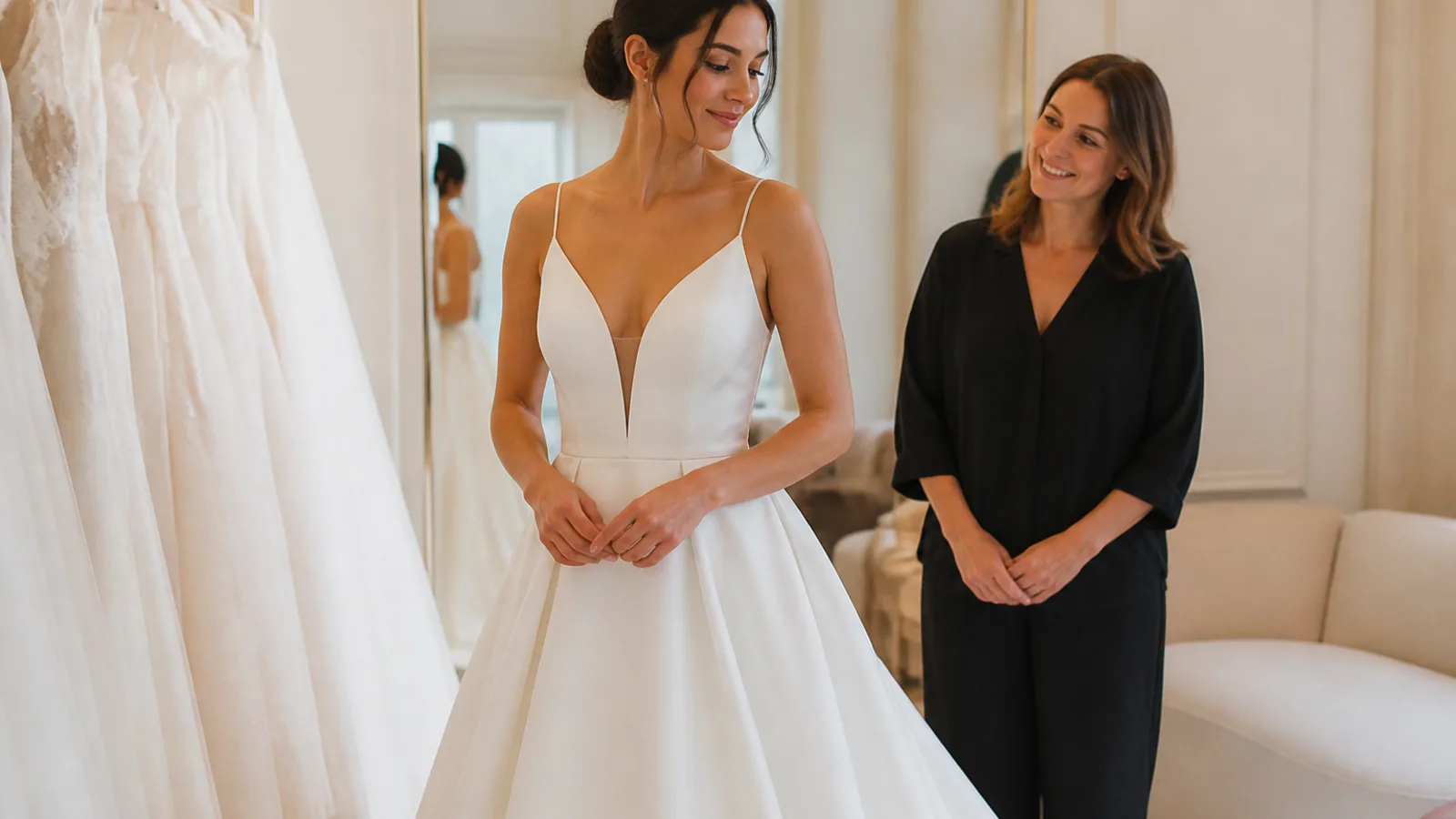
Wedding dress shopping by season can make the whole process feel more manageable and a lot more intentional. The month you shop, the month you marry, and the weather you’re likely to face all affect what’s worth trying on, what may be in the salon, and how much time you need for alterations.
That matters because a dress is never just a dress on a hanger. A gown that feels perfect in an air-conditioned salon in March may feel very different at a beach ceremony in July or a candlelit winter wedding in November. The upside is that once you plan around season, you can narrow your options with more confidence instead of trying on everything at random.
Here’s how to use the season as a practical guide, not a hard rule.
Why season matters when you shop for a wedding dress
Season affects more than style preference. It changes what bridal salons are showing, what designers may be releasing, how much lead time you may need, and how practical a dress will be on the day itself.
Bridal collections tend to arrive in waves, and salons often rotate samples throughout the year. That means the dress you see online may not be in the room when you visit, and the best time to try a new look may depend on when the store receives it. If you’re hoping to see the newest bridal fashion, ask what has just arrived and whether any trunk shows are coming up.
Season also matters because of real-life logistics. A gown for a winter wedding may need sleeves, a wrap, or a heavier fabric. A gown for a summer wedding may need to breathe, move well, and stay comfortable in heat or humidity. Alterations, shipping, and accessory planning all fit into that seasonal picture too.
Timing note: many made-to-order dresses need several months from order to arrival, and alterations usually take additional time. The exact window varies by designer and salon, so ask before you fall in love with a style that can’t realistically arrive in time.
In other words, season should guide your decisions, not limit them. Think of it as a filter that helps you try on the right kinds of dresses first.
Wedding dress shopping by season: what to expect
Spring
Spring bridal appointments often feel fresh and optimistic, with racks that lean into lighter fabrics, softer movement, and romantic details. You may see more tulle, chiffon, organza, floral appliqués, and airy silhouettes that suit the mood of the season.
What to try on in spring:
- Light, floaty skirts that move easily
- Detachable sleeves or straps for flexibility
- Soft necklines and romantic bodices
- Dresses that work for outdoor ceremonies or garden venues
Spring is a smart time to think about weather that can shift quickly. If your wedding is in spring, you may need to account for warmth during the day and a chillier evening later on. A dress with layering potential can help.
Practical example: if you’re getting married in a botanical garden, a gown with movement, a less dramatic train, and detachable sleeves can look elegant without fighting the setting.
Summer
Summer shopping usually brings out lighter, more breathable options. Think sleeker silhouettes, thinner straps, open backs, and fabrics that feel comfortable when temperatures rise. Many brides planning destination weddings or outdoor celebrations start here because heat and humidity matter as much as style.
What to try on in summer:
- Breathable fabrics such as chiffon, crepe, and lighter satin
- Low-back or open-back designs
- Shorter or more manageable trains
- Simpler silhouettes that won’t feel heavy in warm weather
If your wedding is in peak summer, comfort should be part of the beauty decision. A dress that looks incredible but traps heat can become a problem during a long ceremony, outdoor photos, or a dance-heavy reception.
Summer is also worth considering for venues with strong sun, sand, grass, or long walks between locations. A heavy skirt or delicate hem can be harder to manage in those settings.
Practical example: for a seaside wedding, a pared-back dress with movement and a lower-maintenance hem may feel more realistic than a heavily embellished ballgown.
Autumn
Autumn often gives brides one of the widest ranges of textures and structure. Bridal collections around this time may feature richer fabrics, more coverage, deeper tones in accessories, and silhouettes that feel polished rather than airy.
What to try on in autumn:
- Mikado, satin, crepe, or other structured fabrics
- Long sleeves or illusion sleeves
- Capes, overskirts, and detachable layers
- More tailored or formal silhouettes
This is a strong season for brides who want a sophisticated look. It also suits venues that feel a little more formal: historic houses, city hotels, vineyards, and evening receptions with candlelight.
Autumn weddings can be variable too. Early autumn may still be warm, while late autumn can turn brisk. If you’re shopping in fall for a fall wedding, try on at least one dress that gives you room to layer without losing the shape you love.
Practical example: if your ceremony is outdoors and your reception is indoors, a gown with sleeves or a cape can bridge the temperature change while still feeling intentional.
Winter
Winter shopping often highlights drama, texture, and coverage. You may see more long sleeves, heavier satins, embellished bodices, and dresses that feel especially elegant in indoor settings. Winter bridal looks can be some of the most striking because they work with richer fabrics and a more formal mood.
What to try on in winter:
- Long sleeves and more coverage
- Structured fabrics that hold their shape
- Capes, wraps, jackets, or boleros
- Gowns that work with indoor lighting and formal settings
Winter wedding dress shopping also encourages practical thinking. You may need to move between a ceremony space, photo location, and reception venue in cold weather, so outerwear matters. If you’re marrying somewhere snowy or windy, think about how the dress will behave when you step outside.
Practical example: a sleek structured gown can look especially polished in a hotel ballroom, while a dramatic sleeve or embellished neckline can add warmth and presence without relying on bare skin.
What to buy and when, based on the season you’re marrying in
The best time to buy depends on more than the wedding date itself. It depends on whether you want a fresh collection, how much tailoring the dress will need, and whether your chosen style is made-to-order or available off the rack.
If you’re marrying in spring or summer, you may want to start looking with enough time to order a dress and complete alterations before the weather turns hot. If you’re marrying in autumn or winter, you may have a little more flexibility with layering pieces, but you’ll still want enough runway for fittings.
Useful questions to ask yourself:
- Is the dress made to order, or can I take it home quickly?
- Will I need multiple fittings?
- Do I want a new-season gown, or is an earlier collection fine?
- Does the dress need to work with outerwear or hot-weather accessories?
If you’re drawn to a newly released collection, don’t wait too long to book appointments. Salons may only have select samples, and popular styles can be limited. If you’re happy with something more classic, you may have more room to shop later or consider off-the-rack options.
Ask the salon what is sample-only, what can be ordered, and whether the designer offers trunk shows or special appointments. That information can make a big difference in what you’re able to try.
What to try on based on weather, not just the calendar
One of the biggest mistakes brides make is shopping by month alone. A wedding in August in Canada can feel very different from one in Arizona or Australia. Likewise, an indoor city wedding can call for something entirely different from a breezy coastal ceremony.
For hot-weather weddings
Prioritize comfort and breathability. That does not mean sacrificing style. It means choosing fabrics and silhouettes that won’t leave you overheated before the ceremony even begins.
Try:
- Lightweight fabrics and less structured layers
- Strapless, sleeveless, or thin-strap styles
- Dresses with movement rather than heavy construction
- Silhouettes that allow airflow and sitting comfortably
Ask how the lining feels and whether the dress can be altered to reduce bulk. A gown that seems simple on the hanger may still be surprisingly warm if it has multiple layers underneath.
For cold-weather weddings
Cold-weather gowns can be more dramatic and more versatile. You may want structure, coverage, and the option to add layers without ruining the overall look.
Try:
- Long sleeves or illusion sleeves
- Heavier fabrics with shape
- Wraps, jackets, capes, or detachable toppers
- Skirts that feel substantial in photos and movement
It also helps to think about the journey between spaces. If you’ll be outside for photos, you may need a warm layer that photographs well, not just one that keeps you warm.
For rainy or unpredictable weather
Weather uncertainty changes the practical side of dressing. Even if you love a train or dramatic hem, it helps to consider what happens if the ground is wet or uneven.
Try:
- Hems that can be managed more easily
- Fabrics that won’t feel fragile in damp conditions
- Silhouettes that move well across grass, gravel, or cobblestones
- Shoes that suit the venue, not just the dress
If your venue has outdoor elements, ask how the dress will behave in real conditions. A long train can be beautiful, but it may need a bustle or a more practical plan for the reception.
How venue style should shape your seasonal choices
Season and venue work together. A winter wedding in a conservatory can call for a very different look than a summer wedding in a ballroom. If you only think about the temperature outside, you may miss the bigger picture.
Match your dress to the setting:
- Garden or outdoor venues: lighter movement, less fuss, and details that won’t compete with flowers or greenery
- Beach or coastal venues: easy movement, wind-friendly silhouettes, and minimal complication
- Historic venues: structured or romantic gowns that feel elegant against the architecture
- City hotels and ballrooms: polished fabrics, clean lines, and stronger structure
- Rustic or barn venues: dresses that feel relaxed but still refined
For example, a sleek satin gown may feel perfect in a black-tie hotel space, while a soft layered dress may suit a spring garden celebration much better. Neither is better; they simply work differently.
If you’re torn between two dresses, ask yourself which one fits the venue as well as your body. That usually makes the decision easier.
How to use seasonal collections to your advantage
Bridal fashion tends to move seasonally, and that gives you opportunities if you know how to use them. New collections often arrive around specific times of year, and many salons host trunk shows when designers bring in extra samples.
That can help if you want to see something new before it becomes widely available. It can also help if your size, shape, or style preferences require a broader range of options than the salon usually keeps on hand.
A few smart ways to work the system:
- Ask when the store receives its newest samples
- Find out whether trunk shows are scheduled around your shopping window
- Bring photos of the venue and the season you’re planning for
- Ask whether the gown can be customized with sleeves, lining, or a different neckline
Seasonal collections are useful, but don’t feel pressured to chase “new” just because it’s new. A beautiful dress from a previous collection may be the better choice if it suits your wedding season, budget, and comfort level.
Tailoring and alterations: why timing matters so much
Even if you find the right dress quickly, alterations take time. That’s especially true if the gown needs changes to length, fit, support, or layering. Seasonal shopping can help you plan for that more realistically.
Here’s what to keep in mind:
- Heavier fabrics may need different handling than light ones
- Seasonal body changes can affect fit, especially if you buy far ahead
- Accessories may depend on weather, venue, and hairstyle
- Last-minute weather shifts can change what you want from sleeves or coverage
If your dress needs a bustle, a hem adjustment, or added structure, give yourself time. A winter gown bought in summer may still need a final fit check closer to the date, just as a summer gown bought early may need tweaks if your body changes or your accessory plan evolves.
It also helps to ask how the fabric behaves. Some materials are more forgiving than others, and that can affect the final fit.
Common seasonal shopping mistakes to avoid
The easiest trap is choosing a dress that looks perfect in the salon but does not fit the actual conditions of the wedding.
- Ignoring the weather: A gown that looks beautiful may still be miserable in heat, wind, or cold.
- Forgetting the venue: A beach wedding and a ballroom wedding are not asking for the same dress.
- Buying too late for a new collection: If you want a specific fresh release, sample availability may be limited.
- Choosing style over comfort only: You need to move, sit, hug, eat, dance, and breathe in the dress.
- Not planning for alterations: Fit changes take time, especially if you want a polished result.
If you keep the season, venue, and practical weather conditions in view, the dress search becomes much clearer.
A simple seasonal checklist for bridal appointments
Before you book, gather a few details that make shopping easier:
- Photos of your venue in the season you’ll marry
- A rough idea of temperature and weather risk
- Notes on whether the ceremony is indoors, outdoors, or both
- Any fabric or coverage preferences you already know you want
- Questions for the salon about collection timing and alterations
Then use the season as a filter:
- Spring: lightness, movement, romance
- Summer: breathability, comfort, simplicity
- Autumn: texture, structure, transitional layers
- Winter: warmth, coverage, drama
That checklist won’t tell you what to wear, but it will help you shop more efficiently and with fewer regrets.
FAQ
Is there a best season to shop for a wedding dress?
Not really. The best season depends on when your wedding is, what kind of dress you want, and whether you’re trying to see a new collection. Many brides shop successfully in any season as long as they leave enough time for ordering and alterations.
Should I shop for my dress based on my wedding season or the season I’m shopping in?
Use your wedding season as the main guide, then adjust for the season you’re shopping in. That way, you’ll try on dresses that make sense for the weather and venue while still staying realistic about what you’ll actually wear on the day.
What should I try on for a summer wedding?
Look for lighter fabrics, breathable construction, and silhouettes that feel comfortable in heat. It’s also wise to pay attention to how a dress feels when you sit, walk, and move in it, especially if your ceremony or photos will be outdoors.
What should I try on for a winter wedding?
Try long sleeves, structured fabrics, and dresses that work with layers such as capes, wraps, or jackets. Think about both warmth and appearance, especially if you’ll be moving between indoor and outdoor spaces.
How far ahead should I buy my wedding dress if I want alterations?
It varies by dress and salon, but it’s smart to allow enough time for ordering, delivery, and more than one fitting. If the gown is custom, heavily altered, or from a new collection, give yourself extra room.
Final thoughts
Wedding dress shopping by season is less about rules and more about making the search fit the life you’re actually planning. The season of your wedding can help you decide what to try on, when to buy, and how to balance style with comfort.
Start with the weather, then think about the venue, the fabric, and the amount of time you need for alterations. If you do that, your dress will not only look right in the salon. It will feel right on the day itself.
In the end, the best wedding dress shopping by season strategy is simple: shop for the season you’re marrying in, but choose a gown that makes sense for the whole experience, from the first fitting to the last dance.



Join the conversation
Sign in — Sign in to join the conversation.