
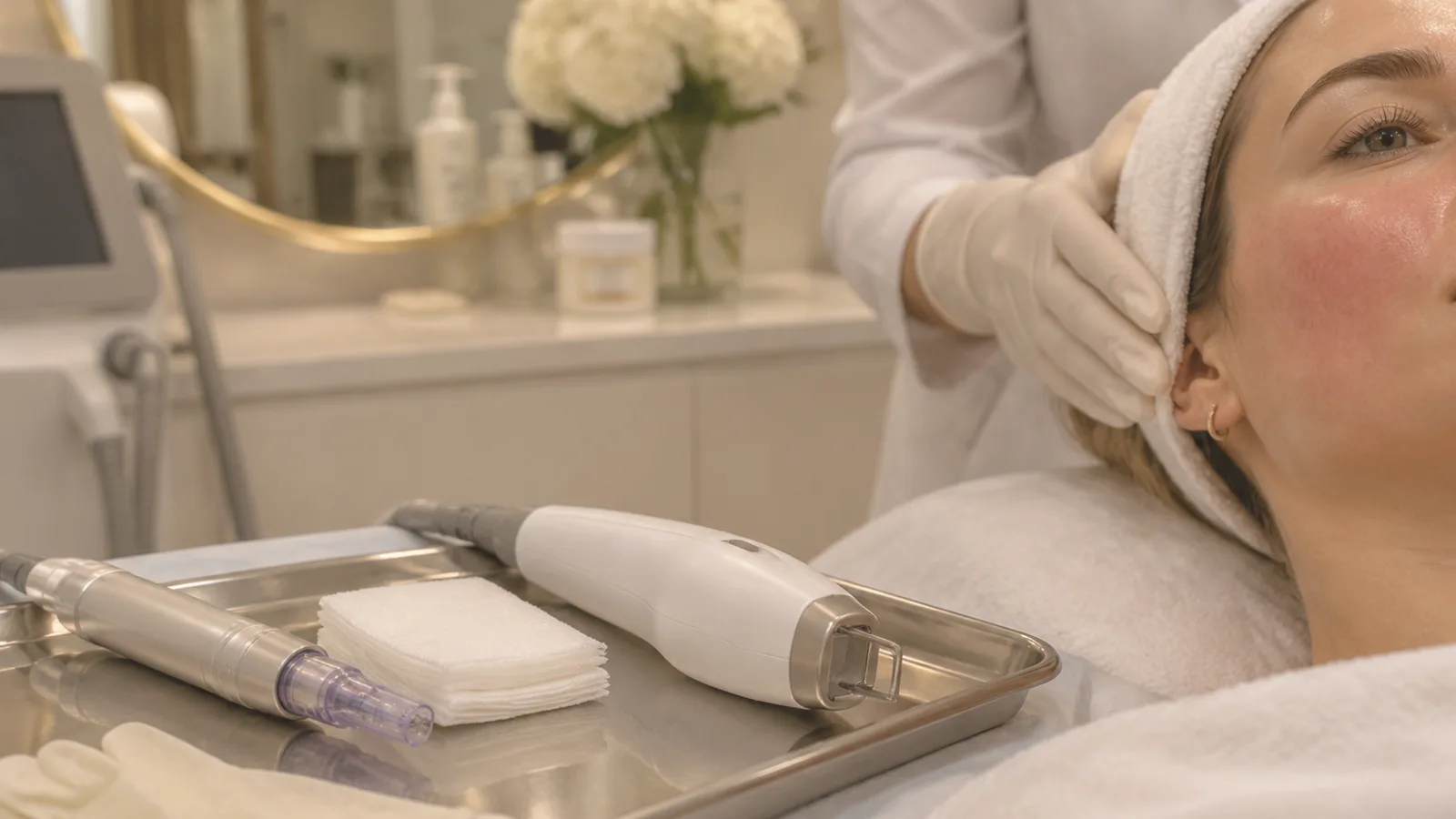
Microneedling vs Laser Resurfacing: What People Actually Need to Know
If you are comparing microneedling vs laser resurfacing, you are probably past the point of scrolling for inspiration and into the part that matters: what will this do to my skin, how long will I look red, and is it a sensible choice for my skin tone?
The honest answer is that these treatments overlap in some ways but are not interchangeable. Microneedling uses tiny needles to create controlled micro-injuries that encourage collagen repair. Laser resurfacing uses light energy to heat or remove layers of skin, and “laser” can mean anything from a gentler non-ablative treatment to a much more aggressive ablative procedure. That difference changes recovery, cost, risk, and results.
This guide is designed to help you compare them on the things that matter in real life: downtime, safety, skin concerns, and total cost over a full course rather than a single session. It is not a substitute for a medical consultation, especially if you have darker skin, melasma, active acne, a history of scarring, or any medical condition affecting wound healing.
How Each Treatment Works
Standard microneedling uses very fine needles to make tiny controlled channels in the skin. Those channels trigger wound healing and, over time, the skin can make more collagen and elastin. Because it does not use heat, standard microneedling is often considered one of the more versatile resurfacing options across different skin tones.
Laser resurfacing uses light energy to target the skin in a more thermal way. Some lasers heat tissue beneath the surface without removing it. Others remove very small columns of skin. The more tissue a laser removes, the more dramatic the potential result and the longer the recovery.
The main laser categories
- Non-ablative fractional lasers heat the skin without removing the outer layer.
- Ablative fractional lasers remove tiny columns of tissue and usually create more downtime.
- Full-field ablative lasers remove the top layer across the entire treated area and are the most intensive option.
That is why a person asking about a light texture refresh and a person treating deep acne scars are not really discussing the same procedure, even if both clinics use the phrase “laser resurfacing.”
Where RF microneedling fits
Radiofrequency microneedling is worth mentioning because it often appears in the same conversation. It combines needles with heat energy delivered into the deeper skin. It may be stronger than standard microneedling for laxity and some scar types, but it is not the same as plain microneedling and it is not a laser.
Downtime: What Recovery Really Looks Like
Downtime is one of the biggest reasons people choose one treatment over another. But recovery is not just about how red you look on day one; it also includes swelling, dryness, sun sensitivity and how soon you feel comfortable seeing other people again.
Standard microneedling
After standard microneedling, the skin usually looks pink to red for about a day or two. Some people also feel tightness, warmth and a sandpapery texture as the skin settles. A typical social downtime is around 24 to 48 hours, although some people prefer to wait longer before putting on makeup or attending events.
The less visible part of recovery is just as important. For several days afterward, the skin may be more sensitive to heat, sweat and sun exposure. That means avoiding intense exercise, saunas and strong sun while the skin is healing. Sun protection matters even after the redness fades.
RF microneedling
RF microneedling often has a bit more swelling than standard microneedling, especially around the eyes and jawline. Redness can last several days, and some people need three to five days before they feel comfortable being seen without makeup. For others, the recovery is easier. The key point is that it is usually more noticeable than standard microneedling but still less disruptive than many ablative lasers.
Non-ablative fractional laser
Non-ablative fractional lasers usually bring a few days of redness and swelling, followed by dryness or bronzing as the skin renews. Many people need around five to seven days before they feel socially presentable, though some are ready sooner and others take a little longer depending on settings and skin sensitivity.
Ablative fractional and full-field laser
This is where recovery becomes much more serious. After an ablative fractional laser, the skin can look raw, swollen and crusted for several days. After full-field ablative laser, the skin may weep, crust and remain visibly red for much longer. A minimum of one to two weeks of downtime is a realistic starting point for fractional ablative treatments, while full-field procedures can take several weeks before you feel truly public-facing again.
It is also important to understand that a clinic may describe the visible recovery gently, but the practical recovery includes wound care, sleep disruption, strict sun avoidance and a temporary pause on many skincare products. If a treatment sounds almost effortless, ask exactly what the first week looks like day by day.
Skin Tone Safety: Why Fitzpatrick Type Matters
This is one of the biggest differences between the two options and one of the most overlooked parts of online comparisons. The Fitzpatrick scale classifies skin from Type I to Type VI based on how it tends to respond to sun exposure. It matters because heat and injury can trigger post-inflammatory hyperpigmentation in some skin tones, leaving dark marks after treatment.
The risk is not the same for everyone. People with deeper skin tones are more likely to develop post-inflammatory hyperpigmentation after aggressive resurfacing, especially if the provider is inexperienced or the settings are too high. That does not mean treatment is off-limits. It means the type of treatment and the skill of the provider matter enormously.
Microneedling across skin tones
Standard microneedling is often considered a safer starting point for a broader range of skin tones because it does not rely on heat. That does not make it risk-free. If the needle depth is too aggressive, or if aftercare is poor, the skin can still become irritated or pigmented. But in general, standard microneedling is one of the more flexible resurfacing choices for medium to deep skin tones.
RF microneedling adds heat, so the safety profile changes. It can still be appropriate for deeper skin tones in the right hands, but the provider’s experience with your exact skin type matters more than the device name alone.
Laser resurfacing across skin tones
Non-ablative fractional lasers may be used conservatively in some medium and deeper skin tones, but they still require a careful specialist assessment. Ablative lasers are usually a more cautious choice in Fitzpatrick Type IV to VI skin because the risk of pigment changes is higher. Some clinicians do use them in darker skin with pre-treatment and careful settings, but that is specialist territory, not a casual med-spa decision.
If your skin is Type IV or deeper, look for a board-certified dermatologist or plastic surgeon who routinely treats patients with your skin tone. The question is not just “can this be done?” but “how much experience does this provider have doing it safely on skin like mine?”
For trustworthy background on cosmetic procedures and safety, the American Academy of Dermatology offers useful patient guidance at aad.org.
Which Skin Concerns Each Treatment Fits Best
Neither treatment is the universal winner. The right choice depends on the concern you want to improve and how much downtime you can tolerate.
Fine lines and texture
Both treatments can help with fine lines and rough texture. Laser tends to produce a stronger effect per session, while microneedling often works more gradually and may require a series of treatments.
Sun damage
Laser resurfacing, especially ablative laser, is generally more powerful for visible sun damage and etched-in lines. If the goal is a more dramatic resurfacing result, laser usually has the edge.
Acne scars
For shallow to moderate acne scars, both options can help. For deeper structural scars, RF microneedling and ablative fractional laser are often the more effective choices. Ice pick scars, boxcar scars and rolling scars may all respond differently, so a consultation should ideally include a scar type assessment, not just a broad “acne scarring” label.
Laxity
If loose or crepey skin is part of the concern, RF microneedling is often more useful than standard microneedling. Laser can also help tighten skin through thermal remodeling, but the result depends heavily on the laser type and the patient’s skin.
Pigmentation and melasma
This area needs caution. Some lasers can improve pigment, but they can also worsen it, particularly in reactive or deeper skin tones. Microneedling does not directly target pigment in the same way, but it may be part of a broader treatment plan when a clinician wants a gentler approach. Melasma is especially tricky and should be managed by an experienced dermatologist rather than treated based on social media success stories.
Stretch marks
Microneedling is often used for stretch marks because it can improve texture and is relatively adaptable across body areas. Some lasers are used for stretch marks too, but the treatment plan is more variable and depends on the location, the skin tone and the depth of the marks.
What It Really Costs
Cost comparisons can be misleading if you only look at the price of one appointment. Most people need multiple sessions, and a treatment that seems cheaper at first can become more expensive once the full course is included.
Standard microneedling is usually the lowest-cost option per session. The downside is that you often need several sessions to see meaningful change. RF microneedling costs more, but some people need fewer treatments. Non-ablative fractional laser is generally mid-range to higher per session. Ablative fractional laser is more expensive again, though it may need fewer sessions. Full-field ablative laser is the most intensive and often the most expensive single treatment.
Prices also vary by city, clinic type, practitioner expertise and device used. A treatment at a board-certified dermatologist’s office in a major city will usually cost more than a session at a smaller clinic. If local anaesthesia, sedation or prescription aftercare is needed, that adds to the total. The final bill may also include follow-up visits and medical-grade products.
For cosmetic treatment, insurance usually does not help. That means it is wise to ask for the total treatment plan cost, not just the session price, before you commit.
How to Choose Between Them
If you want the gentlest entry point, standard microneedling is often the simplest place to start. It is especially attractive if you want less downtime and a treatment with a broader safety profile across skin tones.
If your concern is deeper acne scarring, more obvious sun damage or you want a stronger result in fewer sessions, laser resurfacing may be a better fit — but only if your skin tone and recovery tolerance make it a reasonable choice.
If your main goal is skin laxity plus texture, RF microneedling deserves a serious look before you book a laser appointment.
If you have medium to deep skin, or you have ever had dark marks after pimples or procedures, the provider’s experience matters as much as the device. In that situation, a conservative plan from an experienced clinician is often better than the most aggressive option on the menu.
And if you cannot genuinely spare the downtime, do not let a before-and-after timeline on social media make the decision for you. Choose the option that matches your real life, not your ideal schedule.
Frequently Asked Questions
Can microneedling and laser resurfacing be combined?
Sometimes, yes. Some treatment plans use both, but they are usually spaced apart rather than done together. The order depends on the skin concern, the device being used and how your skin heals. A clinician should decide this based on your individual case.
How long do results last?
Results are not permanent because skin continues to age. Microneedling results can last for months and are often maintained with repeat sessions. Laser resurfacing, especially ablative treatment, can deliver longer-lasting change, but sun protection and skincare habits make a big difference in how long the improvement holds.
Can I have these treatments if I use retinoids or have taken isotretinoin?
You should discuss this with the clinician who will perform the treatment and with the prescriber if relevant. Retinoids are commonly paused before and after procedures, and isotretinoin requires a much more careful assessment because it can affect healing. Do not assume a treatment is safe just because someone online said they had it done.
What should I ask a provider before booking?
Ask which exact device will be used, how many sessions they expect, what downtime is realistic, what risks apply to your skin tone and what happens if you develop hyperpigmentation or delayed healing. Ask to see examples on patients with a similar Fitzpatrick type and similar concern to yours.
Is one treatment always better than the other?
No. The best choice depends on your skin concern, your skin tone, your budget and how much recovery time you can handle. Standard microneedling is often safer and more flexible. Laser resurfacing can be more powerful. The better option is the one that fits your skin and your life.
Bottom Line
When it comes to microneedling vs laser resurfacing, the right answer is rarely about which treatment is “best” in general. It is about which one is best for your skin concern, your Fitzpatrick type, your tolerance for downtime and your budget for the full course of treatment.
Microneedling is often the more accessible, lower-downtime choice, especially for a wider range of skin tones. Laser resurfacing can deliver more dramatic improvement, but the trade-off is more recovery and a greater need for careful patient selection. If you want the safest, most useful next step, book a consultation with a board-certified dermatologist or plastic surgeon who can assess your skin in person and recommend the right approach rather than the most dramatic one.
For more background on cosmetic procedure safety and choosing a qualified specialist, see NHS guidance on cosmetic procedures.





Join the conversation
Sign in — Sign in to join the conversation.