
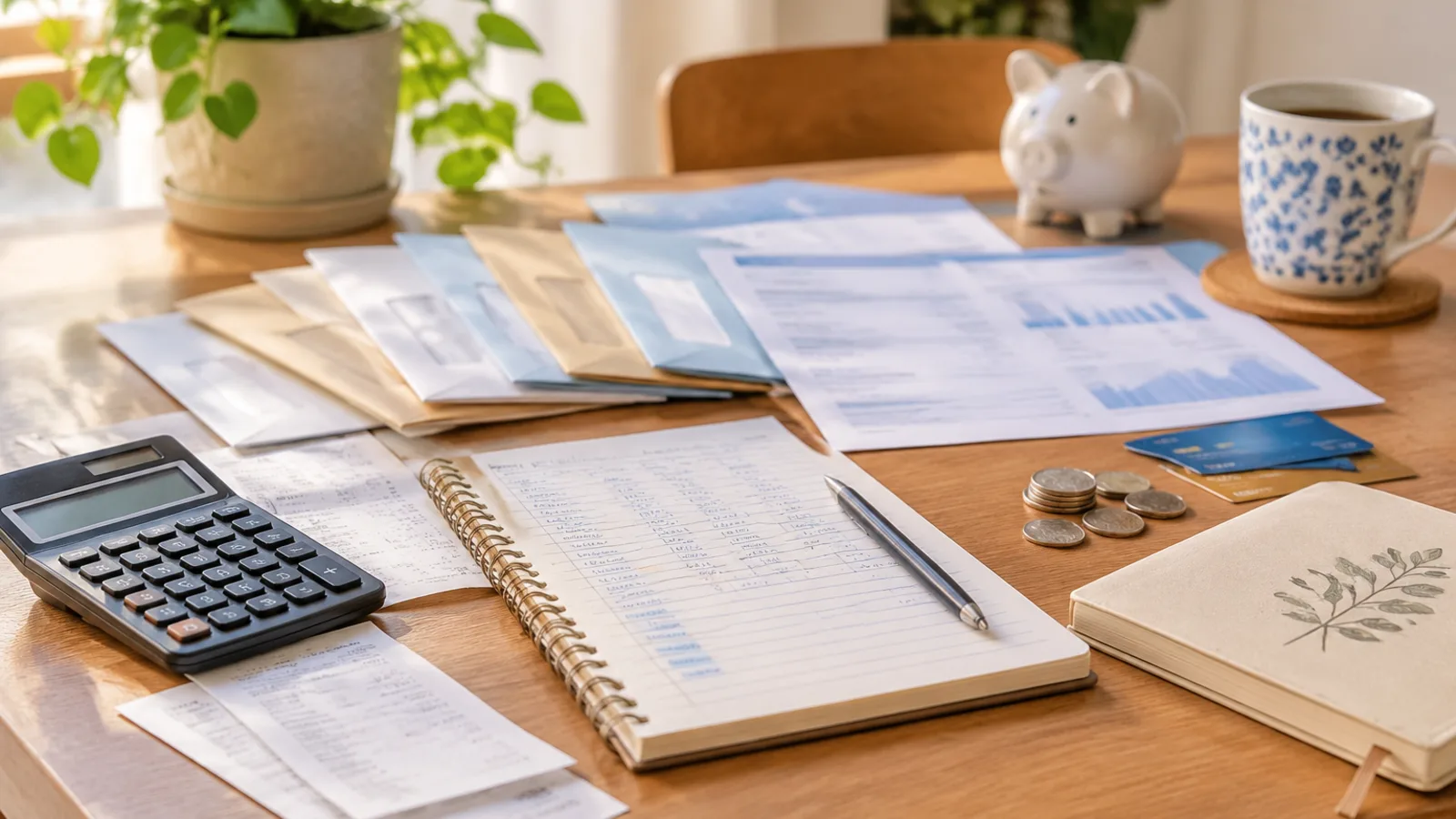
Your car insurance comes due in August. Holiday spending peaks in December. The furnace always seems to need attention in February. These aren't mysterious expenses—they're predictable—but they can still blow up a monthly budget if you pay them all at once. A sinking fund for irregular expenses gives those bills a place to land before they arrive. Unlike an emergency fund, which is there for true surprises, this is money you intentionally set aside for costs you know are coming.
If that sounds like another budgeting system you have to keep track of forever, it isn't. At its best, a sinking fund is simple: list the bills that do not show up every month, estimate what they cost, divide by the number of months until they come due, and save that amount regularly. Once the system is in place, those awkward seasonal or annual bills stop feeling like emergencies.
What a sinking fund is—and why it is not the same as an emergency fund
An emergency fund exists for unexpected problems: a job loss, an urgent medical issue, or a car repair you genuinely did not see coming. A sinking fund handles the opposite category—expenses that are predictable, but not monthly.
Common examples include annual insurance premiums, property taxes, school fees, holiday gifts, home maintenance, car registration, pet vaccinations, annual memberships, and seasonal utility spikes. You may not know the exact amount yet, but you usually know the timing and the rough range.
That distinction matters because it changes how you budget. Money for the unknown should stay protected. Money for known irregular bills should be earmarked so it does not quietly disappear into groceries, takeout, or everyday spending.
One buffer protects you from chaos; the other protects you from the calendar.
Start by listing every irregular expense you can predict
The first step is to make the invisible visible. Pull up a year of bank statements, credit card statements, and any bills you can find. Look for anything that is charged quarterly, semi-annually, or annually.
Then think beyond the obvious. Seasonal costs often hide in plain sight: higher heating or cooling bills, back-to-school shopping, winter car checks, holiday travel, birthday gifts, or a yearly dentist visit that is not fully covered by insurance.
A useful way to do this is to sort your list into categories:
- Household: property tax, home repairs, appliance servicing, HOA fees, pest control
- Vehicles: car insurance, registration, maintenance, tyres or tyres replacement, annual inspection
- Family and personal: school fees, childcare extras, gifts, holidays, subscriptions, medical copays
- Seasonal: winter utilities, summer cooling, garden supplies, holiday food, fuel for travel
For example, one household might discover that car insurance, property tax, school supplies, holiday gifts, and HVAC servicing add up to a very real annual total. Seeing the full list in one place is often the moment the budget finally starts making sense.
Calculate how much to set aside each month
Once you have your list, add up the yearly total and divide by 12. That gives you a monthly amount to move into your sinking fund. If a bill is due sooner than a year away, divide by the number of months left instead.
Here is a simple example:
- Car insurance: $1,200 a year
- Property tax: $3,600 a year
- Back-to-school costs: $800 a year
- Holiday gifts: $1,000 a year
- HVAC servicing: $200 a year
Total: $6,800 a year. Divide by 12 and you get about $567 a month. Rounding up to $570 gives you a small built-in cushion for price changes or small miscalculations.
If that number feels too high, do not abandon the idea. Start with the most important bills first—usually insurance, taxes, and utilities—and build from there. A partial sinking fund is still useful. Saving some of the amount is much better than getting hit with the full bill and scrambling.
Choose where to keep the money so it is easy to find but hard to spend
Your sinking fund should not live in the same account you use for day-to-day spending. If the money sits too close to your checking balance, it is easier to accidentally spend it on something else.
A separate savings account is usually the simplest option. If your bank offers sub-accounts or savings buckets, you can create one for each category: insurance, home maintenance, holidays, school expenses, and so on. That can make it easier to see what each dollar is meant for.
Some people keep one single sinking fund and track categories on paper or in a spreadsheet. Others like separate sub-accounts because they reduce mental bookkeeping. Either approach can work. The best system is the one you will actually keep using.
Two practical rules help here:
- Keep the fund separate from your everyday spending money.
- Make access easy enough that you can use it when the bill arrives.
That usually means a savings account rather than cash at home or a long-term product that limits withdrawals.
Automate the transfer so you do not have to remember it
The most effective sinking fund is the one that happens without drama. Set up an automatic transfer on payday, even if the amount is modest at first. This turns saving into a routine instead of a decision you have to make every month.
Think of it as paying Future You first. When the money moves automatically, you are less likely to spend it elsewhere and then hope to make it up later. That is where budgeting plans tend to fall apart.
If some bills are coming up soon, you may need to front-load the fund. For example, if your insurance premium is due in three months and you are starting from zero, you might need a larger initial transfer or a temporary spending trim in another category until the fund catches up.
For bills that arrive twice a year, such as some tax or insurance payments, it can help to note the due dates in your calendar and adjust transfers a few months ahead of time. That keeps the account balanced instead of scrambling at the last minute.
Use the fund only for the expense it was meant to cover
When the bill arrives, pay it from the sinking fund without guilt. That is the whole point of creating it.
What does not help is dipping into it for unrelated shortfalls. If you borrow from the holiday fund to cover groceries, you will only create a second problem for yourself later in the year. If you absolutely have to use the money for something else, treat it as a temporary shift and replenish it as soon as possible.
A simple tracker can help. You do not need a complicated app. A notes page or spreadsheet with three columns is enough:
- Category: what the money is for
- Target amount: what you expect to need
- Current balance: what is already saved
That level of visibility is often enough to keep the fund working without turning it into another full-time job.
Common mistakes to avoid
The first mistake is underestimating irregular expenses. It is easy to forget the small things until they stack up. A few “minor” yearly charges can easily add hundreds of dollars to your budget.
The second mistake is failing to update the list when life changes. A new pet, a new home, a child starting school, or a move to a colder climate can all change what belongs in your fund. Revisit the list at least once a year.
The third mistake is mixing your sinking fund with your emergency fund. They serve different purposes, and keeping them separate makes both easier to use well.
The fourth mistake is expecting perfection immediately. It can take a few billing cycles before the system feels smooth. The first year is usually the hardest because you are building the fund while bills are still coming due. That does not mean the system is failing. It means it is still getting established.
What to do if an irregular bill is higher than expected
Sometimes the amount you saved is not enough. Utility bills can spike, insurance renewals can increase, and home repair quotes can come in higher than planned.
When that happens, cover the gap the best way you can: from the rest of your budget if there is room, or from your emergency fund if necessary. Then adjust your future contributions so the same problem is less likely next year.
For example, if your winter heating bill is $200 higher than expected, you can spread that difference over the next 12 months by adding roughly $17 a month to the relevant category. Small adjustments like that are usually easier to absorb than trying to catch up all at once.
The key is not to give up on the system just because one estimate was off. A sinking fund is a tool, not a test. It should help you handle surprises better, not demand flawless forecasting.
How to start if you are already behind
You do not need a full year's worth of money saved before you begin. Start where you are. Even $25 or $50 a month is useful if it means you are no longer facing every irregular bill from zero.
If you are behind, prioritize by timing:
- List the bills due in the next three to six months.
- Fund the soonest and most important ones first.
- Set up a small automatic transfer you can keep up with.
- Increase it later if your budget opens up.
This approach keeps the system realistic. It is better to create a modest fund that grows steadily than to plan an amount that looks ideal on paper but never happens in real life.
Over time, you will notice something important: the fund creates breathing room. Instead of treating annual or seasonal bills as budget emergencies, you are simply moving money you already planned for. That shift can make monthly budgeting feel much calmer.
FAQ
How is a sinking fund different from just keeping extra money in my checking account?
A sinking fund is money you have set aside on purpose for a specific future expense. Extra money in checking often gets spent because it feels available. A separate fund creates a clear boundary.
What if I cannot afford to save the full monthly amount?
Start with what you can. A partial fund still helps reduce the shock of a bill arriving all at once. Focus first on essential categories like insurance, taxes, and utilities, then build from there.
Should I have one sinking fund or several?
Either can work. One fund is simpler. Several categories or sub-accounts can make it easier to track and less tempting to spend the money on the wrong thing. Choose the version you will maintain consistently.
What if I forgot to plan for an irregular expense?
Use your emergency fund or shift money from another part of the budget if you have to, then add that expense to next year’s list. The point of the system is to improve over time as you identify more recurring costs.
Can I use a sinking fund for non-essential goals too?
Yes. Many people use the same method for vacations, a new sofa, holiday shopping, or a home project. The principle is the same: save in advance so the expense does not derail your monthly budget.
Building a sinking fund for irregular expenses is one of the most practical ways to make a budget feel less fragile. It does not eliminate every surprise, but it gives predictable bills a place to go before they show up. Start with the expenses you know are coming, save what you realistically can, and keep the fund separate from your emergency money. Over time, those annual and seasonal costs stop feeling like disruptions and start feeling manageable.





Join the conversation
Sign in — Sign in to join the conversation.