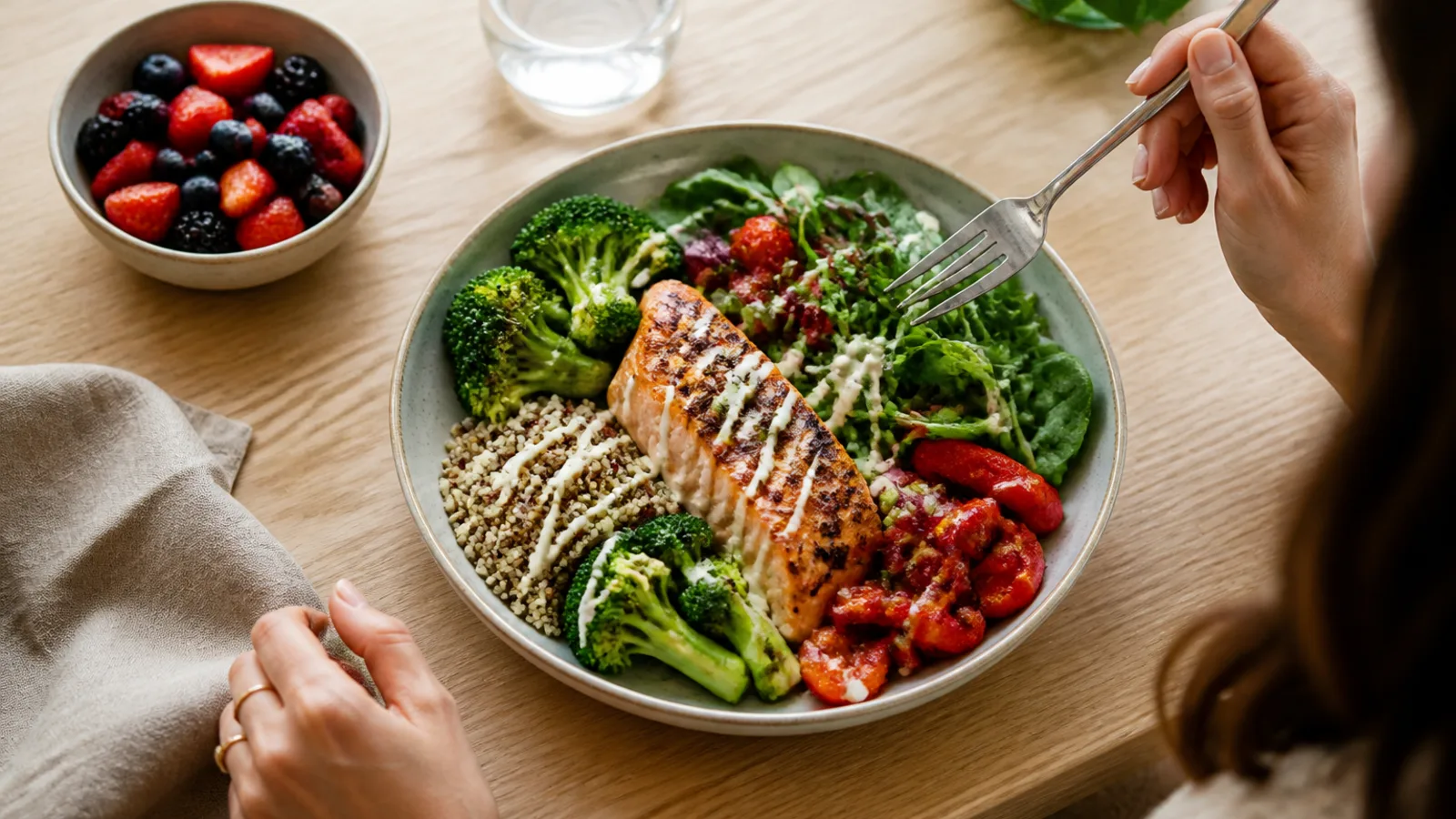
It often starts with good intentions: a light lunch, a promise to be stricter, then a 4pm hunger that makes everything in the kitchen look urgent. By dinner, you are ravenous, tired and wondering why weight loss always feels like a test of willpower.
Here is the kinder truth: hunger is not a personal failing. It is information. If you want to learn how to lose weight without being hungry, the answer is not to eat as little as possible. It is to build meals that keep you satisfied while you gently eat a little less over time.
This guide focuses on satiety rather than punishment: protein, fibre, high-volume foods, planned snacks, sleep and simple meal structure. It is not a crash diet, and it is not a substitute for medical advice. If you have a health condition, take medication that affects appetite or weight, are pregnant or breastfeeding, or have a history of disordered eating, speak with a GP, doctor or registered dietitian before making major changes.
Why Diets Leave You Hungry
Weight loss usually requires eating somewhat less energy than your body uses. That does not mean you should feel hungry all day. Mild hunger before a meal can be normal. Constant hunger, shakiness, irritability, poor concentration or feeling preoccupied with food are signs that your approach may be too aggressive or poorly balanced.
Many diets create hunger because they remove too much at once: sharply smaller portions, skipped meals, no carbohydrates, low-fat everything and salads that look virtuous but lack staying power. For a day or two, this can feel productive. Then biology pushes back.
Appetite is shaped by stomach fullness, blood sugar patterns, hormones, sleep, stress, habit and the simple pleasure of eating. A satisfying weight-loss plan needs more than rules. It needs structure.
Physical hunger vs. cravings
Physical hunger usually builds gradually. You might notice an empty feeling, low energy or a rumbling stomach, and a range of foods would sound acceptable. A craving tends to be sudden, specific and emotionally charged: chocolate, crisps, biscuits, ice cream.
Try this quick check: Would I eat a simple, balanced meal right now, like a bowl of soup, plain chicken with rice or beans on toast? If the answer is yes, you are most likely physically hungry. If only a specific sweet, salty or crunchy treat will do, you may be tired, stressed, bored or responding to a habit cue.
That does not make cravings bad. It simply gives you options. You can still choose the food you want, but deliberately rather than reactively.
How to Lose Weight Without Being Hungry: Start With a Gentle Deficit
The most sustainable plan is usually the one you can repeat. A severe deficit may move the scale quickly at first, but it often increases hunger, fatigue and the urge to overeat later. A gentler approach feels less dramatic, and it is far easier to live with.
You do not have to count calories to lose weight, though some people find short-term tracking helpful. Others prefer portion cues, meal templates and habit changes. Both can work.
- Tracking can help if you like data and want to understand your usual intake. The trade-off: it can become stressful or rigid for some people.
- Portion cues can help if you want a lower-effort approach. The trade-off: progress can be harder to measure and relies on honest consistency.
A practical starting point is to keep your meals familiar but improve their structure: add protein, add fibre, increase vegetables, and be more intentional with snacks, drinks and energy-dense foods such as oils, nuts, cheese and desserts.
Think satisfied on slightly less, not as little as possible.
Make Protein the Anchor of Every Meal
Protein is one of the most filling nutrients, which makes it a natural anchor for each meal. Combined with regular physical activity, especially strength or resistance training, adequate protein also helps preserve muscle while you lose weight. You do not need extreme amounts; the goal is a meaningful source at each meal rather than saving it all for dinner.
A simple visual cue is a palm-sized portion of protein per meal, adjusted for your body, appetite and activity.
- Animal-based options: eggs, Greek yoghurt, skyr, cottage cheese, chicken, turkey, fish, seafood and lean meat.
- Plant-based options: tofu, tempeh, lentils, beans, chickpeas, edamame, soy yoghurt and fortified soy milk.
- Easy upgrades: yoghurt stirred into oats, eggs on toast, beans in soup, chicken on salad, tofu in stir-fries.
Breakfast is often where protein is lowest. Toast or cereal on its own may be fine, but many people stay fuller for longer when they add eggs, yoghurt, cottage cheese, nut butter, tofu or seeds.
If you have kidney disease or another condition requiring a special diet, ask your doctor or dietitian what protein intake is right for you.
Use Fibre as Your Fullness Tool
Fibre adds bulk to meals, supports gut health and helps food feel more substantial. You will find it in vegetables, fruit, pulses, oats, wholegrains, nuts and seeds.
If your current diet is low in fibre, increase it gradually. Jumping straight to large servings of beans, bran and raw vegetables can leave you bloated and uncomfortable. Add one change at a time and drink enough fluids.
- Choose whole fruit more often than juice.
- Add beans, lentils or chickpeas to soups, salads, stews and pasta sauces.
- Try oats, barley, brown rice, quinoa or wholegrain bread instead of more refined options.
- Keep frozen vegetables on hand for fast volume and fibre.
- Sprinkle chia seeds, flaxseed or berries over yoghurt or porridge.
Fibre works best alongside protein. A plain green salad rarely lasts long. A salad with chicken or chickpeas, roasted vegetables, seeds and a wholegrain roll is far more likely to carry you through the afternoon.
Try Volume Eating, But Do It Properly
Volume eating means choosing foods that take up plenty of space on your plate and in your stomach without being very energy-dense. These are usually rich in water and fibre: vegetables, fruit, broth-based soups, salads and some cooked wholegrains.
Fullness vs. satiety: why the difference matters
It helps to separate two feelings. Fullness is the immediate, physical sense of a stretched stomach, and water- and fibre-rich foods deliver it quickly. Satiety is the longer-lasting satisfaction that keeps food off your mind for hours afterwards. Protein, some fat and certain types of fibre tend to slow digestion and are linked with those longer-term signals.
That is why a huge bowl of plain vegetables may leave you feeling stuffed yet hungry again soon after. Volume gives you fullness; protein, fibre-rich carbohydrates and a little fat give you satiety. The best meals deliver both.
- Start dinner with a vegetable soup or side salad if you tend to arrive very hungry.
- Add mushrooms, courgette, peppers, spinach or broccoli to pasta dishes.
- Bulk out curries and chilli with lentils, beans, cauliflower, carrots or greens.
- Load stir-fries with vegetables plus prawns, tofu, chicken or edamame.
- Reach for apples, oranges, berries or melon when you want something sweet.
Do not fear fat, but do measure it
Fat makes food taste good and helps meals feel satisfying. Olive oil, avocado, nuts, seeds, cheese and oily fish can all fit into a weight-loss plan. The catch is that fat is energy-dense, so portions grow quickly without looking large.
Use a spoon rather than pouring oil from the bottle. Put a small portion of nuts in a bowl instead of eating from the bag. These habits keep satisfying foods in your diet without quietly turning a light meal into a heavy one.
Sample Plate Builds That Keep You Full
The anti-hunger plate at a glance
- Half (about 50%): non-starchy vegetables or salad
- A quarter (about 25%): lean or plant protein
- A quarter (about 25%): fibre-rich carbohydrate, such as potatoes, oats, brown rice, wholegrain pasta, quinoa, beans or lentils
- A thumb-sized portion: satisfying fat, such as olive oil, avocado, nuts, seeds, cheese or dressing
This is a guide, not a law. Some meals will not fit neatly onto a plate, and appetite varies from day to day. Use it to check whether a meal has enough staying power.
Breakfast ideas
- Greek yoghurt or skyr with berries, oats and a spoonful of nuts or seeds.
- Two eggs with spinach, mushrooms and tomatoes, plus wholegrain toast.
- Tofu scramble with peppers and black beans in a wholewheat tortilla.
Lunch ideas
- Lentil and vegetable soup with a small wholegrain roll and a piece of cheese.
- A grain bowl with chicken or chickpeas, roasted vegetables, leafy greens, quinoa and a yoghurt or tahini dressing.
- Tuna or white bean salad with crunchy vegetables and new potatoes.
Dinner ideas
- Salmon or tofu with roasted broccoli and sweet potato.
- Turkey or lentil chilli loaded with peppers and beans, served with a modest portion of rice.
- Stir-fry with prawns or edamame, plenty of vegetables and a serving of noodles.
On a budget? Oats, eggs, tinned beans, lentils, chickpeas, frozen vegetables, potatoes, yoghurt and tinned fish are filling, flexible and usually easier on the weekly shop than speciality diet products.
Plan Snacks Instead of Grazing
Snacks are not required for weight loss, but they can be extremely useful. If there is a long gap between lunch and dinner, a planned afternoon snack can prevent the kind of hunger that has you raiding the cupboards while you cook.
The best snacks include protein, fibre or both. Think of them as a bridge to your next meal, not a random handful of whatever is closest.
- Apple slices with peanut butter.
- Cottage cheese with pineapple or cherry tomatoes.
- Hummus with carrots, cucumber or wholegrain crackers.
- A boiled egg and a piece of fruit.
- Edamame with a pinch of salt or chilli.
- Air-popped popcorn, with a small yoghurt if you need more staying power.
- Skyr or Greek yoghurt with cinnamon and berries.
Pre-portion snacks if you tend to graze. Keep helpful options visible and easy to grab. Put foods you find hard to stop eating somewhere less convenient, not because they are forbidden, but because environment matters.
Sleep and Stress Can Change Your Hunger
Short or poor-quality sleep is linked with stronger appetite and a greater pull towards energy-dense foods for many people. You may have noticed it yourself: after a bad night, pastries, crisps or a takeaway feel far more compelling than usual.
Sleep will not replace good nutrition, but it makes good choices easier. Start with the basics:
- Keep sleep and wake times reasonably consistent.
- Build a short wind-down routine that does not revolve around work or scrolling.
- Be mindful of caffeine later in the day.
- Notice whether alcohol disrupts your sleep or fuels evening snacking.
- Keep your bedroom cool, dark and comfortable where possible.
Stress matters too. Emotional eating is common, and guilt rarely helps. Build a small menu of non-food coping options: a short walk, a shower, a phone call, journalling, stretching or five minutes of slow breathing.
If emotional eating feels out of control, or food and weight take up a distressing amount of mental space, consider speaking with a GP, therapist or registered dietitian. Asking for support is a strength, not a failure.
Everyday Habits That Help Fullness Register
How you eat matters as much as what you eat. Fullness signals take time to arrive, so eating very quickly makes it easy to overshoot.
- Pause halfway through a meal and ask yourself how hungry you still are.
- Put your fork down between some bites.
- Eat without screens when you can, especially at meals you tend to overeat.
- Keep mealtimes fairly regular so you do not arrive at dinner ravenous.
- Drink water with meals, but do not use it to replace food when you are genuinely hungry.
Liquid calories are worth noticing. Sweetened coffees, juice, soft drinks and alcohol can add up without providing the fullness of solid food. You do not need to cut them out entirely; swapping some for lower-sugar or alcohol-free options may make things feel easier.
Zero-calorie fizzy drinks save energy, but they are not a hunger fix. Some people find that sipping sweet drinks all day keeps sweet cravings alive, and lots of carbonation can leave you bloated. Water, herbal teas and sparkling water with a squeeze of citrus make reliable everyday defaults.
What to Expect From Sustainable Weight Loss
Many health organisations describe gradual weight loss as more sustainable than rapid loss. A commonly cited range is around 0.5 to 1 kg (1 to 2 lb) a week for many adults, but this varies widely, and slower is perfectly fine. Body size, hormonal changes, medication, age, activity, sleep and health conditions all affect the pace.
Scale weight fluctuates daily with water, salt, digestion, menstrual cycle changes and exercise. If you weigh yourself, look at the trend over several weeks rather than reacting to every number.
Plateaus are normal. Before cutting food sharply, review the basics: Are portions creeping up? Are snacks still planned? Are weekends very different from weekdays? Are you sleeping poorly? A small adjustment is often enough.
Non-scale progress counts too: steadier energy, fewer intense cravings, better sleep, less evening grazing and clothes fitting differently.
For general guidance, the NHS, the CDC and your own national health service are useful starting points, but personalised advice is best if you have medical concerns.
When to Get Professional Advice
Weight-loss advice should never ignore your health history. Speak with a GP, doctor or registered dietitian if you:
- Have a history of an eating disorder or disordered eating.
- Have diabetes, thyroid disease, kidney disease, heart disease or another medical condition.
- Take medication that affects appetite, weight, blood sugar or fluid balance.
- Are pregnant, trying to conceive or breastfeeding.
- Experience persistent extreme hunger, dizziness, fainting, rapid unexplained weight change or missed periods.
A doctor can check for underlying issues and discuss all appropriate options. A registered dietitian can tailor meals, portions and habits to your body, preferences and lifestyle.
FAQ
Is it normal to feel hungry when trying to lose weight?
Mild hunger before meals can be normal, especially while you adjust your eating pattern. Feeling hungry all day is not. If you are constantly distracted by food, irritable or light-headed, your plan may be too restrictive or too low in protein, fibre or overall food.
What foods keep you full the longest?
Combinations of protein and fibre tend to be most filling: eggs with wholegrain toast and vegetables, Greek yoghurt with berries and oats, lentil soup, tofu stir-fry, or fish with potatoes and greens. No single food is magic; the combination matters.
Can I lose weight without counting calories?
Many people do. Plate templates, portion cues, regular meals, planned snacks and fewer liquid calories can all help. Counting can be useful for some, but it is not required and is not suitable for everyone, particularly anyone with a history of disordered eating.
Does drinking water help with hunger?
Water can help if you are mildly dehydrated or mistaking thirst for hunger, and having it with meals may support fullness. It should not be used to suppress genuine hunger or replace balanced meals.
Should I skip breakfast to lose weight?
There is no universal rule. Some people feel fine with a later first meal; others find skipping breakfast leads to overeating later. If you notice intense afternoon or evening hunger, try a protein-rich breakfast for a couple of weeks and see whether it helps.
Your First Week, Simplified
The most reliable way to learn how to lose weight without being hungry is to stop building your day around restriction and start building it around satiety. Anchor meals with protein, add fibre, use vegetables and fruit for volume, include enough fat for satisfaction and plan snacks before you are desperate.
This week, try three changes:
- Add a clear protein source to breakfast.
- Add one extra portion of vegetables, beans or lentils to lunch and dinner.
- Plan one afternoon snack that includes protein or fibre.
Sustainable weight loss is not about finding better ways to endure hunger. It is about building meals that make hunger a non-issue. When eating well stops feeling like a test of endurance, consistency has room to take care of itself.






Join the conversation
Sign in — Sign in to join the conversation.