
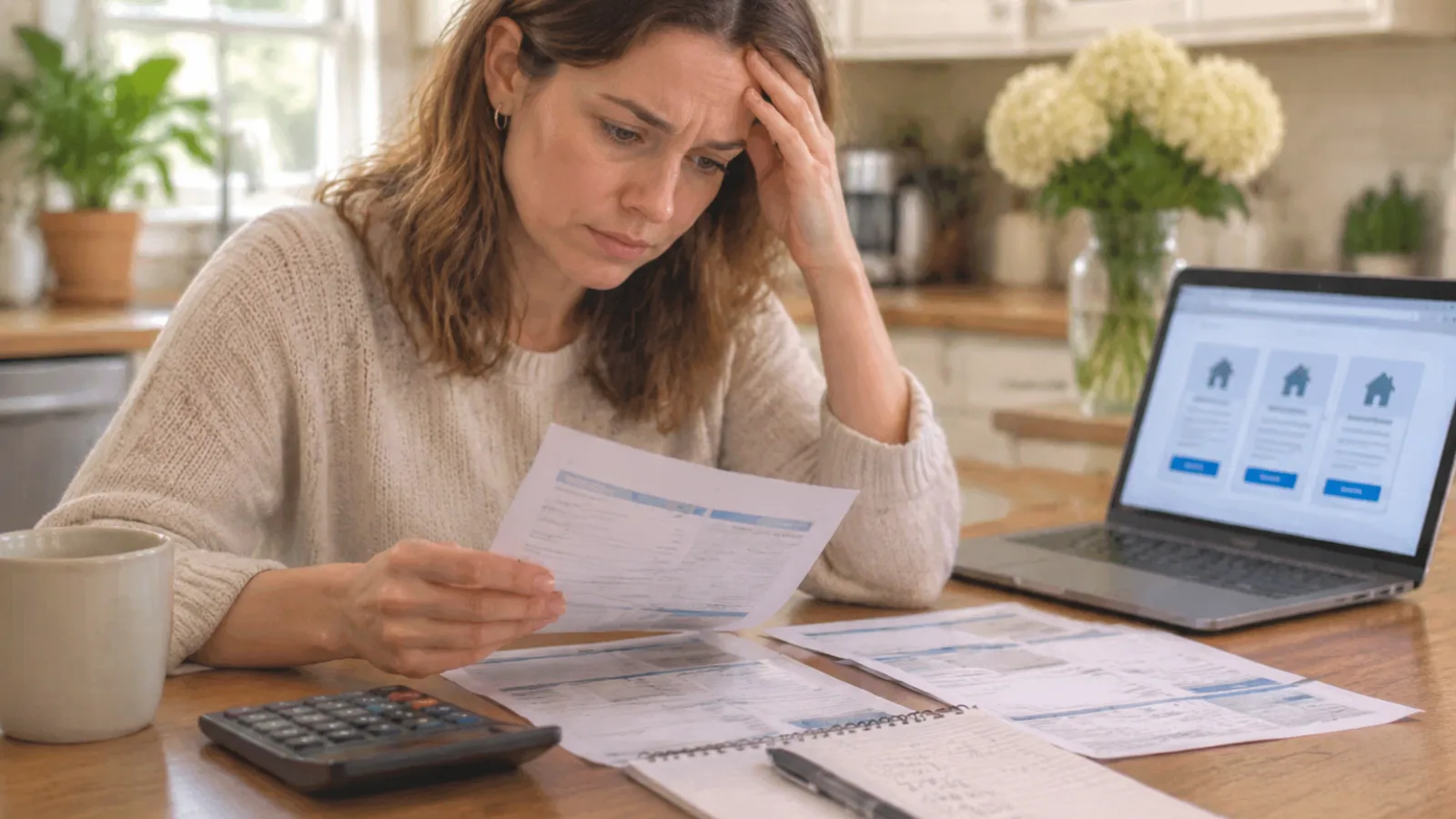
Debt consolidation sounds like the simplest way out when you're juggling multiple payments—roll everything into one loan, lower your rate, breathe easier. Sometimes that's exactly how it works. But sometimes it just stretches the same debt over more years, costs you more in the long run, or sets you up to borrow again because the root problem never got solved. Here's how to tell which side of that line you're on.
What Debt Consolidation Actually Does
At its core, debt consolidation combines multiple debts into a single loan or balance transfer. The goal is usually to lower your interest rate, reduce your monthly payment, or simplify your finances by dealing with one creditor instead of five.
The most common methods include personal loans from banks or credit unions, balance transfer credit cards with promotional rates, home equity loans or lines of credit, and debt management plans arranged through nonprofit credit counseling agencies.
Here's the key thing to understand: consolidation doesn't erase your debt. It reorganizes it. You still owe the same amount—you're just changing the terms.
Take someone carrying $8,000 across three credit cards at interest rates between 19% and 24%. If she consolidates to a personal loan at 10%, her monthly payment drops and the interest savings are real—but only if she doesn't run up the cards again once they're paid off.
When Consolidation Actually Saves You Money
Your Interest Rate Drops Meaningfully
Consolidation makes the most financial sense when you're moving high-interest debt to a significantly lower rate. Consolidating credit card debt at 18% or higher to a personal loan at 7% to 12% can save you hundreds or even thousands over the life of the loan.
But don't just look at the monthly payment. Calculate the total interest you'll pay over the entire loan term. A lower monthly payment doesn't always mean you're saving money.
You Can Pay It Off Faster—or at Least No Slower
If your consolidation loan has a shorter or equal term compared to how long it would take to pay off your current debts, you're making genuine progress. A three-year personal loan to replace credit cards you've been making minimum payments on for who knows how long is usually a good move.
A longer term may lower your monthly obligation, but it often costs you more overall. Compare the numbers carefully.
You Have a Plan to Stop Adding New Debt
This is the big one. If you pay off your credit cards through consolidation but keep using them, you'll end up with the consolidation loan plus new balances. You haven't solved anything—you've just given yourself more rope.
Consolidation works best when it's part of a broader plan: a realistic budget, a clear understanding of what led to the debt in the first place, and a commitment to changing spending habits.
Consider this scenario: You consolidate $15,000 of credit card debt at 22% that would take five years to pay off with your current payments. You get a personal loan at 9% with a three-year term. Your monthly payment might be slightly higher, but you'll pay far less in total interest and be debt-free two years sooner—assuming you have the discipline not to charge up the cards again.
When Consolidation Can Make Things Worse
The New Loan Stretches Your Debt Over More Years
A lower monthly payment feels good until you realize you're paying on that debt for twice as long. Extending a three-year payoff to six years might ease your monthly budget, but you'll often pay more in total interest even at a lower rate.
For example, estimates show that $10,000 at 15% paid off in three years costs roughly $2,450 in interest. Stretch that same debt to six years at 12%, and you'll pay approximately $3,900 in interest despite the lower rate. Actual amounts will vary based on your specific loan terms.
You're Using Home Equity to Pay Off Unsecured Debt
Turning credit card debt into a home equity loan or line of credit means your house is now on the line. If your circumstances change—job loss, medical emergency, anything that affects your ability to pay—you're risking foreclosure over what was originally just credit card debt.
Home equity loans typically offer lower rates, but the trade-off is significant. Only consider this option if you're absolutely certain about your ability to repay and you have a solid plan to avoid running up new credit card balances.
Fees Eat Up Your Savings
Balance transfer cards typically charge 3% to 5% of the amount transferred. Personal loans may have origination fees. Home equity products come with closing costs.
A 3% fee on a $10,000 balance transfer is $300 right off the top. Factor that into your calculations. If you're only saving $400 in interest over the promotional period, your actual savings is $100—and that's only if you pay it all off before the regular rate kicks in.
It Doesn't Address Why You Went Into Debt
If you accumulated debt because of a genuine emergency—medical bills, sudden job loss, unavoidable necessary expenses—consolidation can help you stabilize and move forward.
But if the debt came from overspending, no budget, or lifestyle creep, consolidation often just resets the clock. Without addressing the underlying behavior, you're likely to end up in the same place within a year or two, only now with a consolidation loan and new credit card balances.
How Debt Consolidation Affects Your Credit
In the short term, you'll likely see a small dip. Applying for a new loan triggers a hard inquiry, and opening a new account lowers the average age of your credit.
The medium-term impact is usually positive. If you're consolidating credit card debt with a personal loan, your credit utilization ratio drops dramatically—often the biggest factor in improving your score. Someone with 80% utilization across their cards who consolidates to a personal loan might see their score climb 30 to 50 points over six months as utilization drops to 10% or less.
Long-term, consistent on-time payments rebuild your credit steadily. Just don't close your old credit cards immediately after paying them off. Closing accounts can hurt your utilization ratio if you carry any balance elsewhere. Keep them open with a zero balance unless they have annual fees you can't justify.
What Debts You Can (and Can't) Consolidate
You can typically consolidate credit card balances, personal loans, medical bills, and payday loans (though there are often better options for payday loans specifically—talk to a nonprofit credit counselor).
You shouldn't consolidate federal student loans into a private consolidation loan. You'll lose access to income-driven repayment plans, potential loan forgiveness programs, and forbearance protections that federal loans offer.
Secured debts like car loans are rarely consolidated into unsecured debt—lenders don't typically offer this. And specialized debts like tax obligations or child support follow different rules entirely and usually can't be consolidated with other debt.
Red Flags That You Should Try a Different Plan
If you're only able to make minimum payments and can't realistically commit to paying more, consolidation probably won't help. You need enough cash flow to make real progress.
If you don't have a realistic budget or you're still spending more than you earn, fix that first. Otherwise consolidation is just a temporary Band-Aid.
If the consolidation loan has a higher interest rate than most of your current debt, it doesn't make sense. Shop around or consider alternatives.
If someone is pushing you toward a home equity loan when all your debt is unsecured, think hard about whether you want to put your house at risk.
And be wary of debt settlement companies that want you to stop paying your creditors. These programs severely damage your credit, often lead to lawsuits, and come with high fees. They're not the same as consolidation and should be a last resort.
Better alternatives might include a debt management plan through a nonprofit credit counseling agency, where they negotiate with creditors on your behalf; the debt snowball or avalanche method, where you tackle debts one by one without taking out a new loan; or negotiating directly with creditors for hardship plans or lower rates. If the situation truly feels unmanageable, consult a bankruptcy attorney. Sometimes it's the most honest path forward.
How to Decide If Consolidation Is Worth It for You
Start by listing all your debts: balances, interest rates, minimum payments, and how long until each is paid off at your current pace.
Calculate what you're paying now—total monthly payment and total interest over the life of all your debts combined.
Get quotes for consolidation options: personal loans from multiple lenders, balance transfer cards if your credit qualifies. Include all fees in your comparison.
Run the numbers side by side. Will you actually save money? How much? Over what period? What's the monthly commitment?
Be brutally honest about your behavior. Do you have a plan to avoid new debt? Have you identified what led to the debt in the first place and addressed it?
Finally, consider the credit impact. Will closing accounts help or hurt your score? Can you keep old accounts open?
If the math works and you have a realistic plan to avoid new debt, consolidation can be a smart tool. If the numbers are close or your spending habits haven't changed, you might just be delaying the inevitable.
Frequently Asked Questions
Does debt consolidation hurt your credit score?
It can cause a small, temporary dip from the hard inquiry and new account, but if it lowers your credit utilization and you make on-time payments, your score often improves within a few months. The short-term hit is usually worth the medium-term benefit.
Can I consolidate debt if my credit score is low?
Yes, but your interest rate may not be much better than what you're already paying. Compare carefully—if the rate isn't meaningfully lower, consolidation may not save you money. Nonprofit credit counseling agencies can sometimes negotiate lower rates with your existing creditors without requiring you to qualify for a new loan, which may be a better starting point.
Should I close my credit cards after consolidating the balances?
Not right away. Closing cards reduces your total available credit, which can hurt your credit utilization ratio even if you're not using them. Keep them open with a zero balance unless they have annual fees you can't justify. You can always close them later once your credit has stabilized.
What's the difference between debt consolidation and debt settlement?
Consolidation combines debts into one loan; you still pay the full amount you owe, just under different terms. Settlement involves negotiating with creditors to accept less than the full balance, which severely damages your credit, may result in tax consequences on the forgiven amount, and often leads to lawsuits. Settlement should be a true last resort, not a first option.
Is a home equity loan a good way to consolidate credit card debt?
Only if you're disciplined and the savings are substantial. You're converting unsecured debt into secured debt—if you can't pay, you risk losing your home. Never do this if there's any chance you'll run up the credit cards again. For most people, an unsecured personal loan is a safer choice even if the rate is slightly higher.
Debt consolidation can be a genuine lifeline when the numbers work and you're ready to change the habits that led to the debt. But it's not magic, and it's not right for everyone. Run the math, be honest about your behavior, and consider your options carefully. Major debt restructuring decisions benefit from professional guidance—a nonprofit credit counselor or certified financial planner can help you see whether consolidation makes sense for your specific situation or whether another path gets you debt-free faster. The right choice is the one that addresses both the numbers and the behavior, not just the monthly payment staring you down right now.






Join the conversation
Sign in — Sign in to join the conversation.